مراجعة واجب المُلامس (الكونتاктор) عندما ترى بنوك المكثفات توافقات (توافقيات)
A capacitor switching contactor is reviewed as part of a circuit, not as an isolated catalog label. When harmonic-producing loads and capacitor stages share a system, the useful starting evidence is the switching sequence, electrical boundary, stage arrangement, measured condition, and any reactor topology.
للحصول على سياق تخطيط أوسع، ابدأ بـ أدوات تعويض القدرة غير الفعالة. This article organizes review inputs; it does not prescribe wiring, diagnose an arc, calculate resonance, or certify a product for a project.
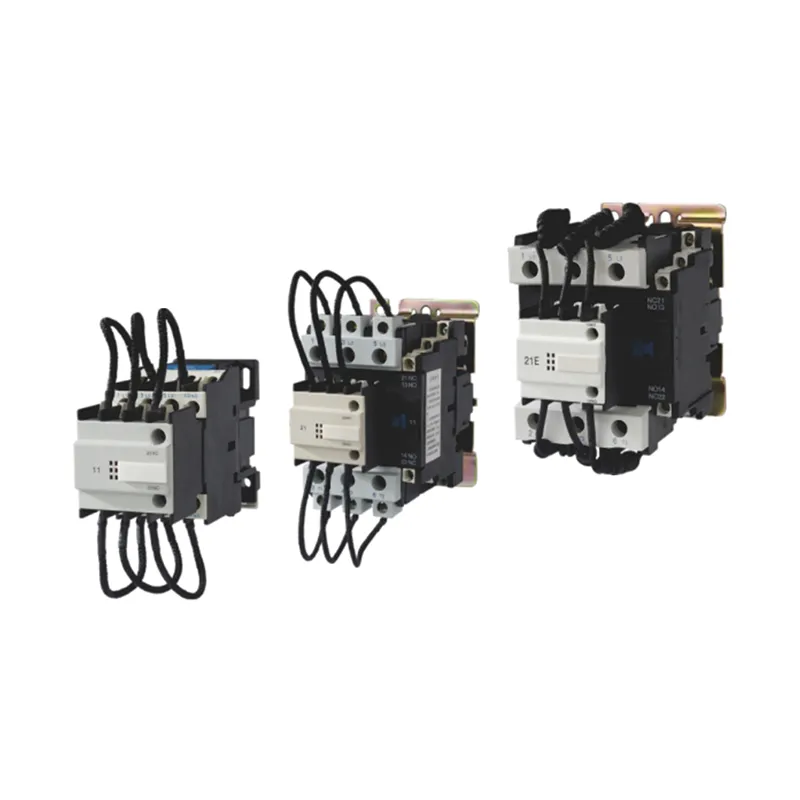
إجابة مباشرة
Assess capacitor switching contactor duty from the switching sequence and the measured network around the capacitor stage. Retain the stage arrangement, harmonic record, operating condition, and topology so a reviewer can distinguish an equipment question from a system-level conclusion.
Part 1. Define capacitor-switching duty as a circuit question
Capacitor-switching duty starts with the capacitor stage and the circuit that surrounds it. A reviewer needs to know what is being switched, where the stage connects, what control command is used, and whether the network contains nonlinear loads or a reactor arrangement. A generic contactor description leaves those questions unanswered.
The search results also show why buyers ask about “capacitor duty” rather than merely contactor current. Questions about switching, contactor purpose, duty cycle, and fault symptoms point to a decision path that includes the stage, the switching sequence, and evidence from the actual network.
| Duty question | Evidence to name | Do not conclude from it alone |
|---|---|---|
| What stage is switching? | Capacitor-stage identification and connection point | That another stage has the same duty |
| What initiates the transition? | Controller command, mode, and timestamp | That a command proves a completed operation |
| What is around the stage? | Source, feeder, major nonlinear loads, and reactor note | That a general diagram represents the live topology |
| What is the review objective? | Defined observation and acceptance scope | That a catalog selection is already justified |
ال CJ19 contactor working-principle context article covers basic terminology. The present article is narrower: it sets out what must be known before duty is compared in a harmonic environment.
Part 2. Read the switching sequence before comparing contactors
The switching sequence matters because capacitor duty includes more than steady-state connection. Some capacitor-contactor designs use auxiliary contacts and a resistive pre-insertion arrangement before main contacts close. That is a design approach to confirm in the exact product documentation, not a statement about every contactor or any CNBYG model.
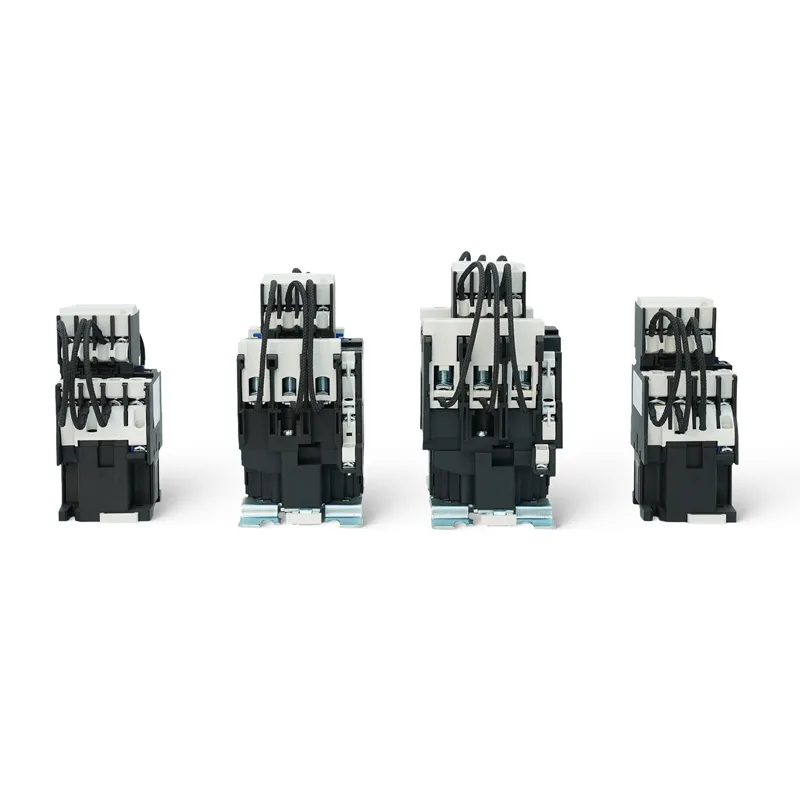
For the project record, write down the sequence that is actually known. Note the controller command, stage identifier, available feedback, prior stage condition, time interval, alarm indication, and whether the evidence comes from a manual observation, controller export, or meter capture. A report should not silently turn a timing assumption into a measured fact.
| Sequence item | Retain in the record | Why it affects review |
|---|---|---|
| Transition trigger | Controller logic or documented request | Explains why a stage was asked to change |
| Prior stage condition | State indication and available discharge/hold information | Keeps sequence context visible |
| Main event window | Timestamp, clock source, and meter capture interval | Allows an event to be located in the electrical record |
| Feedback or alarm state | Original export and any known limitation | Separates reported state from diagnosis |
A product-family description does not replace a project duty review. Confirm the actual device documentation, the circuit arrangement, and the intended duty before treating a general switching concept as a selection decision.
Part 3. Record the harmonic network around the capacitor stage
Harmonic context is part of the duty record because the capacitor stage is connected to a network, not an abstract load. Schneider’s Electrical Installation Guide states that harmonics in the supply can lead to elevated capacitor current and discusses reactor-capacitor arrangements as system configurations. The page does not select a configuration for an unknown project, so this article only asks the reader to retain the context.
Record the measurement location, CT orientation, voltage reference, time basis, active nonlinear loads, supply arrangement, capacitor-stage identification, and any known reactor or bypass state. If an item is unknown, mark it as unknown. Filling the gap with a generic design assumption can make two unlike records appear comparable.
| Network record | Review purpose | Missing-information risk |
|---|---|---|
| Electrical boundary | Shows which current and voltage quantities were captured | A feeder event is misread as a bus result |
| Harmonic export and meter setup | Preserves how the observation was obtained | Different aggregation settings are compared as if identical |
| Capacitor and reactor arrangement | Discloses the circuit context | The reader assumes a direct capacitor connection |
| Load and source state | Identifies changing operating conditions | A new load profile is mistaken for contactor behavior |
مهم A contactor observation does not resolve a harmonic or resonance question by itself. Harmonic assessment, topology review, and protection decisions require project-specific engineering evidence; a component record should clearly state its boundary. (نظرة عامة على IEEE 519)
Part 4. Compare duty cases without hiding changed conditions
Compare events only after naming what remained constant and what changed. A useful comparison can pair similar operating scenarios, the same measurement boundary, the same capacitor-stage configuration, and the same record method. If the reactor state, source arrangement, CT location, controller revision, or load condition changed, treat the later record as a different scenario until a reviewer defines a valid comparison.
| Comparison dimension | أبقِ الأمر سراً أو افصح عنه | Why it matters to duty review |
|---|---|---|
| Measurement method | Meter, CTs, voltage reference, and event window | Preserves meaning of the electrical capture |
| تغيير التكوين | Stage, command source, and controller revision | Avoids merging different switching situations |
| Circuit topology | Reactor, bypass, source, and parallel-path state | Makes the network context visible |
| Operating scenario | Process condition and major nonlinear loads | Stops calendar date from becoming the comparison rule |
استخدم filter-reactor application context page when a reactor is relevant to the discussion. It is not an instruction to add, remove, tune, or size a reactor from a contactor record.
Part 5. Separate a contactor review from a resonance or APF promise
Contactor duty, resonance, and active filtering are related system topics but they are not interchangeable results. A contactor review can identify the information needed to investigate a stage transition. It cannot establish the cause of arcing, prove that resonance exists, determine protection coordination, or show that an APF achieved a particular outcome.
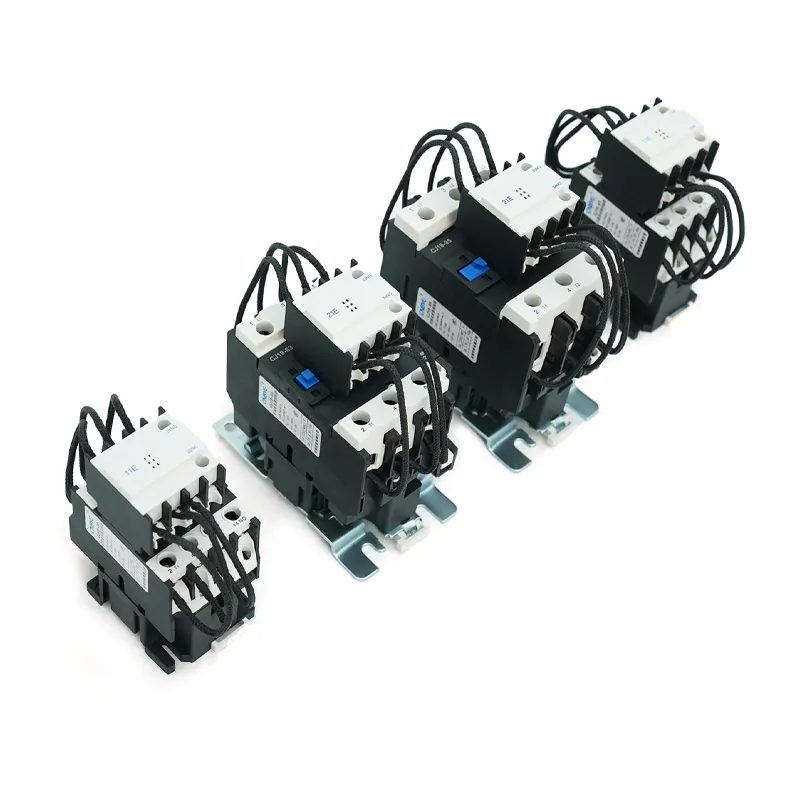
Keep each statement in the right category:
- Record: a dated command, state, waveform, harmonic export, or operating note at a named boundary.
- Engineering question: a question raised by records that needs a study, drawing review, or more measurement.
- Product decision: a decision requiring the exact product documentation, circuit data, installation conditions, protection information, and acceptance method.
For related risk context, see capacitor harmonic-resonance context. It should not be used to convert one product observation into a plant-specific conclusion.
Part 6. Send the duty evidence that a product review needs
A concise evidence package helps a product reviewer ask useful follow-up questions without over-reading one symptom. For an RFQ or product review, include original records as well as the one-line diagram and a short description of the operating scenario. The goal is traceability, not a pre-approved selection.
| Review input | What it clarifies | Common interpretation error |
|---|---|---|
| One-line diagram and nominal system description | Connection point and supply context | Treating an isolated component photo as circuit evidence |
| Contactor and capacitor-stage identification | The item and stage under review | Assuming every stage has the same configuration |
| Reactor or bypass description | Known topology around the stage | Leaving a material circuit change undisclosed |
| Meter setup and harmonic exports | Measurement boundary and record method | Comparing readings collected by unlike setups |
| Switching history and controller settings | The sequence and control context | Calling a command an established root cause |
| Protection, installation, and acceptance notes | Integration limits and decision rule | Requesting a final product choice with no review scope |
Once those inputs are available, the GJ19 capacitor-contactor product context page is a relevant product-line reference. Send contactor-duty evidence when the circuit documentation and project review scope are ready.
أسئلة متكررة
What is capacitor switching contactor duty?
It is the circuit-specific switching question around a capacitor stage, including the stage arrangement, sequence, electrical boundary, and operating context. It is not established by a product name alone.
How does a capacitor-duty contactor work?
Some capacitor-contactor designs use pre-switch auxiliary contacts and damping resistors before main contacts close. The exact sequence and feature set must be confirmed from the documentation for the specific product under review.
Does a contactor power the capacitor?
No. The contactor is part of the switching path for the capacitor stage. The project review should identify the supply, stage connection point, control command, and protection arrangement rather than treating the contactor as the whole circuit.
Why do harmonics matter to a capacitor-stage review?
Harmonic conditions can change the electrical context around capacitors. Keep measured harmonic records, topology information, and operating state with the switching record so a reviewer can see the conditions being discussed.
Can one contactor event prove a resonance problem?
No. One event may identify an observation that needs follow-up. A resonance conclusion requires an appropriate system study and project-specific electrical evidence.
What should buyers provide for a contactor-duty review?
Provide the one-line diagram, nominal system data, identified contactor and capacitor stage, known reactor or bypass arrangement, measurement setup, harmonic exports, switching history, controller settings, protection information, installation constraints, and acceptance method.