Wie die Netzspannung die Ausgabefähigkeit von SVG beeinflusst
Wie die Netzspannung die Ausgabefähigkeit von SVG beeinflusst
Grid voltage affects the usable output capacity of a static var generator because the SVG creates compensating current through the connected voltage waveform. The nameplate kvar or ampere value is therefore not a promise that the same reactive power is available at every voltage, temperature and operating condition. A sound selection starts with the actual line-to-line voltage range, the required reactive current, the compensation point and the equipment’s approved capability curve.
The practical question is not simply whether the supply is “high” or “low.” The engineer must ask what the SVG measures, what current it can produce, which protection limits apply, and whether the upstream transformer, feeder and cabinet can tolerate the changed current. The CNBYG SVG-Produktseite provides the product context; the final rating must be checked against the selected model documentation and site measurements.
What output capacity means in an SVG
An SVG is a current-controlled power-electronic device. It senses the three-phase system, calculates the required compensating component and injects a controlled current so that the source sees a better reactive-current balance. In simplified terms, reactive power is related to voltage and current:
[Q \approx \sqrt{3} \times V_{LL} \times I_Q]
where (V_{LL}) is line-to-line voltage and (I_Q) is the reactive component of line current. If the current limit is fixed, available kvar changes with voltage. If the required kvar is fixed while voltage falls, the required current rises. That is why a unit that appears adequate at nominal voltage may approach its current limit during a sustained undervoltage event.
The same reasoning applies to harmonic or unbalance functions when they share the converter’s current budget. The display may show a nominal capacity, but the control system still has to divide its available current between the enabled objectives. Do not interpret a capacity label as independent capacity for every mode at the same time.
Voltage and capacity relationship
The table below is a design guide, not a substitute for the model capability curve. Use it to decide which measurements and supplier confirmations are needed.
| Zustand | What changes electrically | Was zu überprüfen ist |
|---|---|---|
| Nominal voltage | Current and kvar are close to the rated operating point. | Rated current, duty cycle, ambient and enabled functions. |
| Sustained undervoltage | The same kvar requires more current; current limiting may reduce output. | Lowest measured voltage, protection thresholds and capability curve. |
| Sustained overvoltage | For a fixed current, theoretical kvar increases, but insulation, thermal and control limits still apply. | Voltage tolerance, derating rules and alarm history. |
| Voltage unbalance | Negative-sequence conditions add stress and can change the measured requirement. | Phase-by-phase voltage, unbalance calculation and trip settings. |
| Distorted voltage | The converter and measurement algorithm operate on a non-ideal waveform. | THD, dominant orders, synchronization and interaction with other equipment. |
| Rapid voltage variation | The target current changes quickly and may be limited by control or protection response. | Event traces, ride-through settings and plant disturbance records. |
Establish the real voltage boundary
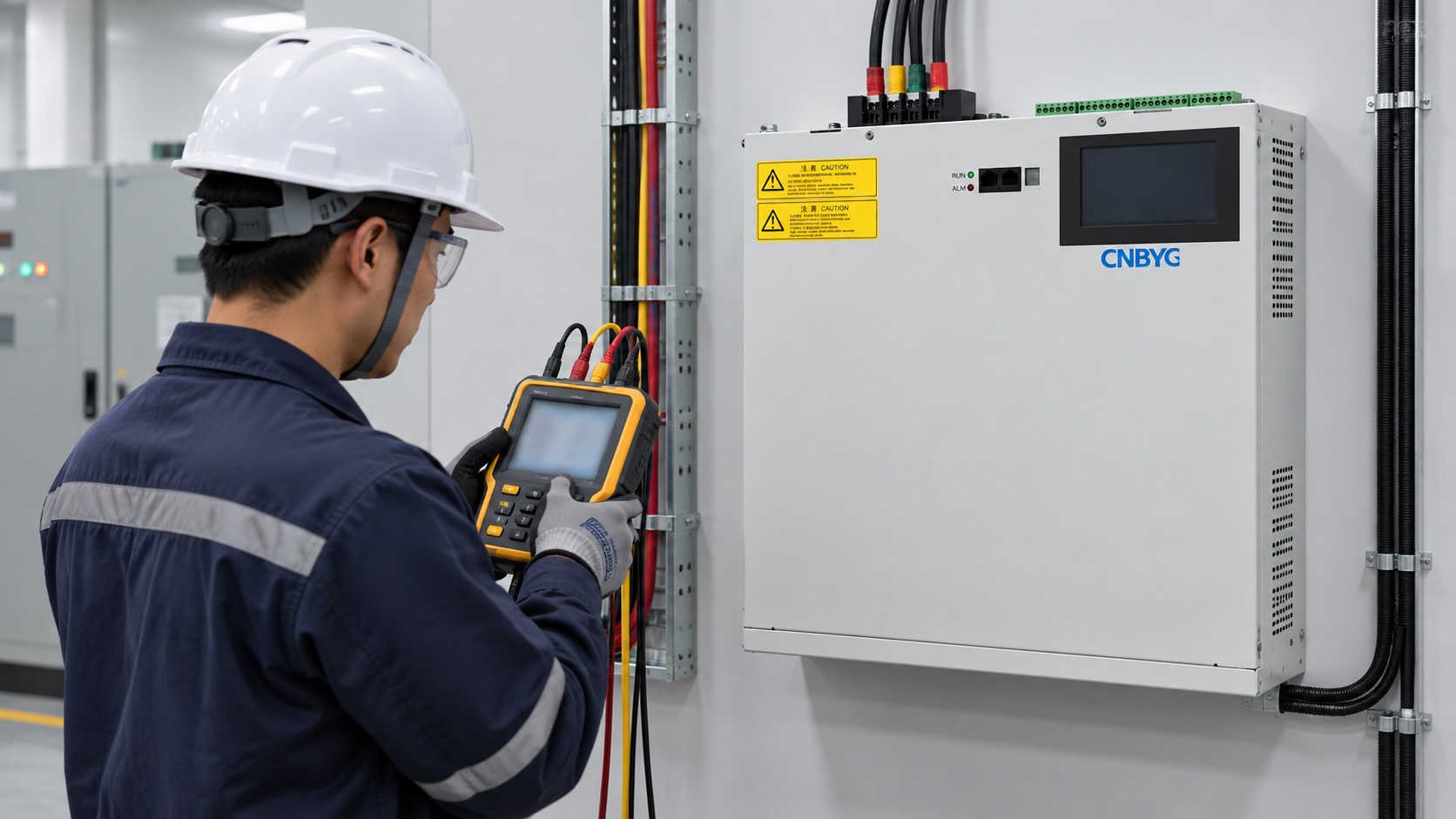
Measure voltage at the same electrical point used for the control objective. A utility meter at the incomer, a switchboard analyzer and the SVG’s internal value may legitimately differ because of transformer impedance, cable drop, CT/VT location and sampling. The commissioning procedure should identify which value is authoritative for acceptance.
Collect a time series rather than one handheld reading. Record line-to-line voltage, line-to-neutral voltage where applicable, phase order, unbalance, frequency, load current, kvar demand and the SVG’s output current. Correlate the trace with production states. A short measurement during a quiet shift cannot establish the worst case for a rolling mill, compressor bank or VFD process.
Das Checkliste zur Inbetriebnahme von SVG explains how to preserve synchronized traces. Those records are especially valuable when output appears to fall only during a voltage sag or a high-load transition.
For a complete review, also compare the measured kvar with the SVG-Anleitung zur reaktiven Stromkompensation. It explains why a converter can show output while the source still sees reactive current when the CT boundary, priority or shared current budget is different from the assumed design.
Check the capability curve, not only the nameplate
Ask the supplier for the allowed voltage range, continuous and short-time current, ambient derating, switching frequency constraints, overload duration, protection thresholds and the effect of simultaneous compensation functions. The useful question is: “At our minimum and maximum measured voltage, ambient and harmonic duty, how much reactive current is guaranteed at the control point?”
Check whether the published kvar is based on a particular voltage. Some specifications are stated in amperes, some in kvar at nominal voltage, and some show separate curves for voltage and temperature. Convert units consistently before comparing alternatives. Also confirm whether the output rating is per phase, total three-phase, or a controller setting that is lower than the hardware limit.
A practical capacity review
Use this sequence before changing a setpoint or ordering a larger unit:
- Define the compensation point and the required power-factor or voltage objective.
- cURL Too many subrequests by single Worker invocation. To configure this limit, refer to https://developers.cloudflare.com/workers/wrangler/configuration/#limits.
- cURL Too many subrequests by single Worker invocation. To configure this limit, refer to https://developers.cloudflare.com/workers/wrangler/configuration/#limits.
- cURL Too many subrequests by single Worker invocation. To configure this limit, refer to https://developers.cloudflare.com/workers/wrangler/configuration/#limits.
- cURL Too many subrequests by single Worker invocation. To configure this limit, refer to https://developers.cloudflare.com/workers/wrangler/configuration/#limits.
- cURL Too many subrequests by single Worker invocation. To configure this limit, refer to https://developers.cloudflare.com/workers/wrangler/configuration/#limits.
- cURL Too many subrequests by single Worker invocation. To configure this limit, refer to https://developers.cloudflare.com/workers/wrangler/configuration/#limits.
cURL Too many subrequests by single Worker invocation. To configure this limit, refer to https://developers.cloudflare.com/workers/wrangler/configuration/#limits
cURL Too many subrequests by single Worker invocation. To configure this limit, refer to https://developers.cloudflare.com/workers/wrangler/configuration/#limits.
cURL Too many subrequests by single Worker invocation. To configure this limit, refer to https://developers.cloudflare.com/workers/wrangler/configuration/#limits.
Interactions with capacitors and other converters
Fixed capacitors, APFC stages, VFD front ends, generators and UPS systems all influence the voltage and reactive-current requirement. A capacitor stage that switches in during a low-load period can make the SVG reduce inductive compensation or become temporarily leading. A generator can change short-circuit strength and voltage regulation. The SVG vs capacitor bank comparison gives selection context, but the site study must include the actual switching sequence.
Do not solve an apparent voltage-capacity problem by forcing the SVG to a higher output limit. That can hide a measurement error or cause repeated protection trips. Separate the questions: Is the voltage within tolerance? Is the requested current physically available? Is another device creating the demand? Is the control point correctly defined?

Acceptance test for voltage-dependent capacity
Write acceptance cases before energization. Include nominal voltage, the lowest normal operating voltage, the highest normal voltage, peak reactive demand, a representative harmonic load and the light-load condition that may create leading power factor. For every case record voltage at the SVG and reference point, current, kvar, power factor, temperature, alarms and active control mode.
Allow the system to reach steady state before comparing values. A short transient can be useful for response testing but should not be mixed with continuous capacity. If the output is limited, record the limit indication and the voltage at the moment it occurs. The result should state whether the limitation is electrical capacity, thermal derating, protection, measurement or another enabled function.
For measurement practice, IEC 61000-4-30 provides a framework for power-quality measurement methods and aggregation; it does not replace the SVG manufacturer’s commissioning procedure. The IEC-Katalogeintrag is the authoritative source for the standard scope.
Häufig gestellte Fragen
Does lower voltage always mean lower SVG kvar?
Nicht sofort oder in jedem Steuerungsmodus. Bei einer festen Strombegrenzung reduziert eine niedrigere Spannung die Kvar, die der Strom darstellen kann. Der Controller kann auch kurzfristigen Spielraum oder eine andere Begrenzung haben, daher verwenden Sie die genehmigte Leistungsfähigkeitskurve und die gemessene Spannung.
Kann eine höhere Spannung verwendet werden, um die SVG-Bewertung zu erhöhen?
Nein. Eine höhere Spannung kann die theoretischen kvar bei konstantem Strom erhöhen, aber Isolierung, Schutz, thermische und Steuergrenzen bleiben weiterhin bestehen. Ändern Sie niemals die Betriebsspannung oder die Schutz-Einstellung, um eine höhere Leistung zu erzielen.
Warum begrenzt die SVG-Ausgabe nur während Produktionsspitzen?
Der Spitzenwert kann niedrige Busspannung, höheren reaktiven Bedarf, Harmonische und Umgebungstemperatur kombinieren. Vergleichen Sie synchronisierte Spannungs-, Last- und Ausgangsstromkurven mit einer Ruhephase, um festzustellen, welcher Grenzwert aktiv ist.
What should be written in an RFQ?
Geben Sie den Spannungsbereich, die Frequenz, das Phasen-/Leitersystem, den erforderlichen Strom oder die Blindleistung (kvar) bei jeder Spannung, den Kompensationspunkt, die Oberschwingungsbelastung, die Umgebungstemperatur, die erwarteten Überlastbedingungen, die Installationsart, die Kommunikation, die Schutzfunktionen und die Nachweise zur Abnahme an.
Fazit
Grid voltage is part of the SVG capacity calculation, not a footnote. Measure the real voltage boundary, translate the required kvar into current, account for functions that share the converter and validate the result against the supplier’s capability curve. A documented voltage-dependent test gives procurement, commissioning and maintenance teams the same defensible answer about what the SVG can deliver.
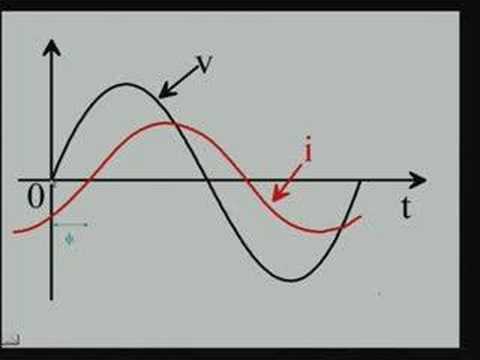
Neutral video: power-quality measurement background
The NPTEL lecture below is general educational context for power-quality measurement. It is not a model-specific SVG procedure.