


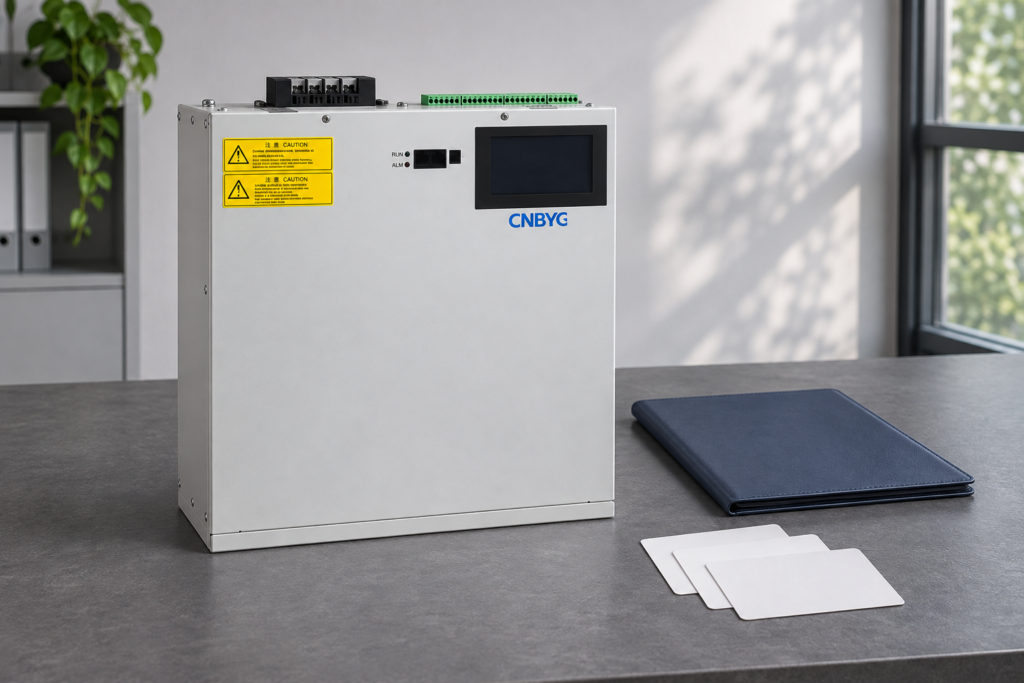
An AHF firmware change approval record should establish why a change is needed, which exact unit and revisions it covers, who authorized the intervention, and how the site will judge the outcome. Obtain written manufacturer confirmation before planning any update. A product family name or a visible communication terminal does not establish field-update support. This guide addresses the approval evidence around a manufacturer-directed intervention, rather than a flashing procedure. It does not assume that CNBYG equipment offers customer-installable firmware, a particular service interface, or a rollback function.
Start with the problem the change is meant to solve
A request saying “install the latest version” gives a reviewer little basis for accepting operational risk. Record the observed fault, affected operating state, support case and the manufacturer’s explanation of how the proposed release addresses it. Distinguish a confirmed correction from an investigation step. If support needs additional evidence before recommending a change, keep the request in investigation rather than treating the release file as permission to proceed.
For a power-quality installation, include the consequence of taking the filter out of service. The owner may need to coordinate production loads, utility obligations or parallel equipment. The change request should identify the person who decides whether the planned maintenance window is acceptable. A software specialist cannot automatically authorize a change in the site’s electrical operating condition.
Das CNBYG-Produktseite für aktivem harmonischen Filter provides the product context. Obtain the installed model’s actual documentation, serial identification and support instructions before applying this workflow. Public product illustrations cannot identify a controller board revision inside an installed unit.
Define the configuration boundary
Create an asset list that connects the physical unit to its approved configuration. Include the site tag, serial number, model designation, present revision if accessible by an approved method, and document revision used for the work. Identify associated displays, controllers or other assemblies only where manufacturer documentation confirms they matter. Do not infer that every visible screen has an independently updateable program.
For multiple filters, state whether the request covers one unit, an entire parallel arrangement or a staged subset. Ask the manufacturer whether mixed revisions are supported during the proposed sequence. Keep the answer in the approval package. Compatibility statements for another manufacturer’s filter are useful research context, but cannot establish compatibility for the installed CNBYG arrangement.
Use a simple boundary drawing or asset table to prevent omissions. A unit in a neighboring cabinet may share a measurement or control arrangement even if it is outside the planned work area. Ask the responsible engineer to identify those dependencies before approval, rather than discovering them after one unit has been changed.
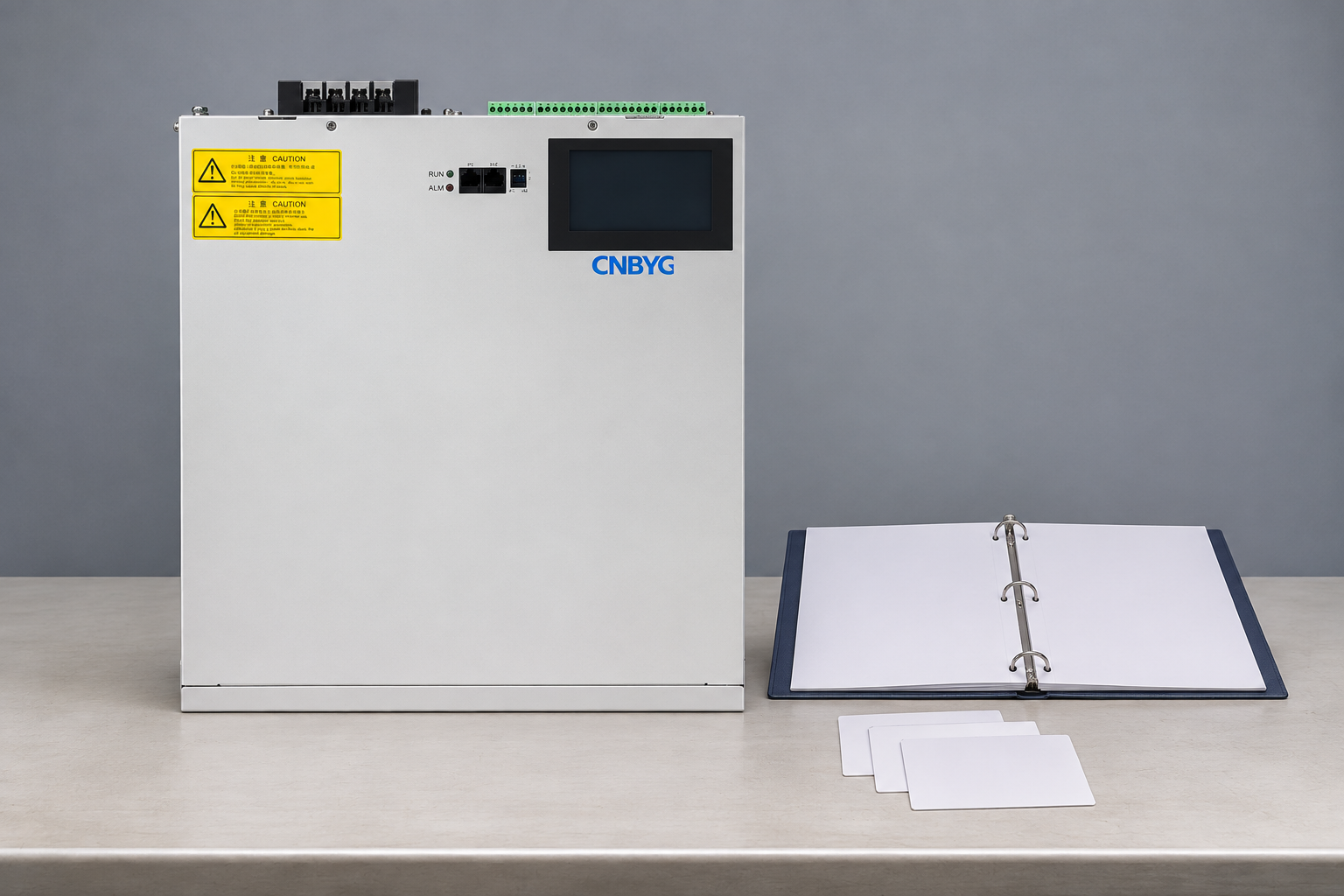

Review the release package before the maintenance window
Obtain the release through the manufacturer’s authorized channel and retain the original delivery record. Record the release identifier, intended models, applicable hardware revisions, required tools and the related support instruction. If a hash or signature is supplied, document the prescribed authenticity check. A hash calculated locally identifies the file received; by itself it does not prove that the file came from the manufacturer.
Keep executable files in the site’s approved controlled location. The review record should reference that location without publishing passwords, credentials or confidential service material in a general maintenance report. Restrict access to the personnel who need the package. If the file changes after approval, compare the new identity with the approved record and return it for review.
NIST SP 800-128 provides a general framework for configuration control. Its relevance here is disciplined review of a proposed baseline change. It is not a CNBYG release instruction, an electrical safety procedure or a statement that a particular firmware file is suitable for this equipment.
Build an approval matrix with explicit hold points
The following matrix is a suggested project record. It supplies decision fields, not universal technical limits. The manufacturer and responsible site engineer must define the actual compatibility and acceptance requirements.
| Approval area | Beizufügende Beweise | Reason to keep the request on hold |
|---|---|---|
| Operational need | Fault description, affected state and support recommendation | No demonstrated reason for intervention |
| Asset scope | Site tags, serials and installed configuration references | A target unit cannot be identified reliably |
| Release suitability | Written model and hardware applicability confirmation | Applicability is assumed from a similar model |
| File provenance | Authorized delivery and prescribed authenticity checks | Release identity differs from approved package |
| Work method | Manufacturer procedure, competent personnel and site permits | Required method or competence is unavailable |
| Wiederherstellung | Supported recovery route, contact and safe fallback state | Failure would leave no authorized response |
| Akzeptanz | Named observations, criteria and reviewer | “Starts normally” is the only proposed test |
Assign an owner to every missing item. A hold point should state what evidence would release it, rather than merely displaying a red status. Record approval names, dates and any conditions, so the maintenance team can distinguish unconditional permission from approval that depends on a final prerequisite.
Preserve a usable baseline
The baseline should describe the state that matters to the site’s operation. Record approved settings, current alarms, relevant operating modes and accessible revision information. Preserve any configuration export only where the manufacturer supports that method. Identify how the export will be checked and who is permitted to use it. A file named “backup” is not evidence that a supported restoration is possible.
cURL Too many subrequests by single Worker invocation. To configure this limit, refer to https://developers.cloudflare.com/workers/wrangler/configuration/#limits.
Verwenden Sie die vorhandene HFAs Inbetriebnahme-Anleitung cURL Too many subrequests by single Worker invocation. To configure this limit, refer to https://developers.cloudflare.com/workers/wrangler/configuration/#limits.
cURL Too many subrequests by single Worker invocation. To configure this limit, refer to https://developers.cloudflare.com/workers/wrangler/configuration/#limits
cURL Too many subrequests by single Worker invocation. To configure this limit, refer to https://developers.cloudflare.com/workers/wrangler/configuration/#limits.
cURL Too many subrequests by single Worker invocation. To configure this limit, refer to https://developers.cloudflare.com/workers/wrangler/configuration/#limits.
cURL Too many subrequests by single Worker invocation. To configure this limit, refer to https://developers.cloudflare.com/workers/wrangler/configuration/#limits.
cURL Too many subrequests by single Worker invocation. To configure this limit, refer to https://developers.cloudflare.com/workers/wrangler/configuration/#limits
cURL Too many subrequests by single Worker invocation. To configure this limit, refer to https://developers.cloudflare.com/workers/wrangler/configuration/#limits.
NIST SP 800-82 Revision 3 cURL Too many subrequests by single Worker invocation. To configure this limit, refer to https://developers.cloudflare.com/workers/wrangler/configuration/#limits.
Keep the service visit roster, approved tool identity and responsible site contact with the change request. If an engineer arrives with a different laptop or package, resolve that difference before using it. An earlier approval should not silently expand to an unknown device or an unreviewed release.
Make post-change acceptance observable
State the expected evidence before work starts: revision confirmation through the approved method, required settings checks, alarm review, agreed functional observations and any performance measurements. Assign each observation to a person and a record location. Define how an unperformed check will be shown; it must not appear as a pass.
Compare observations under documented conditions and preserve adverse results. If a new alarm appears, retain the event history before applying the manufacturer’s troubleshooting instructions. The AHF alarm troubleshooting article explains why a reset alone cannot establish that a cause has been corrected.
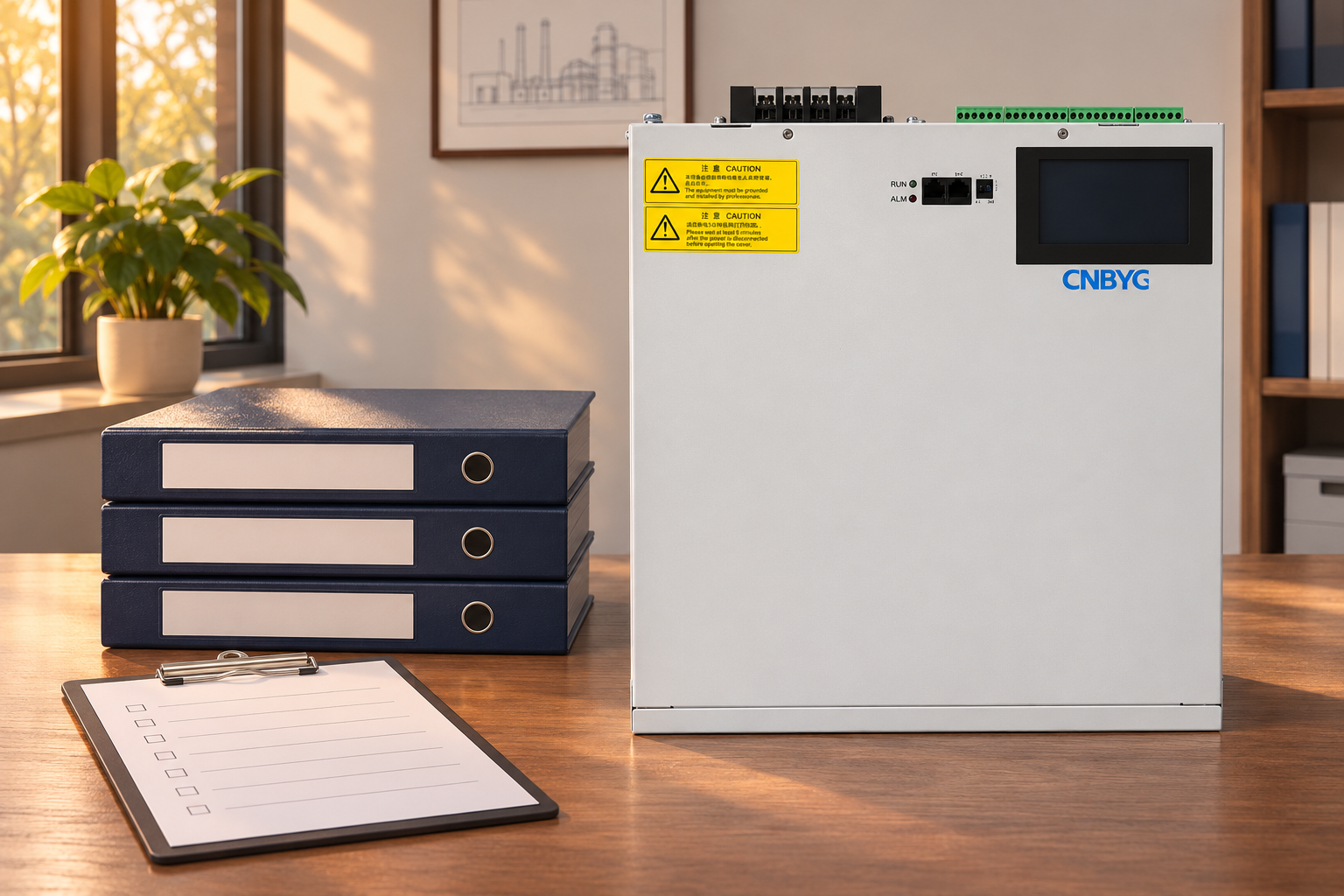
Closeout should state the installed baseline, actual work performed, deviations, remaining restrictions and the person accepting the outcome. Update the maintenance record and configuration register together. A successful intervention can still leave a documentation action open; identify its owner without confusing it with a safety or performance limitation.
Safety learning for the review team
The US Department of Labor lesson below illustrates the consequences of unsafe electrical panel repair. It supports the distinction between administrative permission and an established safe work condition. It does not demonstrate an AHF update or authorize any service procedure. The AHF maintenance schedule guide provides a separate framework for planning routine inspection around the manufacturer’s requirements.

Häufig gestellte Fragen
Does a newer firmware release mean an AHF should be updated immediately?
No. Confirm an operational need, exact model applicability, manufacturer instructions and an approved maintenance window. A newer release identifier alone does not establish a benefit for the installed configuration.
Can a saved settings file guarantee firmware rollback?
No. Settings restoration and firmware recovery are different capabilities. Obtain the manufacturer’s supported recovery method for the exact equipment and record any limitations before approving the intervention.
Who should approve an AHF firmware change?
The site’s designated change authority should coordinate the equipment owner, responsible electrical personnel and manufacturer support. Record separate responsibilities for release suitability, safe access, operational availability and acceptance.
What should happen if the unit starts but an acceptance check is incomplete?
Record the incomplete check and the resulting restriction. Refer the decision to the named authority; a normal startup display cannot substitute for missing configuration or performance evidence required by the approved plan.