Wie harmonische Spannung die Lebensdauer von Leistungskondensatoren beeinflusst
Harmonic voltage can shorten a power capacitor’s useful life by increasing harmonic current, dielectric stress and internal heating. The severity depends on the voltage spectrum, capacitor design, temperature, operating time and the surrounding network. A small voltage harmonic can cause appreciable capacitor current because capacitive impedance decreases as frequency rises. However, a single THD percentage cannot predict remaining life or prove that harmonics caused a failure. Compare measured voltage and current spectra with the manufacturer’s permitted duty, and evaluate resonance and reactor matching before replacing failed units.
This guide concerns low-voltage power-factor-correction capacitors. It does not apply a battery-capacitor lifetime model to industrial shunt capacitors or promise a fixed service life. Start with power capacitor failure modes if visible damage or protective disconnection has already occurred.
Why a capacitor responds strongly to higher frequencies
For an ideal capacitor, the magnitude of reactance is Xc = 1/(2πfC). At a higher frequency, the same capacitance presents a smaller reactance. The current associated with a voltage component is therefore proportional to that component’s frequency as well as its voltage. This relationship explains why voltage harmonics matter even when the fundamental-frequency bus voltage appears normal.
For a single capacitor under an idealized sinusoidal harmonic component, Ih/I1 = h × Uh/U1, where h is harmonic order and U represents the corresponding RMS voltage component across the capacitor. For example, a fifth-harmonic voltage component of 3% of the fundamental would produce a fifth-harmonic capacitor current equal to 15% of the fundamental capacitor current in that simplified model. It does not mean total current rises by 15%; orthogonal harmonic components combine by the RMS relationship.
The example excludes a series reactor, network resonance, losses and component tolerances. It is a screening explanation, not a bank rating calculation. With a detuned branch, use the complete branch impedance and the actual voltage across the capacitor. Review Warum Reaktoren in Kondensatorbatterien eingesetzt werden before applying a capacitor-only calculation to a reactor-capacitor combination.
Separate voltage distortion from current distortion
Voltage distortion describes the shape of voltage at a measurement point. Current distortion describes the current drawn or injected by a load or branch. A nonlinear load can produce current harmonics that interact with the source impedance to create voltage distortion. The spectrum at the plant’s incoming supply may differ from the spectrum at an individual capacitor stage.
A voltage THD reading alone does not show which orders dominate. Two installations with the same THD can impose different capacitor current because the frequencies differ. Likewise, the harmonic current at a drive feeder is not automatically the harmonic current in the capacitor branch. Measure the relevant locations and identify the operating state.
Record the instrument’s definitions, measurement bandwidth and whether current is expressed as THD or as another distortion measure. Do not compare values with different denominators as if they were the same metric. The power-quality survey should preserve the individual harmonic components alongside the aggregate indicators, especially when evaluating a component failure.
Recognize the mechanisms without inventing a life percentage
| Stress mechanism | What to investigate | What the evidence can establish |
|---|---|---|
| Increased RMS capacitor current | Fundamental and harmonic branch currents | Whether measured duty exceeds documented current capability |
| Internal heating | Temperature trend, enclosure ambient and cooling | Whether thermal conditions changed under comparable load |
| Elevated capacitor voltage | Voltage across the capacitor in the complete branch | Whether reactor effects or bus conditions increase electrical stress |
| Frequency-sensitive resonance | Component values, source impedance and harmonic spectrum | Whether a network study identifies amplification risks |
| Progressive capacitance change | Isolated measurement and service history | Whether a unit or phase has departed from its specified condition |
| Frequent switching | Stage-operation log and reconnection interval | Whether switching duty contributes additional stress |
No row provides a universal remaining-life estimate. Use manufacturer limits and a suitable engineering study. The official IEC 60831-1 scope covers low-voltage self-healing shunt capacitors, including performance, ratings, safety and installation guidance. Its public description does not supply a model-specific service-life guarantee.
Heating and the installation environment interact
Harmonic current can increase losses, while restricted cooling can make those losses more damaging. A capacitor may experience a hotter environment because neighboring reactors, contactors or other components add heat to the same cabinet. Check the air near the capacitor and the enclosure ventilation rather than relying on room temperature alone.
Compare temperature at equivalent operating states and after an appropriate stabilization period. Record how long the bank has been connected, which stages are in operation and whether fans are running. An infrared image can identify patterns, but reflective metal surfaces and emissivity assumptions affect the measurement. A cool-looking can is not proof of a healthy internal condition.
cURL Too many subrequests by single Worker invocation. To configure this limit, refer to https://developers.cloudflare.com/workers/wrangler/configuration/#limits.
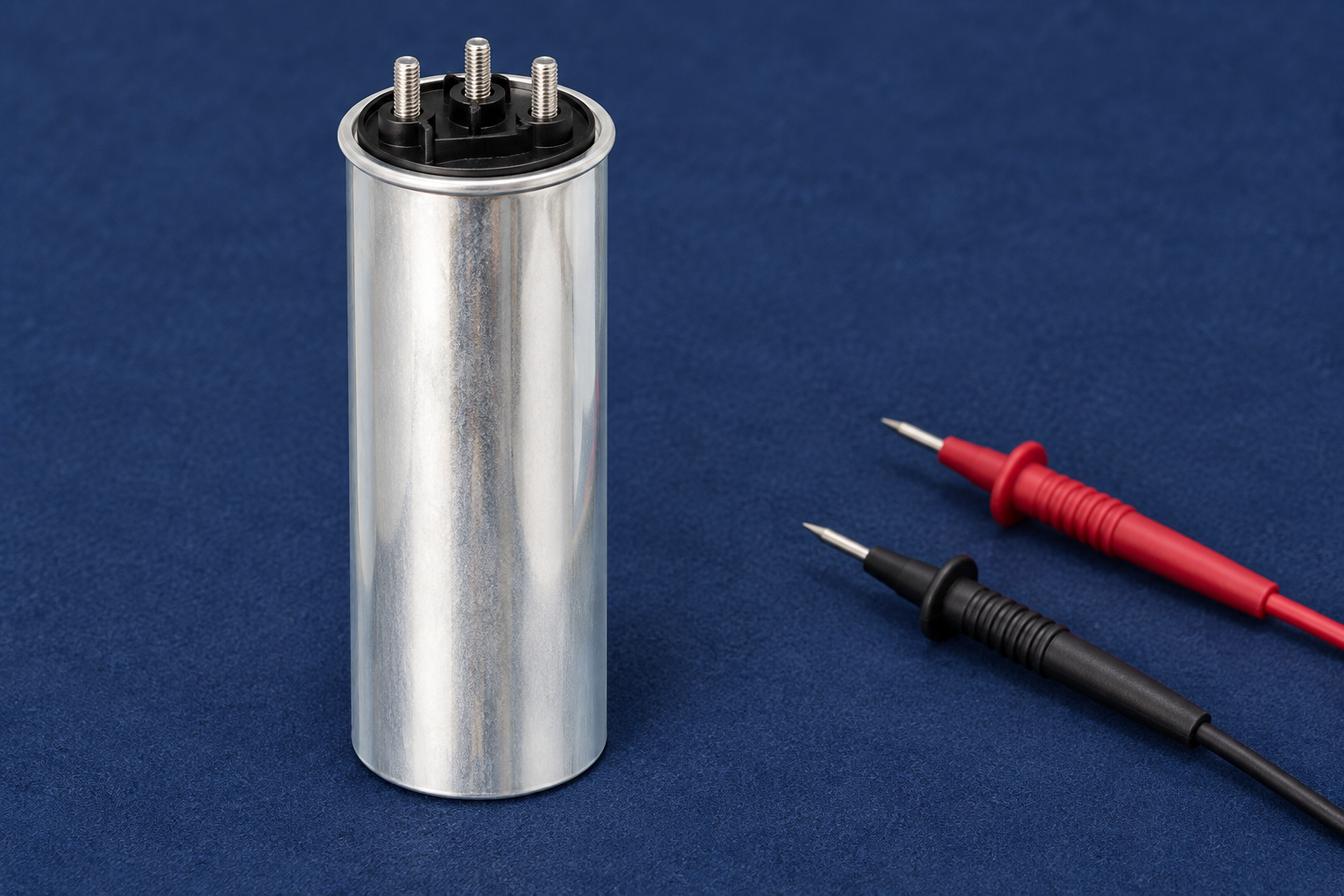
cURL Too many subrequests by single Worker invocation. To configure this limit, refer to https://developers.cloudflare.com/workers/wrangler/configuration/#limits
cURL Too many subrequests by single Worker invocation. To configure this limit, refer to https://developers.cloudflare.com/workers/wrangler/configuration/#limits.
cURL Too many subrequests by single Worker invocation. To configure this limit, refer to https://developers.cloudflare.com/workers/wrangler/configuration/#limits cURL Too many subrequests by single Worker invocation. To configure this limit, refer to https://developers.cloudflare.com/workers/wrangler/configuration/#limits cURL Too many subrequests by single Worker invocation. To configure this limit, refer to https://developers.cloudflare.com/workers/wrangler/configuration/#limits.
cURL Too many subrequests by single Worker invocation. To configure this limit, refer to https://developers.cloudflare.com/workers/wrangler/configuration/#limits.
cURL Too many subrequests by single Worker invocation. To configure this limit, refer to https://developers.cloudflare.com/workers/wrangler/configuration/#limits
cURL Too many subrequests by single Worker invocation. To configure this limit, refer to https://developers.cloudflare.com/workers/wrangler/configuration/#limits.
Check the approved capacitor-reactor combination, including capacitance, inductance, frequency, rated current and permitted voltage duty. Do not replace a capacitor by matching only the number of kvar printed on the can. A different rated voltage with the same kvar can imply different capacitance, which changes the branch’s electrical behavior. Refer to capacitor voltage selection for 400 V systems for the distinction between bus voltage and capacitor rating.
The reactor also needs appropriate thermal and harmonic-current capability. Installing an underspecified reactor does not make the capacitor safe merely because the branch is labelled “detuned.” Have the supplier confirm the assembled stage for the measured harmonic environment and enclosure conditions.
Plan measurements around representative production
A brief measurement during a quiet shift may miss the conditions that stress the bank. Identify production cycles, VFD operating ranges, generator operation, transformer combinations and periods of light load. Include capacitor-stage transitions in the recorded timeline so current and voltage changes can be interpreted.
Use suitable power-quality equipment and qualified personnel following the site’s approved procedure. Never open a CT secondary under load or improvise access to live capacitor terminals. For an isolated inspection, capacitors must be treated as potentially retaining energy until the prescribed safe condition has been established. The California deenergized-equipment rule is a safety reference, while the local procedure determines the actual work steps.
Measure at the supply point and at relevant branches when necessary to distinguish network voltage distortion from component loading. Record uncertainties and inaccessible conditions. A report should state what was measured and what remains inferred; it should not claim compliance at a location that was never assessed.
Choose mitigation according to the measured problem
If overheating mainly reflects poor ventilation, restore the intended thermal conditions and check whether electrical loading is also abnormal. If a capacitor-reactor mismatch is confirmed, correct the matched assembly using the approved design. If harmonic currents or network resonance create the dominant risk, evaluate detuned compensation, active filtering or other suitable measures through a plant-specific study.
An active harmonic filter and a capacitor bank perform different functions. A capacitor stage supplies reactive power; filtering equipment addresses selected current-distortion requirements within its capability. Do not assume that adding more capacitor capacity will solve a distortion-driven low power factor. Review the difference between displacement and total power factor before choosing equipment.
Für CNBYG cylindrical power capacitors, submit the operating voltage, stage arrangement, frequency, reactor details, harmonic measurements and enclosure conditions. These inputs support appropriate selection. This article does not claim that a generic capacitor is suitable for every harmonic environment.
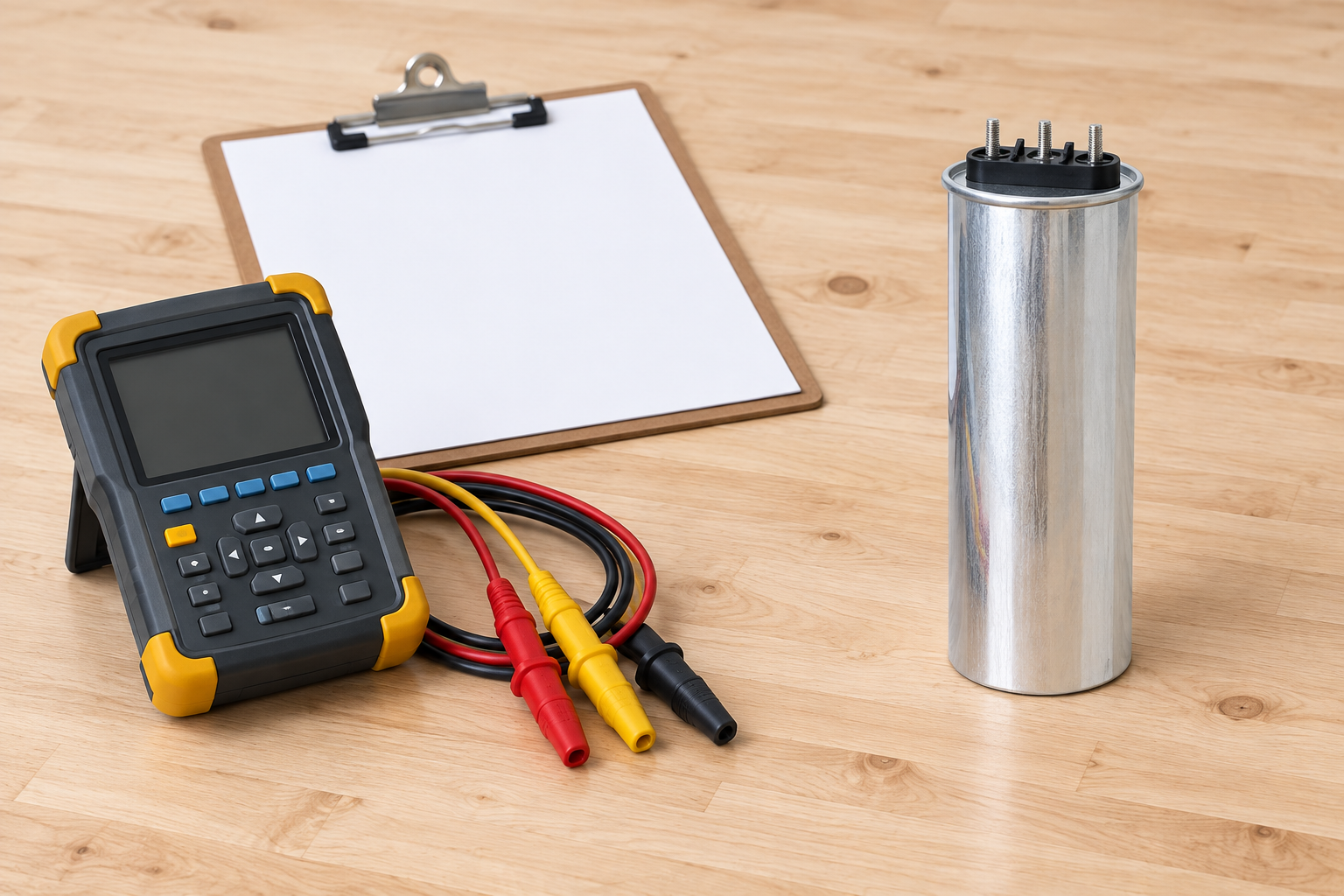
Verify improvement after corrective work
Repeat the relevant measurements under comparable production and stage conditions. Confirm that current, capacitor voltage, temperature and switching behavior meet the documented design requirements. A reduced supply THD does not by itself prove the capacitor branch is within duty, and a replacement unit’s survival for a short period does not establish normal long-term life.
Keep a baseline for future maintenance. Record component replacements, measured capacitance, harmonic spectrum, operating hours where available and thermal observations. A trend can reveal deteriorating conditions early, but it should support maintenance decisions rather than be converted into an unsupported countdown to failure.
Weiterbildung
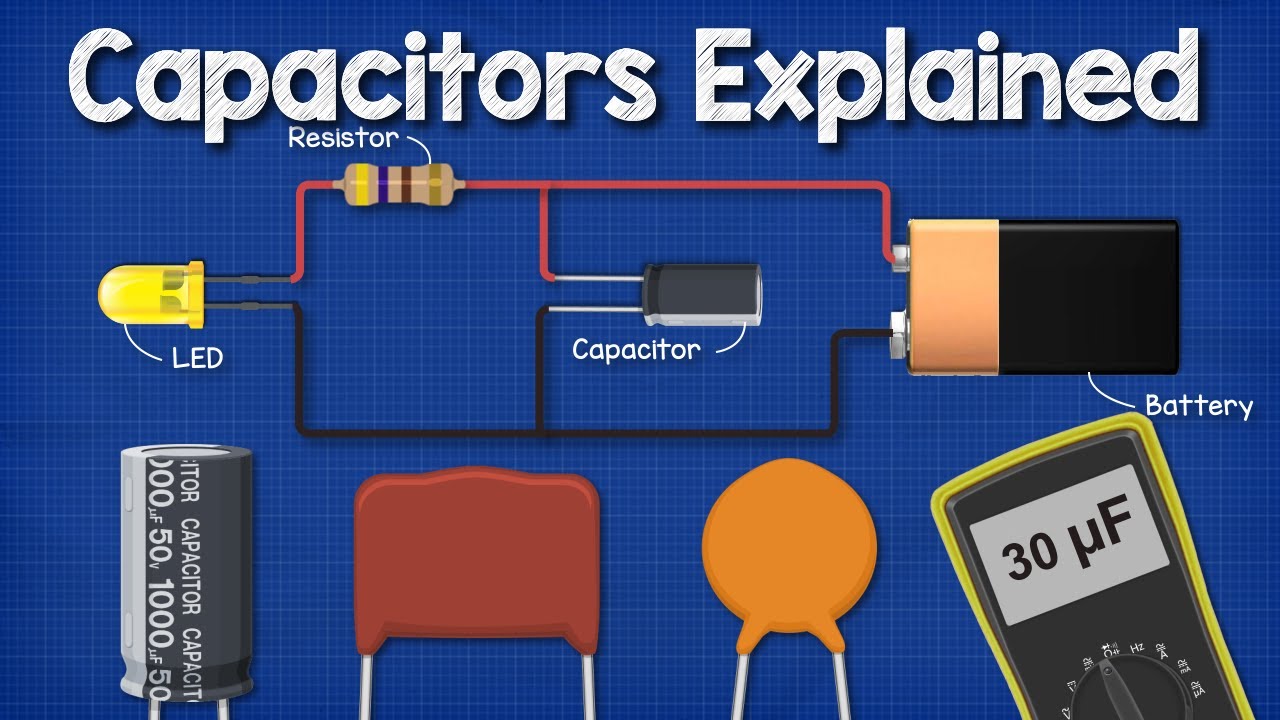
This capacitor lesson explains energy storage and capacitor behavior. It provides background for the frequency and stress discussion, not instructions to test an energized industrial bank.
Häufig gestellte Fragen
Can low voltage THD still create significant capacitor current?
Ja. Hochfrequente Spannungsbestandteile wirken durch geringere kapazitive Reaktanz. Ihre Reihenfolge und Magnitude sind wichtig, daher sollte das Spannungs-Spektrum und der Zweigstrom gemeinsam überprüft werden.
Does a harmonic reading predict remaining capacitor life?
Keine einzelne Messung liefert eine zuverlässige Schätzung der verbleibenden Lebensdauer. Das Design, die Temperaturgeschichte, die Strom- und Spannungsbelastung, Schalt- und Einsatzbedingungen müssen unter Verwendung geeigneter Herstellerinformationen berücksichtigt werden.
Will a detuned reactor eliminate all harmonic problems?
No. It changes branch behavior for a designed operating environment. Correct matching, harmonic-current capability, cooling and a system-level study remain necessary.
Should every failed capacitor simply be replaced with the same kvar?
No. Confirm capacitance, rated voltage, frequency, arrangement, reactor matching and the cause of failure. Equal nameplate kvar alone does not guarantee electrical equivalence in the installed branch.