Meter-Historian-Testkopien: Wiederherstellungsdaten schließen und löschen
Meter historian test copy disposal should close the isolated recovery environment, identify every temporary copy, confirm retention obligations and use an approved method appropriate to the storage system. Do not delete the production archive or the protected backup used to create the test. Keep enough completion evidence to show what was closed, who authorized it and what remains under retention. A successful restore is only part of the exercise: temporary databases, exported files, snapshots, credentials and third-party working copies can outlive the test unless someone is responsible for closing them.
Define what the recovery exercise created
Start with an inventory of the isolated test environment. Record the restored database or archive, host or service, snapshot references, extracted files and approved users. Include working copies made for comparison and any files sent to a support provider. A test label alone does not establish that the environment is isolated or that all its contents can be discarded.
Distinguish three categories: production records, protected recovery sources and temporary exercise outputs. The first two may need to remain available even after the exercise ends. The third category needs a documented retention decision. If the exercise revealed a fault, some outputs may become evidence for an open investigation and need controlled retention rather than immediate removal.
Verwenden Sie die vorhandene meter historian restore acceptance guide to establish whether the restored information was actually checked. This article addresses closure after testing; it does not replace the technical restore or acceptance process.
Confirm authority and retention before removal
Ask the data owner to confirm the exercise is complete and that no investigation, contract or other retention obligation requires the temporary material. Document the decision rather than treating a quiet support ticket as permission. If ownership is uncertain, restrict access and resolve the ownership question before destructive action.
Das NIST media sanitization publication provides authoritative background for selecting sanitization practices. It does not make ordinary file deletion equivalent to media sanitization. The applicable method depends on the storage technology, sensitivity and intended disposition, and should follow an approved organizational process.
The checklist below is a suggested exercise closure record, not a legal retention schedule or a claim that the meter itself contains a historian. Replace its generic roles with named owners and actual storage references in the site’s controlled record.
| Closure item | Required decision or evidence | Reason to leave it open |
|---|---|---|
| Exercise result | Accepted result or documented outstanding defects | Restore verification is unfinished |
| Data scope | Explicit separation of test outputs and protected sources | Production and test references are ambiguous |
| Retention | Owner approval and any evidence hold | Investigation or contractual need remains |
| Copy inventory | Databases, exports, snapshots and support copies | Additional copies have not been located |
| Zugriff | Accounts, tokens and permissions used by the exercise | Temporary access still reaches retained data |
| Disposition | Approved method and execution evidence | Storage platform cannot support the proposed method |
| Verifizierung | Independent review of the actual completion state | Only an unverified deletion request exists |

Close activity before closing storage
Stop scheduled tasks that can recreate exercise outputs. Check test data collectors, report jobs, synchronization services and export scripts. A directory may be empty immediately after deletion but populated again by an unattended job the next morning. Confirm which tasks belong to the test and avoid disabling production collection by association.
Disconnect test integrations using the platform’s approved process. Verify that dashboards and automated reports are not still reading the temporary environment. If a report has become dependent on the exercise database, resolve that dependency before closure. The purpose is to remove the temporary environment without accidentally removing a service that others have started using.
Das restore dependency register guide can help identify services, credentials and reference files used during the recovery. Use that register as an input, then record actual closure results. A dependency list prepared before testing may not include every export produced during troubleshooting.
Match the disposition method to the storage boundary
A local file, a database table, a virtual-machine snapshot and a managed cloud backup are different objects. A command that removes one does not establish the state of the others. Ask the storage owner which replicas, retained versions and recovery mechanisms apply to the particular system.
Do not run an improvised whole-drive wipe on a shared production host to remove a temporary export. That could destroy unrelated records and services. Use a documented approach appropriate to the approved scope. Where underlying storage is shared or managed by a provider, rely on the platform’s documented controls and obtain the completion evidence the site’s process requires.
cURL Too many subrequests by single Worker invocation. To configure this limit, refer to https://developers.cloudflare.com/workers/wrangler/configuration/#limits.
cURL Too many subrequests by single Worker invocation. To configure this limit, refer to https://developers.cloudflare.com/workers/wrangler/configuration/#limits
cURL Too many subrequests by single Worker invocation. To configure this limit, refer to https://developers.cloudflare.com/workers/wrangler/configuration/#limits.
cURL Too many subrequests by single Worker invocation. To configure this limit, refer to https://developers.cloudflare.com/workers/wrangler/configuration/#limits.
cURL Too many subrequests by single Worker invocation. To configure this limit, refer to https://developers.cloudflare.com/workers/wrangler/configuration/#limits.

Verify the result without creating another uncontrolled copy
Read back the platform’s current state after the authorized action. Confirm that the targeted service or object no longer appears in its active inventory, scheduled jobs are closed and temporary accounts cannot be used. Record the verification method and reviewer. A successful request response alone may not mean a long-running storage operation has finished.
Avoid downloading another full archive solely to prove that a copy existed. Prefer the relevant object identifiers, completion records and minimally necessary screenshots. Keep the closure evidence in its approved location. If verification reveals an unexpected retained copy, reopen that item and investigate rather than silently excluding it from the count.
Das OWASP-Leitlinien zur Protokollierung provides background on protecting records and considering copies during retention and disposal. This workflow applies those general ideas to an external meter-data recovery exercise; its particular checklist is an engineering recommendation rather than a quoted standard.
Keep product responsibilities separate from archive responsibilities
Das BY194-Serie Produktseite identifies the relevant instrument family. Confirm the exact device documentation and ordered options when planning an integration. Do not infer internal storage, secure erase or recovery features from the instrument’s front appearance.
In many installations the historian, backup service and supplier portal have separate owners. Include those owners in the closure plan. The meter supplier can answer questions within its documented product scope, while the platform owner controls archive retention and storage operations. The meter decommissioning data handover guide covers the different situation in which an actual device or service is being retired.
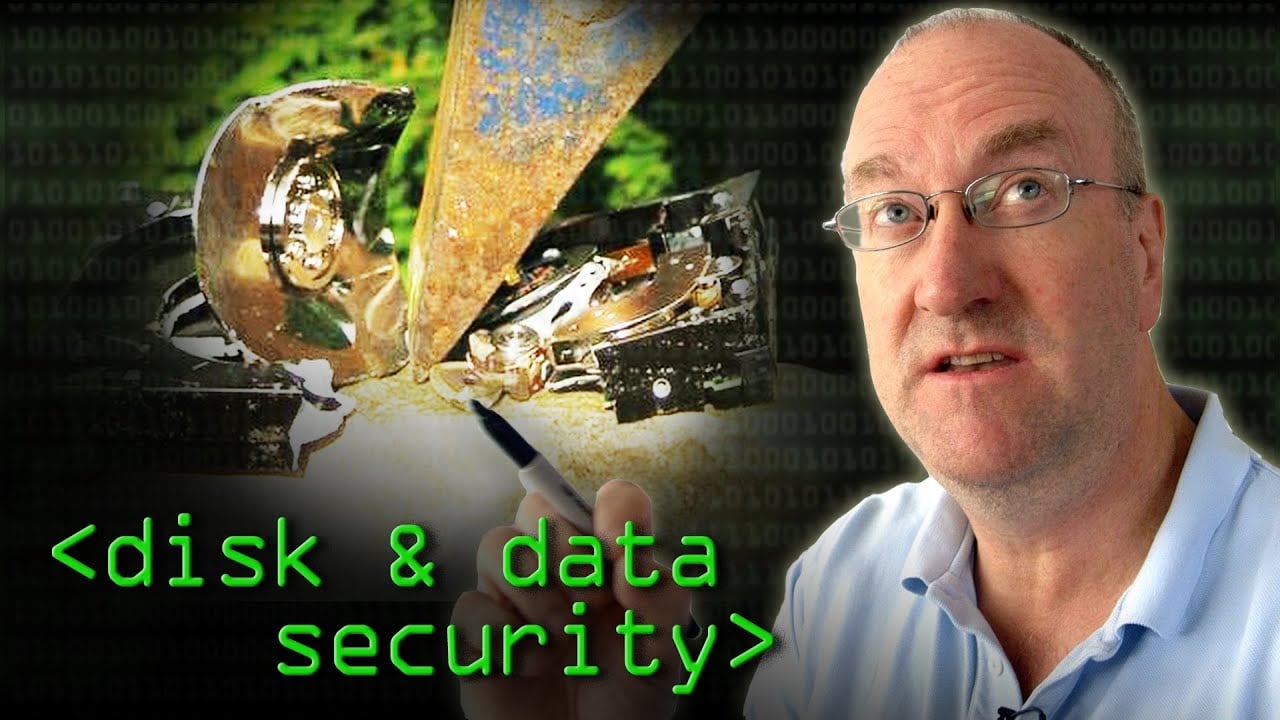
The following educational video explains why deleting a file and removing recoverable information are different questions. It is background material, not an approved procedure for a particular drive, cloud service or industrial system.
Häufig gestellte Fragen
Werden durch das Löschen der Testdatenbank auch ihre Snapshots entfernt?
Not necessarily. Snapshots, replicas, exports and backups can have separate lifecycles. Confirm the actual platform behavior and record each remaining object with its owner and retention or disposition decision.
Soll das geschützte Wiederherstellungs-Backup nach einem erfolgreichen Test gelöscht werden?
Ein erfolgreicher Test führt nicht automatisch zur Löschung. Die geschützte Quelle unterliegt weiterhin ihren eigenen Aufbewahrungs- und Wiederherstellungsanforderungen. Beim Abschluss der Übung sollte sie ausdrücklich von temporären Ausgaben unterschieden werden.
Kann der Entzug von Zugriffsrechten die Datenlöschung ersetzen?
Eine Zugriffsbeschränkung kann als vorübergehende oder ergänzende Kontrollmaßnahme dienen, belegt jedoch nicht, dass gespeicherte Kopien entfernt oder bereinigt wurden. Erfassen Sie den Zugriffsstatus und den Verbleib der gespeicherten Daten als separate Ergebnisse.
Was ist, wenn ein aufbewahrter Snapshot nicht sofort ablaufen kann?
Dokumentieren Sie das aufbewahrte Objekt, beschränken Sie den Zugriff, identifizieren Sie den verantwortlichen Eigentümer und legen Sie gemäß der geltenden Aufbewahrungsrichtlinie eine Folgeprüfung fest. Melden Sie diesen eingeschränkten Status korrekt, anstatt eine vollständige Löschung zu behaupten.