

A puissance active vs puissance réactive comparison is watts that do work versus vars that hold magnetic or electric fields. Apparent power is the combination those two make, in volt-amperes. This page reads the three columns the way a plant meter shows them, then separates compensation from harmonic filtering.
What Active Power Does on a Plant Meter
Active power is the average energy that actually transfers from the supply into the load over each AC cycle. Meters report it in watts or kilowatts.
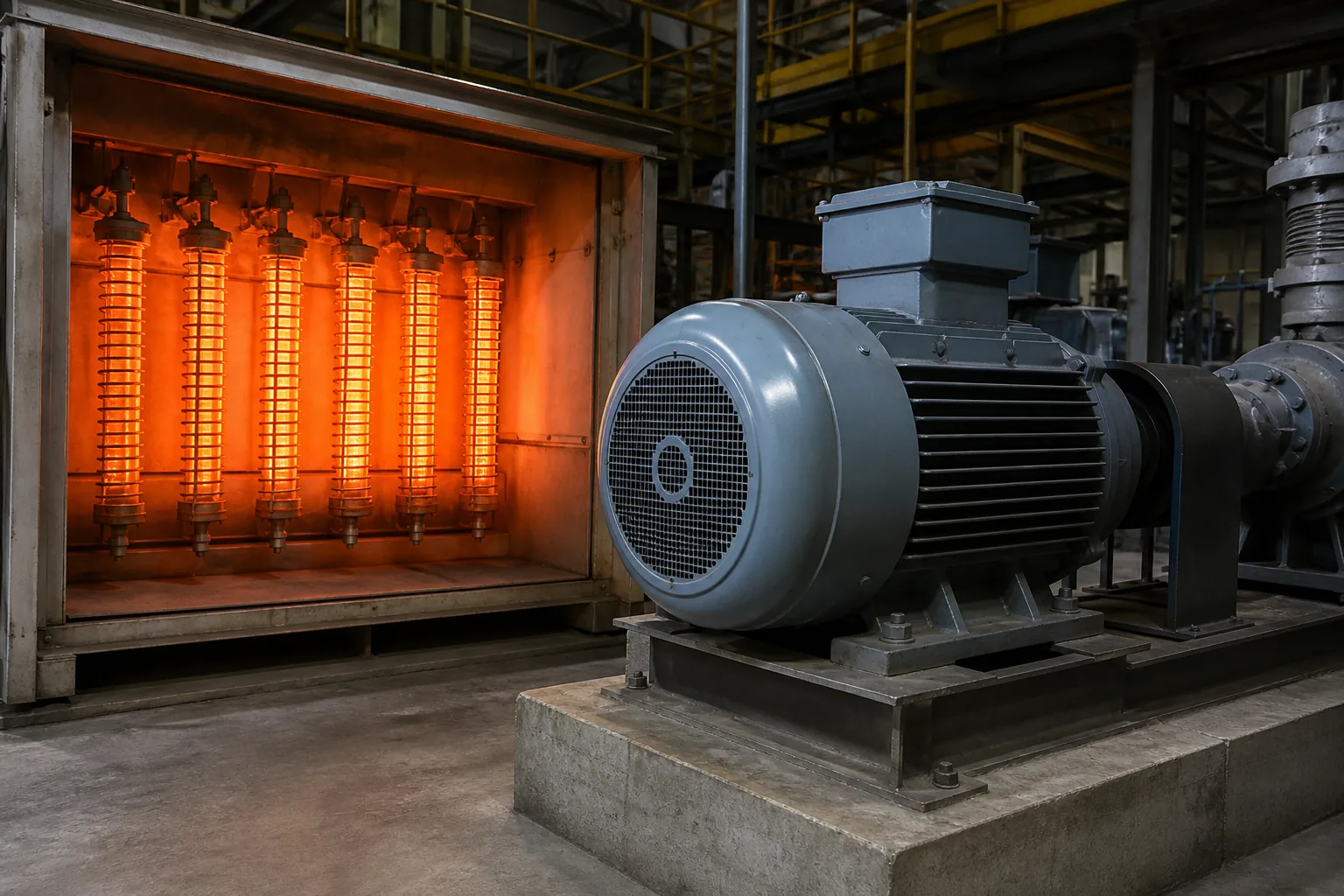
Heaters, lighting with a resistive character, and the mechanical output of a motor all draw on this column. Voltage and current stay in step on a purely resistive load, so instantaneous power does not reverse.
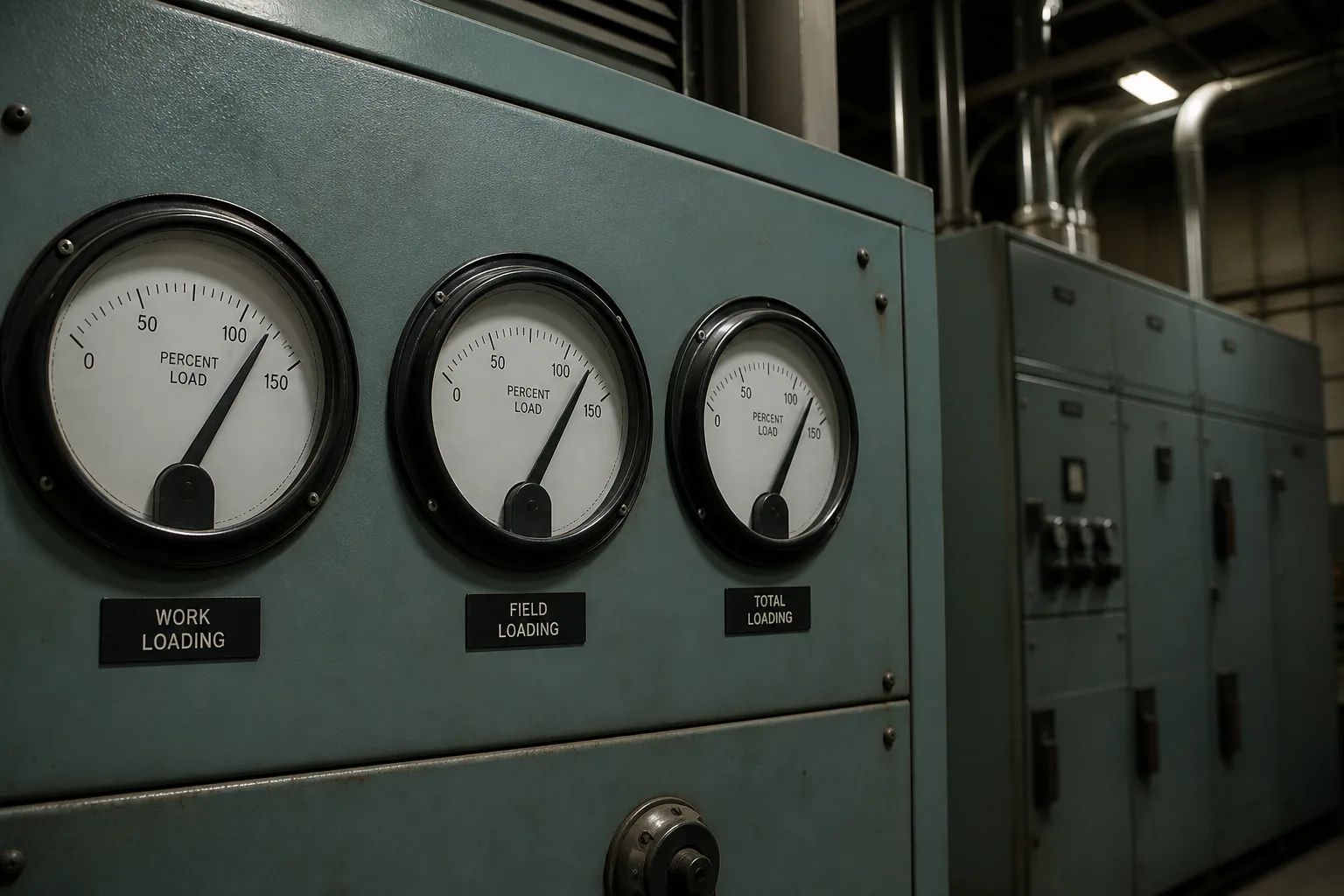
On the bill, treat the kW channel as “what the process used.” Energy charges usually start there, even when a utility later adds a reactive or demand rider. That kW column is the work story, not the field story.
Reactive power vs active power shows up cleanly on a screenshot: one number rises when the line is making product, the other can stay high when motors are simply excited.

What Reactive Power Does and Why Conductors Still Carry It
Reactive power is the oscillating energy stored in magnetic fields of inductors and motors, or in electric fields of capacitors. It does not add net work at the load over a full cycle, and it is reported in var or kvar.
If the load is purely reactive, voltage and current sit 90 degrees apart. Energy heads into the field for a quarter cycle and returns the next quarter.
Cables, bus, and transformer windings still carry the current for that exchange. Line resistance turns part of it into heat even when the ideal load itself consumes no net energy.
Warm feeders with a quiet kilowatt channel are common. Weak reactive support can also pull voltage down on a local bus, which is a grid concern as well as a plant concern.
Apparent Power, the Power Triangle, and Power Factor
Apparent power is the product of RMS voltage and RMS current. Engineers plot it as the hypotenuse of a triangle whose legs are active power and reactive power.
| Quantité | Usual symbol | Unit | What a plant reader should take from it |
|---|---|---|---|
| Active (real, true) power | P | W, kW | Net work |
| Puissance réactive | Q | var, kvar | Field exchange |
| Puissance apparente | S | VA, kVA | What the supply equipment must be able to carry |
Power factor is active power divided by apparent power. When the triangle is skinny, most of the kVA is useful work. When Q grows, the same kilowatts need more current.
The IEC adopted var as the reactive-power unit in 1930 so that this column would not be written as watts. Transformers, generators, and many UPS units are still nameplated in kVA for the same reason: heating follows current, not only kilowatts.
A short formula set is enough for this page: apparent power combines P and Q; power factor is P divided by S. Distortion on a VFD feeder is a separate measurement story.
Walk a feeder that serves one process heater and one large motor and the triangle becomes obvious. The heater fattens the watt leg. The motor adds a var leg even at light shaft load, so kVA rises faster than the production team expects.
AC Versus DC and Mix-ups With Active Versus Passive
Reactive power in this sense is an alternating-current story. Direct current has no repeating phase shift between voltage and current of the kind that stores and returns energy each cycle in L and C.
People still search “what is active vs passive power” after the same Google box. That pairing usually means active versus passive circuits, or active versus passive power-factor-correction hardware, not P versus Q.
If a datasheet says “active PFC,” it is talking about a switched front-end, not about the kilowatt channel on your plant meter. Keep the two vocabularies apart or a buying thread will talk past itself.
UK and many textbooks prefer “active power” where U.S. notes say “real” or “true.” They are the same P column.
A U.S. plant meter that prints kW is still showing that active-power channel.
Compensation Is Not the Same Decision as Harmonic Filtering
Reactive compensation changes Q. Harmonic filtering changes distorted current. Mixing those jobs is the usual expensive mistake on a mixed motor floor.
Displacement power factor on a line-started induction motor is mostly magnetizing vars. Switched capacitors have been the ordinary answer for that shape of lagging Q.
Many variable-frequency drives present a distortion-heavy current. Caps on that feeder can land on a resonance instead of “fixing PF.”
Du terrain : Plant threads still ask whether a mix of across-the-line motors and VFD motors can use capacitors instead of filters. One long-running Discussion Eng-Tips puts it bluntly: induction motors are a displacement-power-factor problem; many drives are a distortion-power-factor problem.
If the logging question is displacement versus distortion, use the existing displacement vs distortion power factor note rather than restating it here. If the question is how compensation equipment is grouped, use what reactive power compensation means.
When Capacitor Banks Fit and When an SVG Fits Better
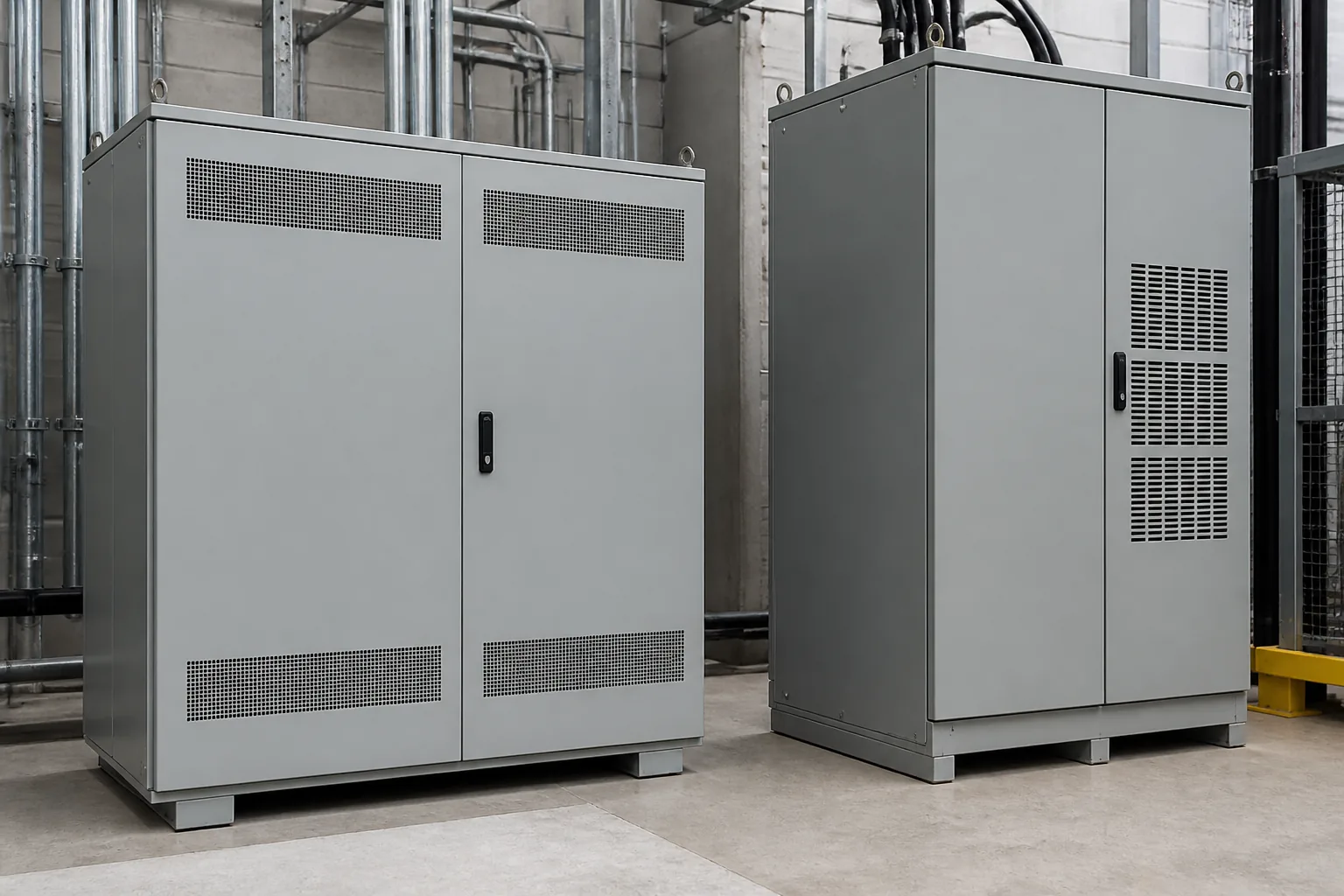
Capacitor banks inject a relatively fixed block of leading vars. They fit when lagging Q is large, fairly steady, and the harmonic environment has been checked.
A static var generator is a power-electronics source that can supply or absorb Q as the bus moves. It is the conversation when welders, cranes, or batch lines swing reactive demand faster than a contactor bank can track.
| Situation | Typical Q path | Pourquoi |
|---|---|---|
| Many line-started motors, stable load | Switched capacitors on the compensateur de puissance réactive family | Displacement Q, slow steps |
| Q that reverses or ramps with the process | SVG static var generators | Bidirectional, fast Q |
| Harmonic current on VFDs | Filter / APF path, not this page | Distortion, not magnetizing vars |
La Générateurs de variables statiques SVG page lists 230–690 V service, a response below 10 ms, a compensation factor above 95%, and efficiency above 97%. Those figures describe that product page; they are not a substitute for a site study.
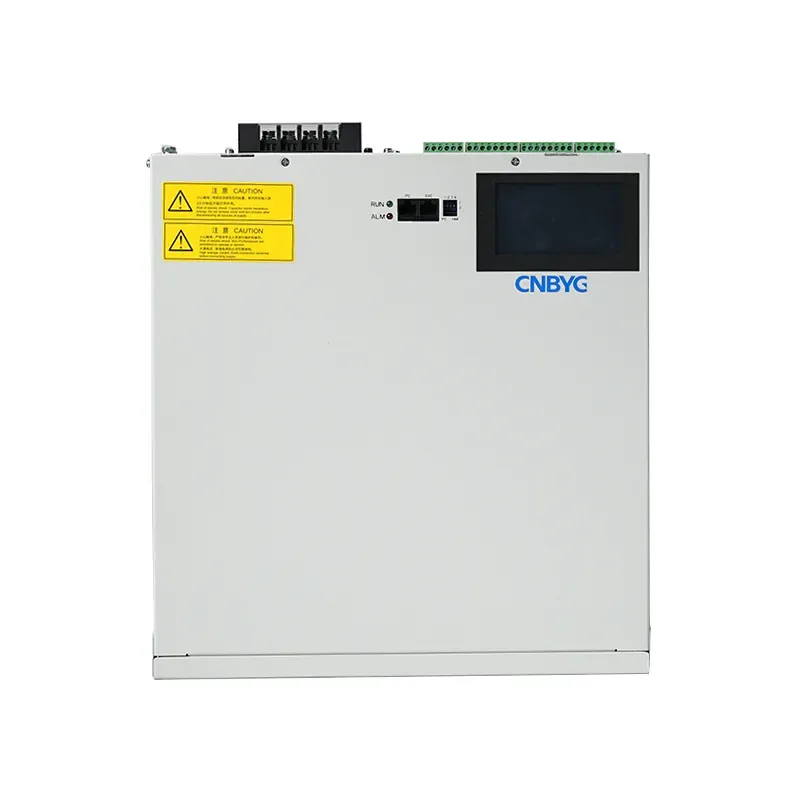
Use the hub when the next step is still “which Q hardware family.” Use the SVG page when the bus already looks like a moving reactive load. Neither page is a harmonic-filter datasheet.
Ask for a load profile before anyone sizes steps. A night-time leading bank on a quiet bus is a different problem from a daytime lagging mill, and the same catalog page can serve both only if the duty is actually known.
FAQ
What is an example of reactive power?
Magnetizing current in an induction motor is the usual plant example. The motor still needs kilowatts to turn the shaft; the vars keep the magnetic field up.
Shunt capacitors are the opposite example: they supply vars that cancel a lagging field.
What is the difference between true power and reactive power?
True power is another name for active or real power: the watts that do net work. Reactive power is the var exchange that averages to zero work at the load.
Both still produce current. Only the watt column shows up as useful energy.
Is reactive power only in AC?
The P-versus-Q split taught here is for alternating voltage and current with energy storage. DC circuits do not show that cyclic field exchange.
Some people loosely call any “non-watt” loading reactive. Keep the AC definition when you are reading a plant PF meter.
What is active vs passive power?
Google often pairs that phrase with electronics, not with plant meters. Active versus passive PFC is hardware architecture.
Active versus reactive power is P versus Q. Answer the meter question with watts and vars, not with “passive circuit.”
What is the difference between reactive power and apparent power?
Reactive power is one leg of the triangle. Apparent power is the whole hypotenuse: watts and vars combined as volt-amperes.
A transformer cares about apparent power because winding current follows kVA.
Why do utilities care about reactive power?
Extra current from Q heats lines and uses up feeder capacity. Voltage on a local bus also depends on reactive balance.
That is why a plant can see a PF rider even when kilowatt-hours look ordinary.