


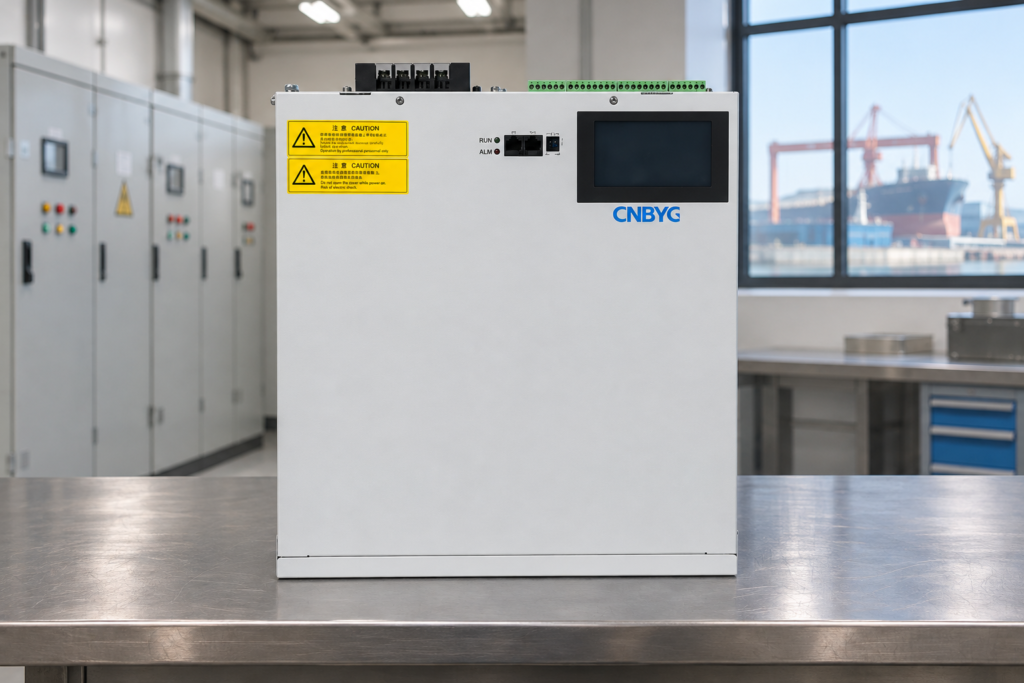
An active harmonic filter for a coastal site needs a corrosion review that reaches beyond the cabinet’s IP code. Define the actual exposure, request the material and coating details, and check whether any salt-mist evidence covers the equipment being supplied. A painted enclosure, an indoor location or a test duration alone cannot establish a service-life promise. The practical purchasing task is to identify what is supported, what remains uncertain and which environmental controls belong to the site owner before the AHF is ordered.
Separate the product, enclosure and building
Commencez par le CNBYG AHF product information and the exact quoted configuration. The public page describes wall-mounted and rack-mounted equipment and lists IP20 in its specification tables. Do not interpret that information as a coastal corrosion qualification or permission to expose the product to salt spray. Ask for model-specific environmental limits and the proposed enclosure arrangement.
There may be three boundaries: the AHF unit, an enclosing assembly and the electrical room. Identify the party responsible for each. A corrosion-resistant outer shell does not, by itself, explain what reaches internal connections through the cooling-air path. A protected room also needs an agreed description of its environmental controls and maintenance responsibilities.
Keep the electrical purpose clear. The AHF working-principle guide explains harmonic compensation. This environmental review concerns preserving the equipment’s installation conditions; it does not change the harmonic study or prove the output performance of a coastal installation.
Describe the site exposure with evidence
Provide the location, room type, relationship to open doors and ventilation intakes, nearby cleaning activities and available operating history. Include existing observations such as deposits or corrosion on surrounding equipment, with dates and photographs. Distinguish observations from an engineer’s diagnosis. A white deposit should not be labelled sea salt solely from its appearance.
Avoid relying on distance from the shoreline as the only selection input. It is useful context, but it does not describe building leakage, air handling, prevailing exposure or local practices. If the site has an environmental assessment, supply its method and scope. If it does not, record the gap and ask the responsible specialist what investigation is appropriate.
Un NTT EAST field investigation of coastal equipment rooms documented salt contamination and corrosion inside telecommunications facilities. That is evidence that an indoor boundary may still require investigation. It is not an AHF test, a universal coastal exposure model or a set of acceptance limits for your installation.
Ask what the coating proposal actually includes
Request the enclosure substrate, surface preparation, coating system and intended environmental application. Ask which parts are included and excluded: exterior panels, edges, cutouts, mounting hardware, hinges and internal supports may have different arrangements. Keep the supplier’s stated specification with the quotation so later substitutions can be identified.
The expression anti-corrosion treatment is too broad for a purchase decision. Ask for a controlled document describing the proposed construction and repair process. Where film thickness, preparation grades or inspection methods are specified, they should come from the approved system and responsible specialists. Do not invent a target value or transfer one from an unrelated cabinet.
Consider the practical consequences of installation changes. A field-cut cable opening can expose a new edge; a replacement fastener may introduce a different material combination; transport damage can interrupt a coating. Ask how these conditions are assessed and repaired without interfering with electrical bonding, sealing or cooling requirements.
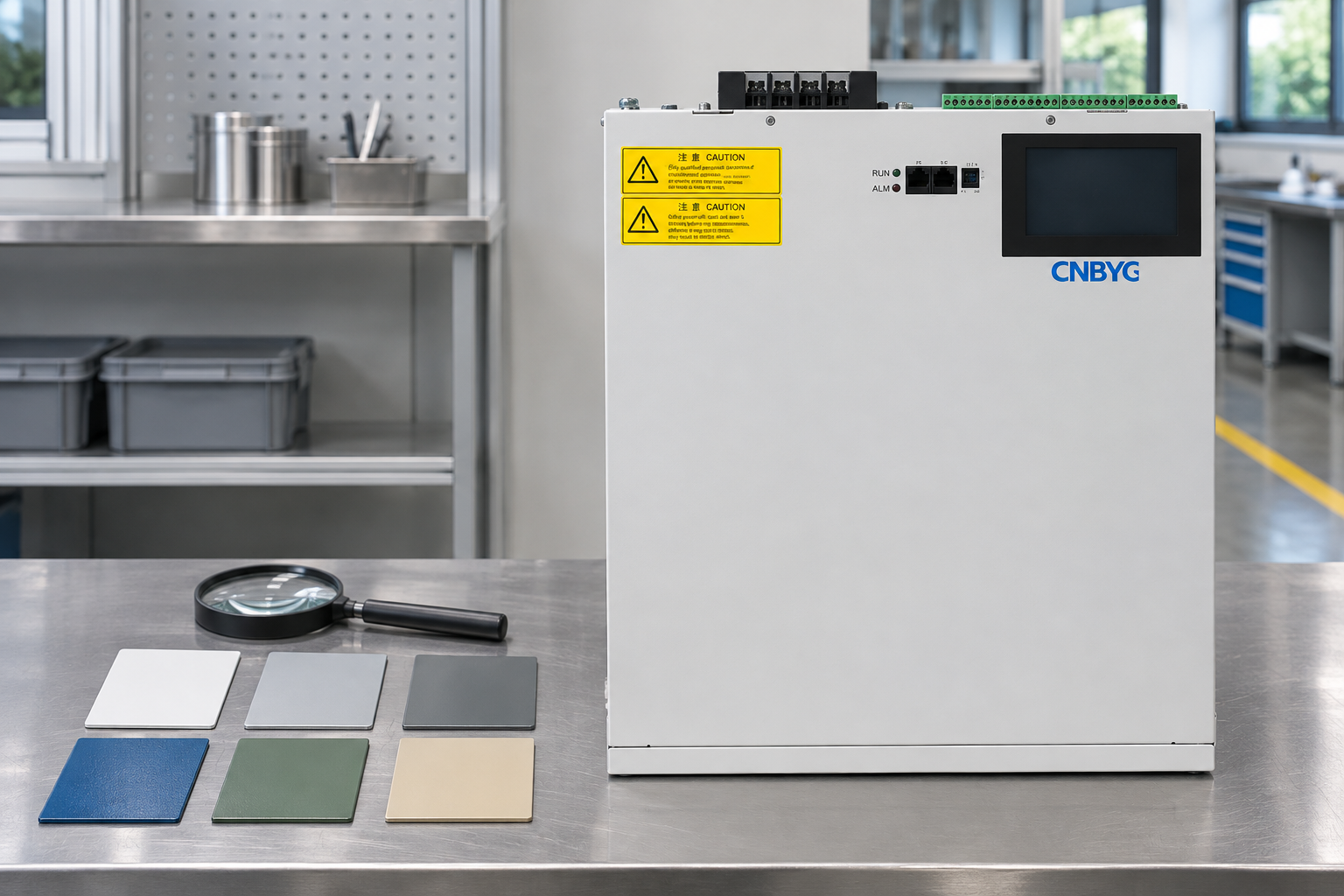

Read salt-mist evidence by scope, not by headline
The official scope of IEC 60068-2-52 concerns cyclic salt-mist testing of components or equipment intended for salt-laden atmospheres. A relevant report should therefore be read as evidence for an identified specimen under an identified method. The standard’s public description does not certify a CNBYG product or define this project’s acceptance criteria.
Ask for specimen identification, preparation, test method, exposure sequence, assessment criteria and recorded results. Establish whether the specimen was a coated coupon, an enclosure part or an assembled unit. A coupon can provide information about a coating arrangement, but it does not show how every joint, opening or installed component behaves.
Do not compare two offers only by the number of test hours. Different methods, specimens and acceptance criteria can make those numbers unsuitable for direct comparison. Request an engineering explanation of the relevance to the proposed environment. If a supplier claims a particular outdoor life, ask for the separate basis and contractual limits rather than converting a laboratory duration into years yourself.
Use a procurement evidence matrix
This is a proposed review matrix for discussion with the supplier and site engineer. It contains no invented corrosion limits or product certifications.
| Question | Preuves utiles | Decision or follow-up |
|---|---|---|
| What exposure is expected? | Site description, room arrangement and documented observations | Resolve missing exposure inputs before selecting protection |
| What construction is offered? | Material, preparation, coating and hardware specification | Tie the proposal to the quoted model and enclosure |
| What was tested? | Specimen identity, method, criteria and results | Separate coupon evidence from complete-equipment evidence |
| Are openings addressed? | Cooling, cable-entry and joint details | Assign responsibility for the installed environmental boundary |
| How are defects repaired? | Approved handling and coating-repair instructions | cURL Too many subrequests by single Worker invocation. To configure this limit, refer to https://developers.cloudflare.com/workers/wrangler/configuration/#limits |
| cURL Too many subrequests by single Worker invocation. To configure this limit, refer to https://developers.cloudflare.com/workers/wrangler/configuration/#limits | cURL Too many subrequests by single Worker invocation. To configure this limit, refer to https://developers.cloudflare.com/workers/wrangler/configuration/#limits | cURL Too many subrequests by single Worker invocation. To configure this limit, refer to https://developers.cloudflare.com/workers/wrangler/configuration/#limits |
| cURL Too many subrequests by single Worker invocation. To configure this limit, refer to https://developers.cloudflare.com/workers/wrangler/configuration/#limits | cURL Too many subrequests by single Worker invocation. To configure this limit, refer to https://developers.cloudflare.com/workers/wrangler/configuration/#limits | cURL Too many subrequests by single Worker invocation. To configure this limit, refer to https://developers.cloudflare.com/workers/wrangler/configuration/#limits |
cURL Too many subrequests by single Worker invocation. To configure this limit, refer to https://developers.cloudflare.com/workers/wrangler/configuration/#limits.
cURL Too many subrequests by single Worker invocation. To configure this limit, refer to https://developers.cloudflare.com/workers/wrangler/configuration/#limits
The environmental boundary must coexist with the AHF’s cooling requirements. Review room air, cabinet openings and any proposed filtration or heat-removal arrangement together. Ask the designer which conditions the quoted equipment requires and how the installation will maintain them during operation and routine maintenance.
Do not add a dense filter, block a vent or coat internal components on your own initiative. These actions may affect temperature, insulation, electrical connections or serviceability. A mitigation measure needs written approval for the specific equipment and a corresponding inspection and replacement plan. An attractive enclosure drawing cannot replace that coordination.
Utilisez le AHF cabinet ventilation guide to organise the thermal questions. If a proposed corrosion measure changes airflow, return it to that review before purchase release. Avoid accepting separate answers from different parties that depend on mutually incompatible arrangements.
Inspect receipt and installation condition
On receipt, preserve identification and photograph visible coating damage, distorted joints, missing closures or contaminated packaging. Record where the equipment was stored and any exposure during unloading. Keep findings factual. A photograph can establish visible damage, but it cannot establish coating chemistry or internal electrical condition.
Have qualified personnel decide whether a discrepancy requires further inspection, approved repair or replacement. Do not energize equipment to see whether a contaminated unit still works. Do not wash electrical assemblies or apply an unapproved coating as a quick cure. The supplier’s instructions and site safe-work procedures govern the intervention.
La Liste de vérification pour l’installation AHF provides the broader coordination framework. Add the environmental conditions to that handover record, including storage, enclosure completion, air-handling readiness and any unresolved defects. The installation should be released against the actual arrangement, not the original clean-room assumption after site conditions have changed.
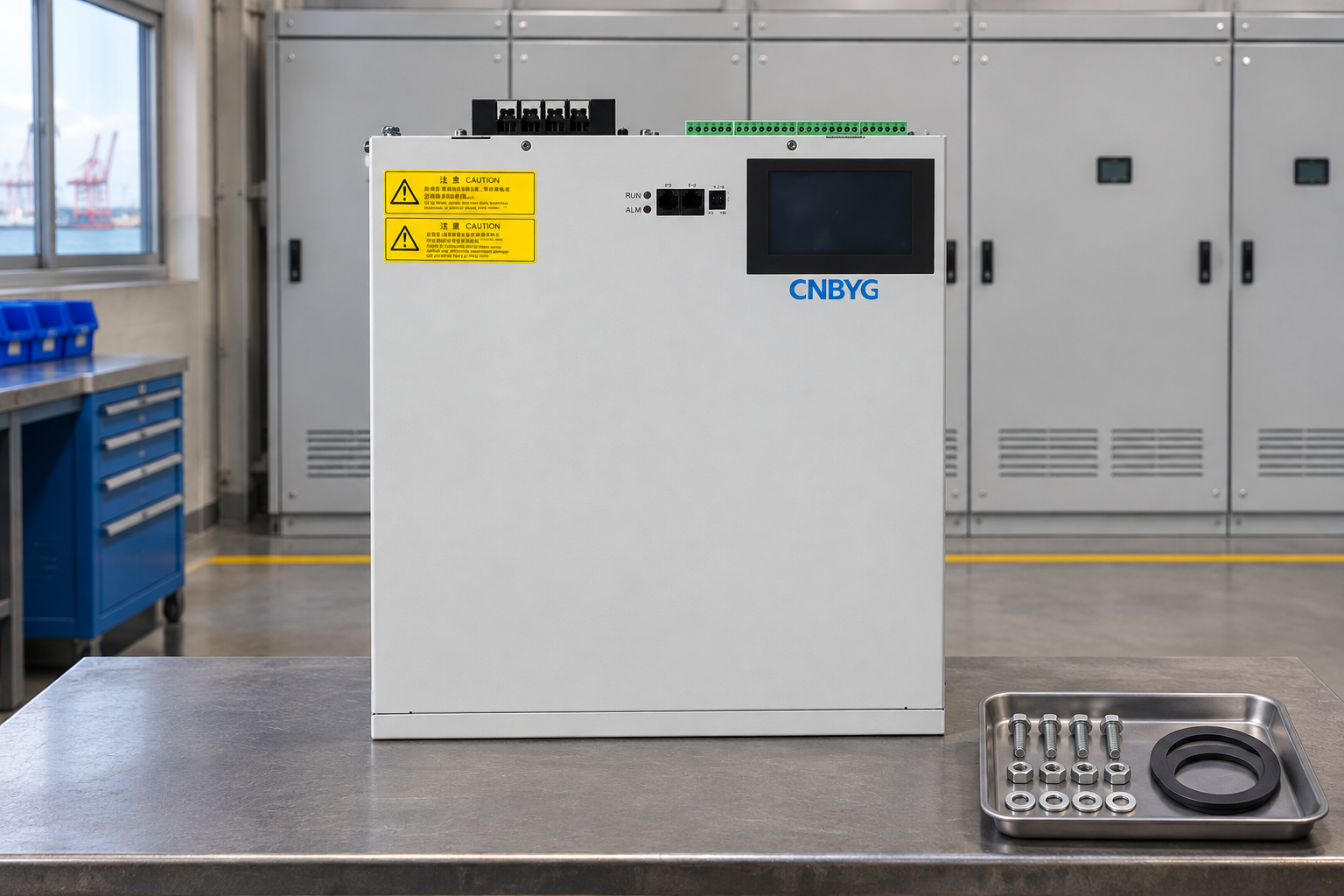
Make maintenance findings comparable over time
Create a photographic baseline of accessible external surfaces and the surrounding room at handover. Choose repeatable locations and preserve the date and equipment identity. This helps distinguish a new defect from a mark already accepted at receiving. Access to internal electrical areas requires the appropriate isolation and qualified inspection process.
Record deposit observations, coating defects, seal condition and relevant room-control changes according to the approved maintenance plan. If repeated deterioration appears, investigate the exposure and configuration rather than repeatedly touching up the same area without review. Escalate evidence to the supplier and responsible engineer, keeping the original observations with the repair history.
Set review intervals from the equipment instructions, site assessment and observed conditions. This article does not prescribe a universal coastal maintenance frequency. The useful outcome is a traceable decision about the required protection, the conditions maintained by the owner and the evidence supporting continued operation.
Understand the corrosion mechanism
The following Khan Academy India English lesson explains corrosion at an introductory chemistry level. It helps explain why moisture and exposure matter, but it does not demonstrate the durability of an AHF or replace a project-specific materials assessment.

Foire aux questions
Does an IP rating prove coastal corrosion resistance?
No. Review ingress protection and corrosion resistance as separate requirements. Request the proposed materials, coating details and relevant environmental evidence, together with the installation conditions for the exact AHF and enclosure arrangement.
Is an indoor electrical room automatically free from salt exposure?
Do not assume so. Review the room’s actual ventilation, access and condition history. If there is a concern about contamination, ask the responsible specialist to define a suitable investigation rather than diagnosing deposits from appearance alone.
Can salt-mist test hours be converted directly into service years?
Do not make that conversion from the duration alone. Establish the test method, specimen, criteria and supplier’s interpretation. A site-life claim needs a separate documented basis relevant to the intended environment.
What should I send with a coastal AHF enquiry?
Send the electrical study inputs, location and room description, exposure observations, proposed enclosure and cooling arrangement, required environmental evidence and maintenance responsibilities. Ask the supplier to identify exclusions and unresolved conditions in writing.