


Les commutations intermittentes et les observations d'harmoniques ne deviennent utiles que lorsqu'elles peuvent être rattachées à la même partie du réseau électrique. Un journal de bord intelligent des commutateurs combinés associé à un FAP doit donc préserver l'action du régulateur, l'état des étages, la limite de mesure et les conditions de fonctionnement plutôt que d'être traité comme un résultat en soi.
Pour le contexte de planification, commencez par guides de compensation de l'énergie réactive. Cette page décrit une méthode d'examen des dossiers ; elle ne pose pas de diagnostic sur une installation, ne confirme pas d'interaction entre appareils et ne promet aucun résultat en matière de qualité de l'énergie.
Réponse directe
Conservez la commande du commutateur combiné, l'état observé de l'étage de condensateurs, la limite électrique et le contexte de fonctionnement harmonique dans un seul enregistrement daté. Utilisez cet enregistrement pour décider ce qui doit être examiné ; ne l'utilisez pas comme preuve qu'un APF a causé, supprimé ou empêché un événement.
Partie 1. Définir la question d'évaluation avant de lire le journal
Commencez par une question vérifiable, par exemple si un étage de condensateur nommé a été commandé dans une condition de fonctionnement particulière ou si une séquence a changé après la révision d'un paramètre de régulateur. Une demande vague de “ vérifier le disjoncteur et le FPA ” ne donne au réviseur aucun moyen de déterminer quels signaux, quelle fenêtre temporelle ou quelle comparaison sont pertinents.
Rédigez la question avec un lieu et une base temporelle. Par exemple, un projet peut vouloir comparer l'enregistrement d'un départ au cours d'un état de processus répété, ou il peut vouloir vérifier si une transition d'étape commandée a coïncidé avec un changement de source. La question n'est pas un critère d'acceptation APF à moins qu'une méthode d'acceptation n'ait été convenue séparément.
| Question de révision | Limite d'enregistrement | Des preuves qui y répondent |
|---|---|---|
| Une étape nommée a-t-elle reçu une commande ? | Sortie du contrôleur et l'étape identifiée | Événement de commande, indication d'état et référence d'horloge |
| Une transition s'est-elle produite dans un état de charge comparable ? | Départ ou barre sélectionné(e) | Journal d'exploitation, capture électrique et note de topologie |
| La série de dossiers a-t-elle changé après une révision des paramètres ? | La portée de contrôle du même nom | Date de révision, anciens et nouveaux paramètres, et groupes d'événements distincts |
Le publié notions de base des commutateurs combinés intelligents cet article explique la catégorie de composants. Cette page intervient plus tard dans le parcours de décision : elle organise les preuves autour d'une question concrète sur le système.
Partie 2. Délimiter la frontière électrique et les équipements concernés
Contrairement à un écran de contrôleur, une limite d'enregistrement indique ce que l'observation comprend. Indiquez l'emplacement du compteur, l'orientation du TC, la référence de tension, le nom du bus ou du départ, le point de connexion de l'étage de condensateurs, le point de connexion de l'APF et tout agencement de réacteur ou de dérivation sur le schéma unifilaire. Une commande d'étage à un point ne peut pas décrire automatiquement le courant ou la tension à un autre point.
Nommez les rôles des appareils sans supposer qu'ils se contrôlent mutuellement. Le commutateur composé peut faire partie d'une séquence d'étages de condensateurs, tandis que l'APF est un élément distinct dans la portée du projet. Leurs horodatages peuvent être utiles ensemble, mais un horodatage seul n'établit pas de relation de cause à effet.
| Élément à identifier | Pourquoi l'enregistrement en a besoin | Ce qu'il ne faut pas déduire |
|---|---|---|
| Compteur, transformateur de courant et référence de tension | Affiche les grandeurs électriques incluses dans la capture | Que l'autre départ a la même composition de charge |
| Point de raccordement de l'étage capacitif | Définit l'étape en cours d'examen | Que chaque étage de condensateur est identique |
| Point de connexion et source d'état APF | Garde les enregistrements APF traçables | Cet état APF prouve une cause de commutation |
| Agencement de réacteur, de dérivation ou de source | Divulgue le contexte du circuit | que la topologie est restée inchangée entre les événements |
Important : Les harmoniques de l'alimentation peuvent augmenter le courant traversant les condensateurs. Le contexte harmonique et toute disposition de réacteur doivent donc figurer à côté d'un historique de commutation, plutôt que d'être omis d'une exportation de contrôleur.Guide de l'installation électrique Schneider Electric)
Partie 3. Conserver la commande, l'état de l'étape et l'horloge dans une seule chronologie
Si une étape est commandée, conservez à la fois la commande et l'indication disponible de ce qui s'est produit ensuite. La logique du contrôleur, l'état de retour, l'état d'alarme et un export d'événements électriques sont des enregistrements différents ; aucun ne doit silencieusement se substituer à un autre. Une chronologie rend ces distinctions visibles pour le prochain relecteur.
Placez la source d'horloge à côté de chaque exportation. Si les horloges de l'appareil ne sont pas synchronisées, divulguez l'incertitude connue au lieu de forcer les enregistrements dans une fausse séquence. Notez également le décalage, les conditions de processus, les entraînements actifs, les redresseurs, les charges d'onduleur, le transfert de source, la maintenance et toute action de commande manuelle susceptible de rendre les événements différents.
| Champ de chronologie | Conserver avec l'événement | Valeur de l'avis |
|---|---|---|
| Registre des commandes | Stage identifier, command direction, and timestamp | Separates a requested action from an observed state |
| State indication | Available feedback or alarm state and timestamp | Shows what the controller reported afterward |
| Electrical capture | Meter configuration and capture window | Connects the event to a defined measurement method |
| Operating note | Process, major loads, and topology state | Prevents calendar time from becoming the only comparison rule |
Intelligent capacitor-bank control references show why controller information and measured-system information need to remain together. That context is not evidence that a particular site uses the same controller method.
Partie 4. Comparer les registres de commutation avec le contexte de fonctionnement harmonique
Compare records by matched operating state rather than by two convenient dates. Group captures by similar process condition, supply arrangement, active nonlinear loads, capacitor-stage configuration, and meter setup. An apparent change can otherwise describe a different operating state instead of a change associated with switching.
Harmonic context belongs in the comparison even when the article is about a switch. The Schneider guide explains that harmonics can elevate capacitor current; its advice is system dependent, so this article does not assign a reactor, tuning point, or equipment rating. The useful action here is to disclose what the records show and what was not measured.
| Comparison check | Match or disclose | Decision that remains open |
|---|---|---|
| Measurement arrangement | Boundary, CTs, voltage reference, aggregation, and time basis | Whether the two periods are technically comparable |
| Operating condition | Process state, active load groups, source configuration | Whether a load change explains the observation |
| Harmonic evidence | Export type, event window, and relevant topology | Whether a mitigation study is needed |
| Switching configuration | Stage identifier, controller revision, bypass or reactor note | Whether product selection needs more project inputs |
For a complementary boundary discussion, see capacitor-switching resonance context. A resonance investigation needs its own engineering method and should not be collapsed into an ordinary log review.
Partie 5. Garder les preuves de l'APF séparées des preuves de l'étage de condensateurs
Switching chronology and APF evidence answer different questions. A stage command can document sequence and context; APF records, if available, should be labeled with their own objective, connection point, measurement setup, and acceptance method. Combining the two into a single “before and after” assertion can create a result claim without a controlled comparison.
La APF and capacitor coordination guide provides related planning context. It does not turn one logged sequence into a proof of harmonic mitigation, power-factor outcome, equipment compatibility, or plant acceptance.
Use separate labels in every report:
- Observed record: what was commanded, measured, or indicated at a named time and boundary.
- Working hypothesis: a question for follow-up, supported by comparable records rather than a single event.
- Project decision: a decision that requires drawings, site conditions, product documentation, protection review, and agreed acceptance criteria.
Un AHF product context page can be relevant once a harmonic-current objective is defined. It should not be selected from a compound-switch log alone.
Partie 6. Établir un dossier de coordination pour l'examen du produit
Package original exports with enough context for a reviewer to reconstruct the question. For an RFQ or product review, the package should show the relationship between devices and records without presenting a site-specific conclusion that the evidence does not support.
| Send for review | What the reviewer can establish | Common gap to avoid |
|---|---|---|
| One-line diagram and nominal system description | Electrical boundary and device locations | Calling a local meter a whole-system record |
| APF and capacitor-stage locations | Which equipment is in scope | Assuming physical proximity proves coordination |
| CT and voltage-reference position | Measurement inclusion and polarity context | Exporting data without the measurement setup |
| Command, state, and alarm exports | Sequence seen by the controller | Treating a command as confirmed physical operation |
| Harmonic records and operating log | Conditions surrounding the observation | Comparing unlike shifts or load states |
| Reactor, protection, installation, and acceptance notes | Project constraints and review boundary | Requesting a product recommendation with no acceptance method |
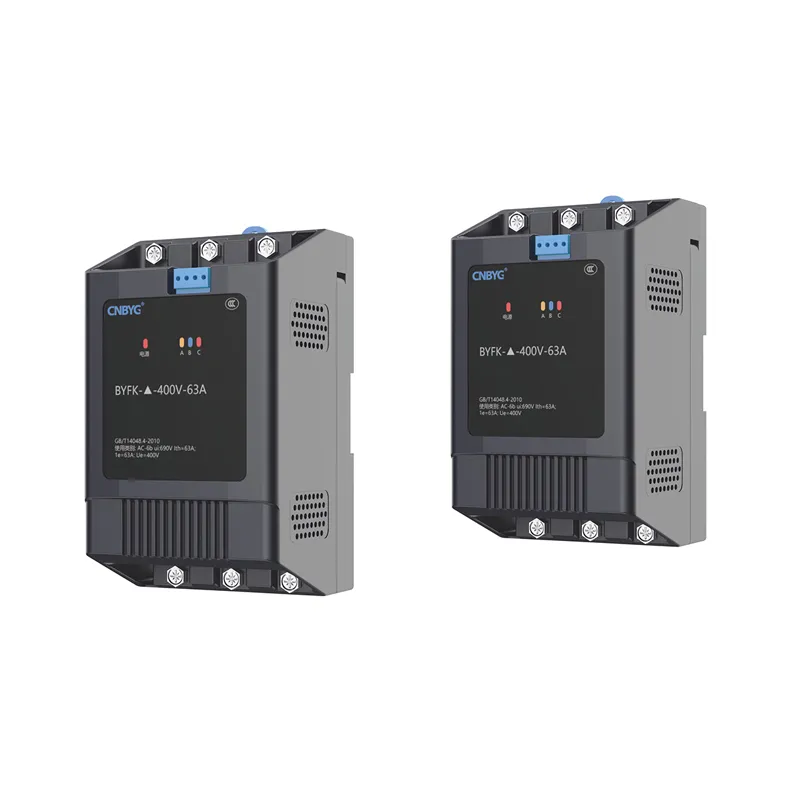
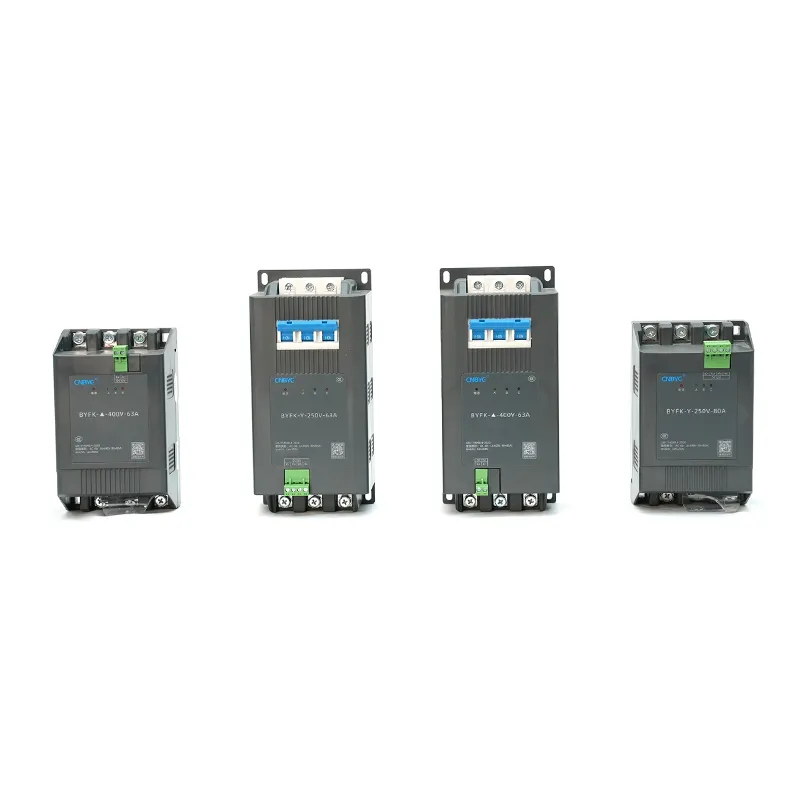
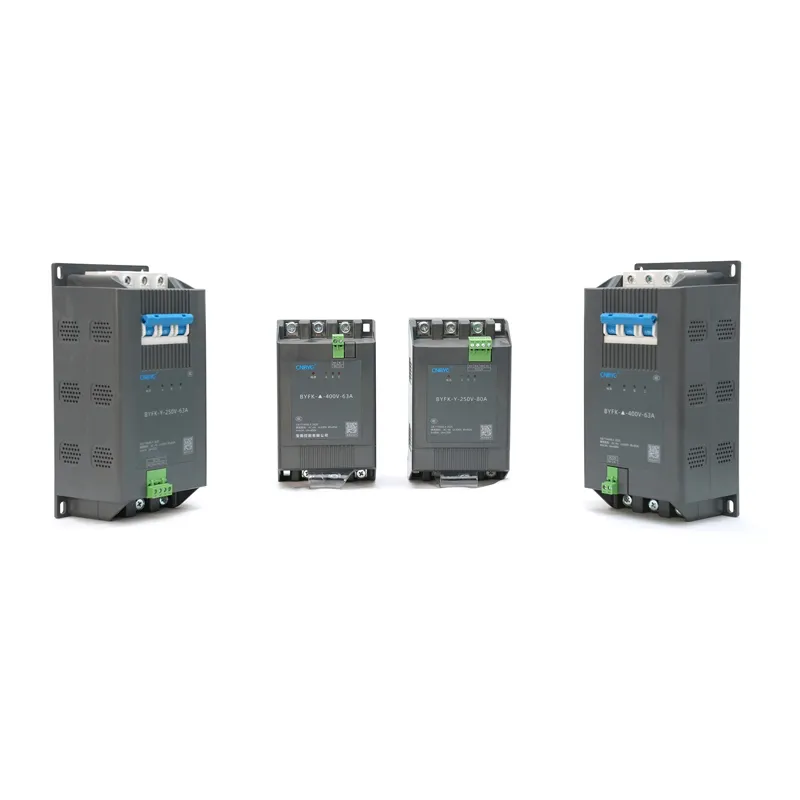
When the record package defines the problem, use the BYFK composite-switch product context as a product-line starting point. Send a coordination record package when the exact circuit, records, and project constraints are ready for review.
Foire aux questions
What is an intelligent compound switch record?
It is a dated record of a defined switching-control event together with the electrical location, controller command, available stage state, and operating context. It is more useful than a screen image because another reviewer can see what the record includes.
Does a command timestamp prove that a capacitor stage operated?
No. A command identifies what the controller requested. Keep available feedback, alarm information, and a separately documented electrical capture so the report distinguishes requested action from observed evidence.
Why should APF and compound-switch records be kept separately?
They may be reviewed together, but they answer different questions. A switching sequence is not a controlled APF performance comparison and cannot establish mitigation, compatibility, or an acceptance result on its own.
What harmonic information belongs with a switching log?
Retain the measurement boundary, meter setup, event window, operating state, and the circuit arrangement known at the time, including any reactor or bypass note. This lets a reviewer see whether unlike conditions are being compared.
Can a logged event identify the cause of resonance?
No. It can identify an observation and preserve the conditions around it. A resonance or root-cause conclusion needs an appropriate study and project-specific electrical review.
What should be sent for a compound-switch product review?
Provide the one-line diagram, nominal system details, stage and APF locations, measurement setup, controller exports, event times, operating log, topology notes, protection information, installation constraints, and the proposed acceptance scope.