Comment lire les harmoniques d'un variateur de fréquence de raffineur dans une papeterie
A refiner drive can move from start to no-load, production, grade change and bypass in one operating day. Those states affect both process power and the electrical record. A paper mill therefore needs two linked views: what the refiner is doing mechanically, and what the feeder and mill bus are seeing electrically.
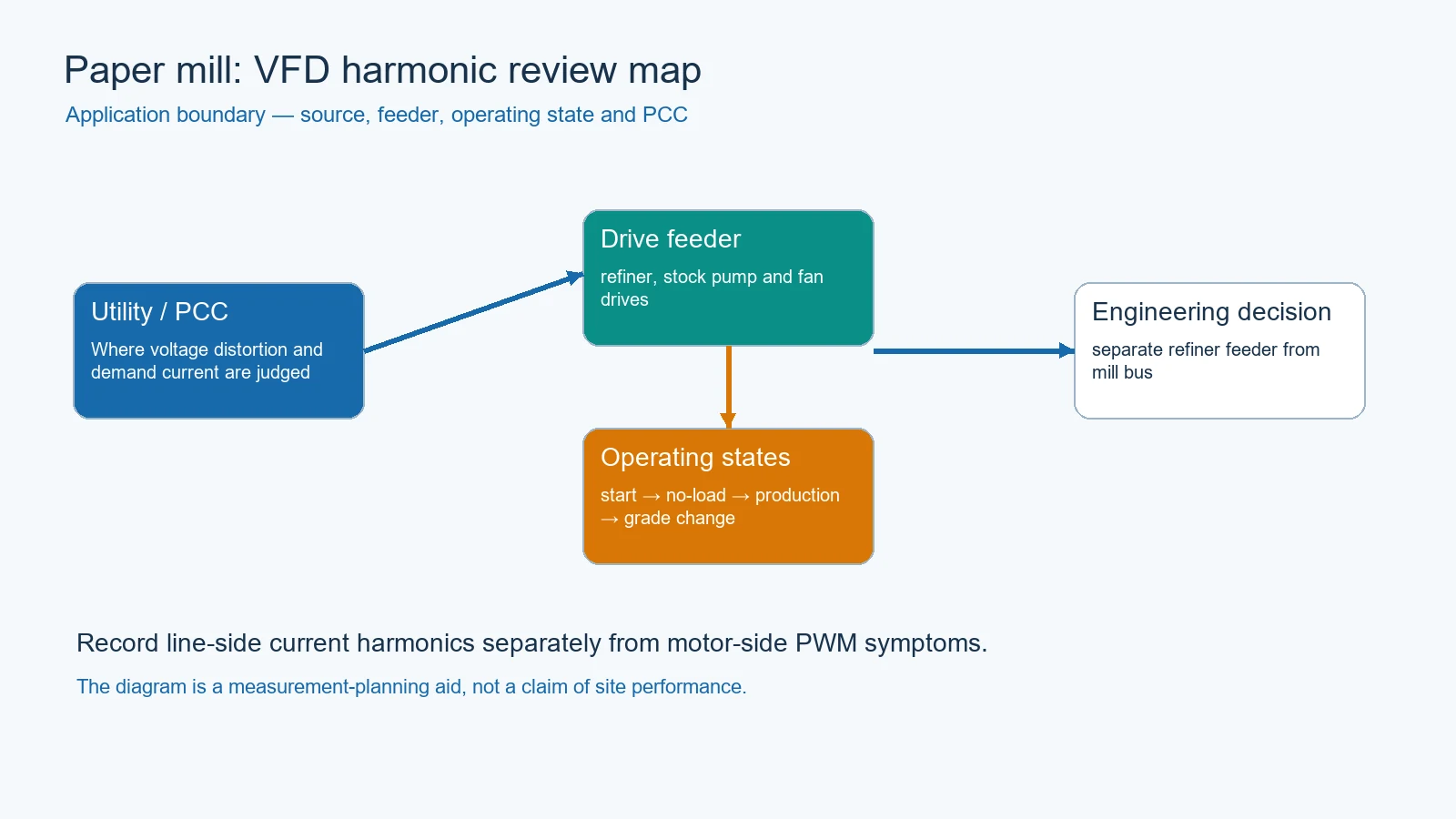
Name the refiner states before opening the spectrum
A useful state set is start, no-load, production, grade change, bypass and stop. Add the refiner plate setting, hydraulic flow or stock recipe fields that operators already trust. TAPPI’s refining paper emphasizes that no-load and process energy should be measured around the actual operating change; that logic also helps keep a harmonic review tied to a real process event.
Do not reuse a case-study energy percentage as a forecast for another mill. The value of the case study is the measurement discipline: compare like-for-like conditions and record what changed.
Measure the refiner feeder and the mill bus
At the refiner feeder, capture phase current, voltage, harmonic spectrum, demand current, power factor and the state tag. At the mill bus or PCC, use the same clock and window. A large refiner can be electrically dominant at one state and almost invisible at another.
| Enregistrement | Pourquoi c'est important | Common misread |
|---|---|---|
| Refiner feeder spectrum | Finds the local drive signature | Treating it as the PCC result |
| Mill bus / PCC spectrum | Shows combined upstream impact | Blaming the refiner without feeder proof |
| kW and process state | Connects electrical data to production | Treating every kW change as a harmonic event |
| Bypass and grade log | Explains discontinuities | Comparing different recipes as if identical |
Use topology and source conditions together
Federal Pacific’s design paper compares line reactors, DC-link chokes, multipulse and active-front-end arrangements under source-impedance, voltage-imbalance and background-distortion conditions. Those conditions should be requested from the project record; they should not be guessed from a refiner nameplate.
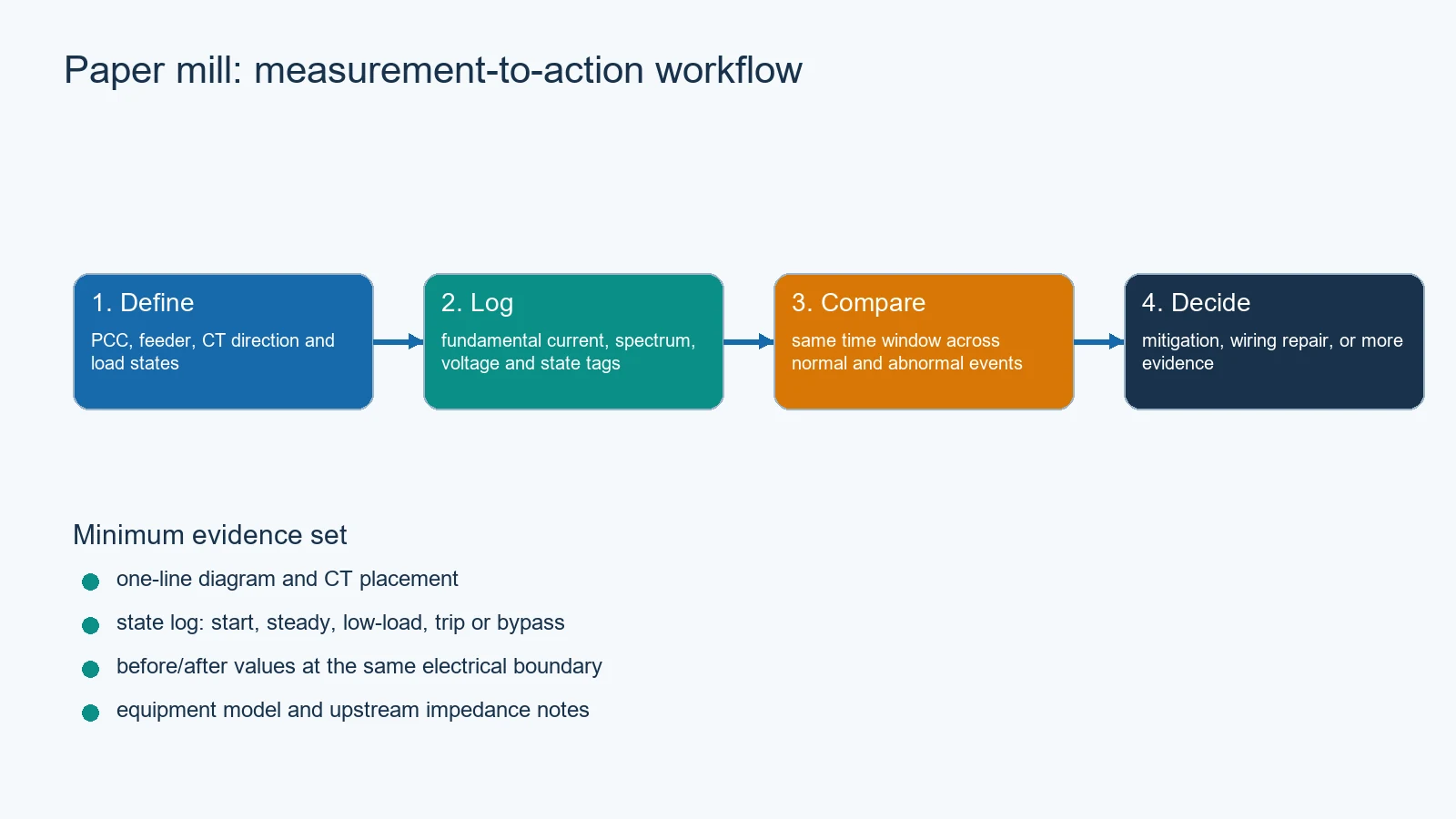
A decision sequence for the mill team
- Confirm CT direction, meter bandwidth and the electrical boundary.
- Capture one complete refiner cycle and at least one grade change.
- Compare feeder and PCC spectra with process power and bypass status.
- Check whether the symptom is line-side distortion, voltage event, or motor-side PWM.
- Shortlist mitigation only after source impedance, grouping, space and maintenance constraints are recorded.
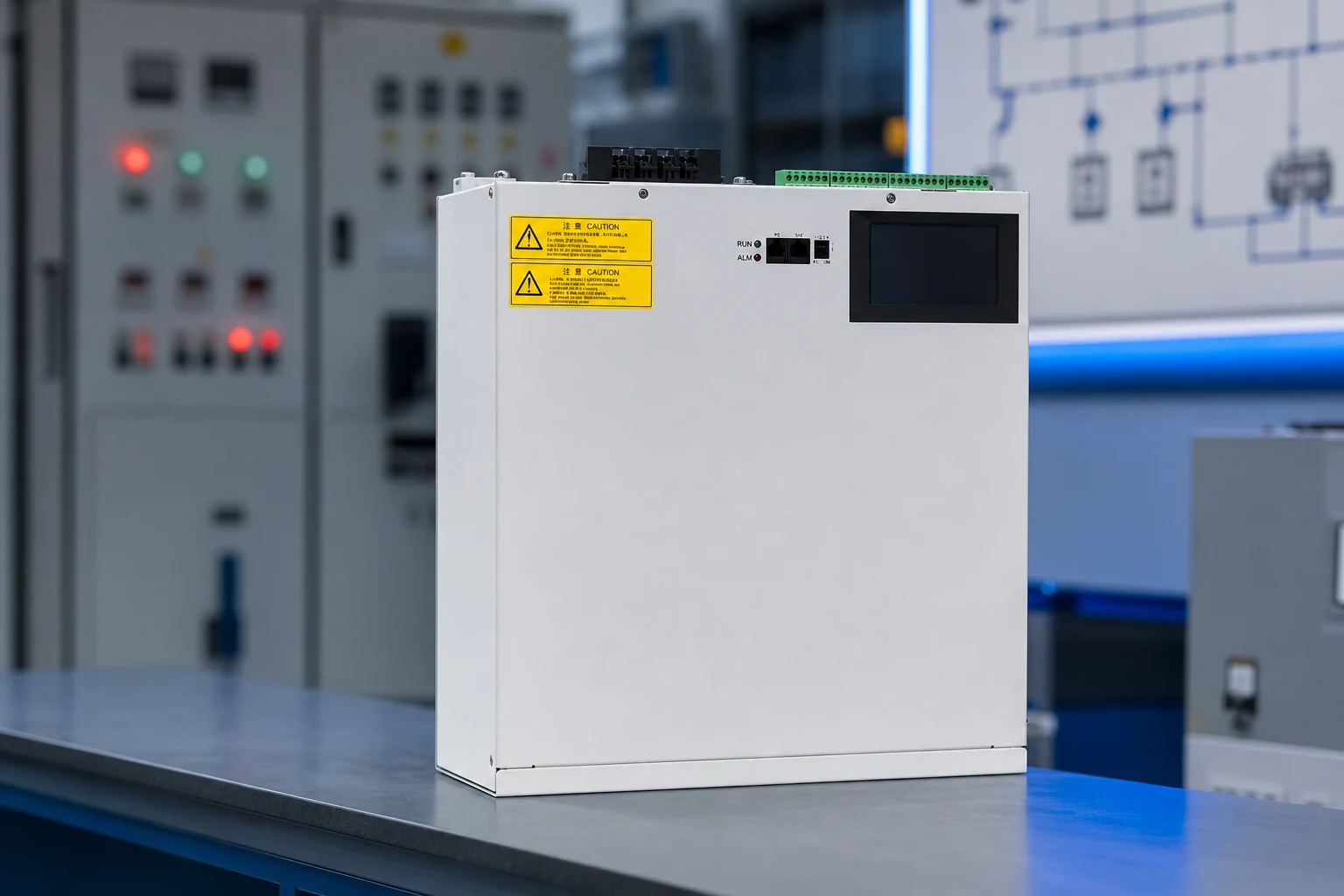
An AHF path only after refiner-feeder evidence
La CNBYG AHF/APF path is relevant when measured line-side current distortion remains a plant concern after the feeder boundary and drive topology are known. Ask for a model datasheet, CT wiring, overload/thermal limits, bypass behavior and acceptance method. This article does not assert that CNBYG supports a particular refiner or that a generic APF will achieve a project target.
For cluster context, see the Power Quality System pillar, industrial VFD/APF selection article et power-quality metering guide.