AHF Storage Condensation Inspection: Release Before Energization
Sebuah AHF temporary storage condensation inspection should establish whether the delivered filter has remained protected, whether a temperature transition could have introduced moisture, and who can authorize the next installation step. Keep equipment disconnected while a qualified person resolves suspected internal moisture or storage damage. A dry outer panel alone does not establish that the complete assembly is ready for energization. Obtain the instructions for the exact supplied model instead of choosing a universal waiting time from another electrical product.
This guide helps receiving teams, electrical contractors and project buyers prepare a traceable release after short-term site storage. It concerns condition and responsibility, rather than harmonic-performance acceptance or a generic capacitor drying procedure.
Start with the delivered assembly and its storage history
A purchase description such as active harmonic filter can refer to an individual module, a panel-mounted assembly or a complete cabinet supplied by an integrator. Record which item is actually on site. A module manufacturer’s instructions may not cover the enclosure, auxiliary components and packaging selected by another supplier. Ask the party responsible for the delivered assembly to identify the applicable storage documents and their revision.
Match the shipping label, model designation and serial number to the delivery record. Record when the consignment arrived, where it was placed, when its packaging was opened and whether it moved between locations. Missing information should remain marked as unknown. Reconstructing a confident history from an undated photograph can conceal the exposure that matters most.
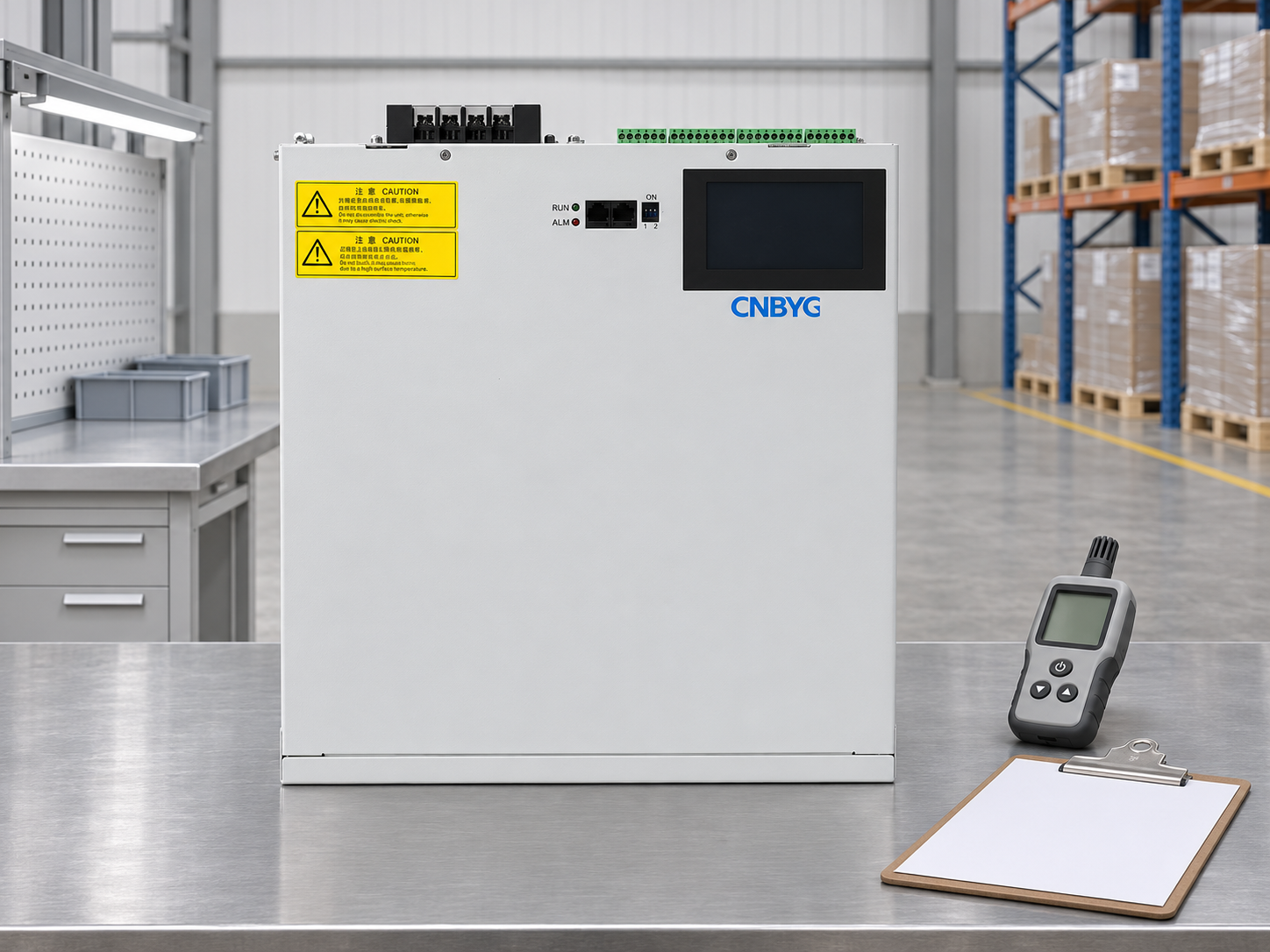
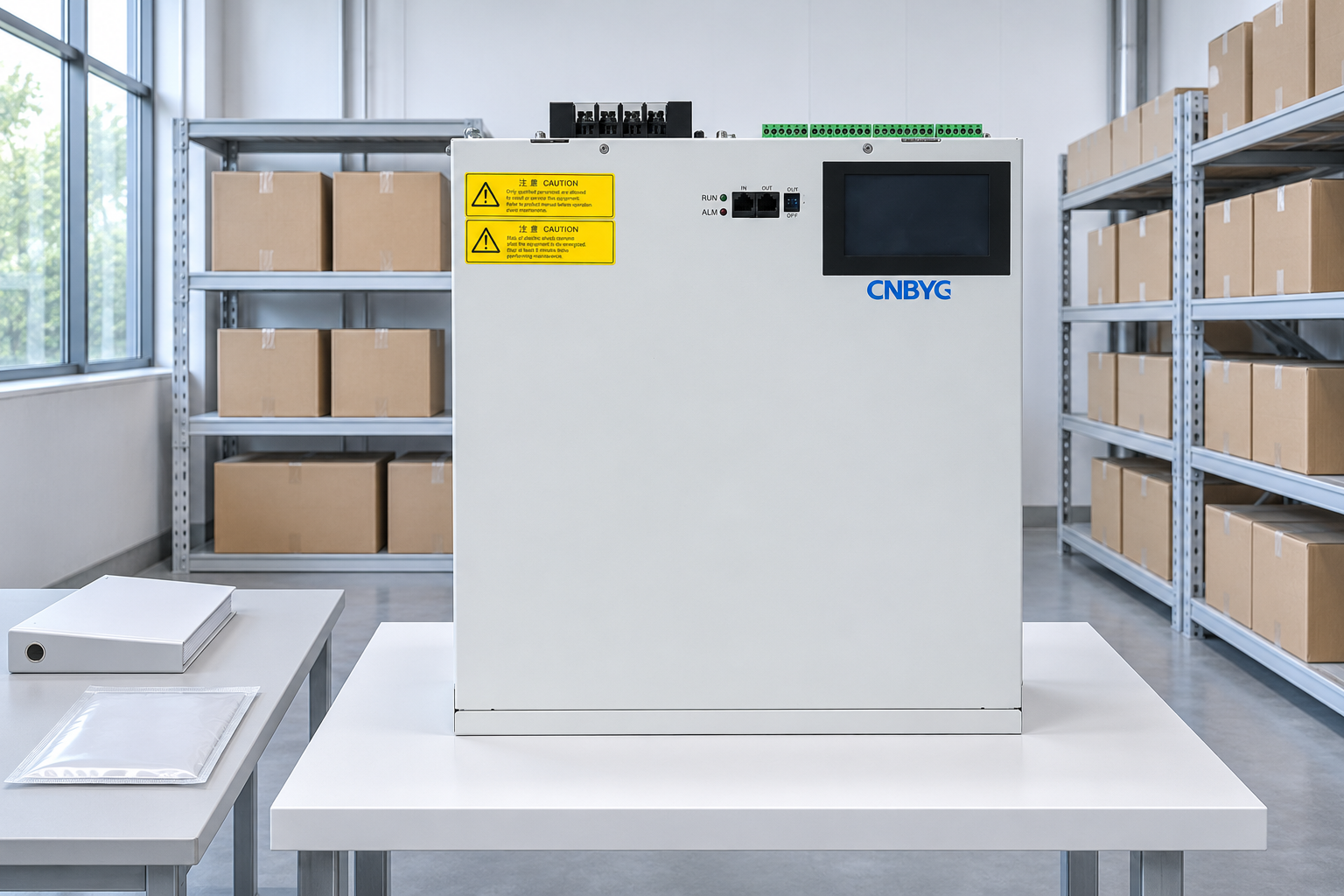
Untuk sebuah CNBYG active harmonic filter, ask for the instructions associated with the quotation and actual supplied configuration. Product photographs identify the product family; they do not establish a permitted storage humidity, a drying temperature or the presence of an anti-condensation heater.
Understand why a temperature transition matters
Itu National Weather Service explanation of dew point describes the temperature at which water vapor begins condensing. A cold surface brought into warmer humid air can therefore acquire moisture even without rain entering the delivery vehicle. The mechanism explains why receiving conditions and equipment temperature history are relevant; it does not supply an AHF acceptance limit.
Relative humidity from one room reading is incomplete evidence. Note the observation time, instrument location and whether the equipment recently arrived from a colder environment. A measurement taken near an open loading door may describe a different condition from the storage area. Identify that limitation in the record instead of treating the number as a measurement inside the equipment.
Do not convert a weather dew-point calculation into permission to energize. Surface measurements, sensor uncertainty and inaccessible internal spaces all limit what a receiving team can conclude. Any required equilibration, inspection or testing must follow the supplier’s approved process and the site’s competent electrical assessment.
Keep the receiving inspection nonintrusive
Begin with packaging and accessible external condition. Look for wet cartons, damaged protective wrapping, stains, impact marks and evidence that the consignment has been stored directly in a wet area. Photograph the overall package before removing anything, then take identifiable close views of concerns. Include the delivery reference so photographs can be associated with the correct unit later.
Inspect accessible external surfaces without opening electrical covers or touching terminals. Record moisture, discoloration, deposits or damaged seals as observations, rather than deciding their cause from appearance. Water on packaging and confirmed water inside equipment are different findings, but either may justify stopping the next step until the responsible party reviews the evidence.
Itu HSE introduction to electrical safety emphasizes the relationship between equipment, intended use, operating environment and competent maintenance. Apply that principle by defining who may examine the assembly, what can be observed safely and when the receiving team must stop. This article is not a live-work procedure or authorization to remove covers.
Use a storage-release decision table
The following is a project documentation aid. The technical acceptance criteria must come from the supplied-equipment instructions and the competent project review; these rows do not create new CNBYG ratings.
| Finding or missing evidence | Record to collect | Next decision owner |
|---|---|---|
| Packaging externally dry and intact | Dated photographs, location and delivery identification | Receiving lead confirms documentation completeness |
| Equipment recently moved from a colder location | Transport history, receiving conditions and supplier transition instructions | Electrical lead determines required assessment |
| Wet packaging or visible moisture | Identifiable photographs and exposure timeline | Supplier and qualified electrical person define disposition |
| Storage instructions unavailable | Exact assembly identity and written request for documents | Procurement resolves document gap before release |
| Cleaning or drying proposed | Proposed method, affected components and manufacturer response | Responsible supplier approves applicability |
| Previous concern reported as resolved | Original issue, action evidence and reviewer signature | cURL Too many subrequests by single Worker invocation. To configure this limit, refer to https://developers.cloudflare.com/workers/wrangler/configuration/#limits |
cURL Too many subrequests by single Worker invocation. To configure this limit, refer to https://developers.cloudflare.com/workers/wrangler/configuration/#limits.
cURL Too many subrequests by single Worker invocation. To configure this limit, refer to https://developers.cloudflare.com/workers/wrangler/configuration/#limits
cURL Too many subrequests by single Worker invocation. To configure this limit, refer to https://developers.cloudflare.com/workers/wrangler/configuration/#limits.
cURL Too many subrequests by single Worker invocation. To configure this limit, refer to https://developers.cloudflare.com/workers/wrangler/configuration/#limits.
cURL Too many subrequests by single Worker invocation. To configure this limit, refer to https://developers.cloudflare.com/workers/wrangler/configuration/#limits.
cURL Too many subrequests by single Worker invocation. To configure this limit, refer to https://developers.cloudflare.com/workers/wrangler/configuration/#limits
cURL Too many subrequests by single Worker invocation. To configure this limit, refer to https://developers.cloudflare.com/workers/wrangler/configuration/#limits.
cURL Too many subrequests by single Worker invocation. To configure this limit, refer to https://developers.cloudflare.com/workers/wrangler/configuration/#limits.
The disposition should say exactly what is released: continued storage, unpacking, mechanical installation or progression to a separate electrical readiness review. Name the person accepting that stage and list remaining conditions. A signature under “received” should not be interpreted as an approval to switch on.
Coordinate the next installation activities
Once the storage concern is closed, carry the release reference into the Checklist instalasi AHF. Confirm that moving the equipment to its final location will not recreate the same exposure. Consider whether the destination is ready, whether building work is still generating dust and whether temporary protection must remain in place.
Keep condition release distinct from the AHF commissioning process. Commissioning addresses electrical configuration and operational acceptance under an approved procedure. It cannot retrospectively replace missing storage history or justify bypassing a hold simply because a scheduled start-up date is approaching.
Include the storage event in the equipment history used for the Rancangan pemeliharaan AHF. The record helps later investigators understand why additional observations were requested. It should describe what happened and what was approved without claiming an unverified effect on service life.
Educational video: electrical work needs controlled access
The US Department of Labor lesson below supports the distinction between ordinary receiving observations and work requiring electrical precautions. It is background safety education, not a manufacturer-specific condensation inspection, isolation procedure or release instruction. The storage decision must remain understandable from the written evidence and approved project documents even if the video is unavailable.

Questions to settle before the next delivery
Procurement can prevent avoidable holds by asking for storage and transition instructions before dispatch. Confirm the party responsible for packaging, the intended unloading and storage locations, the contact for exposure concerns and the documents needed at release. Ask whether any time-dependent preservation requirements apply to the actual order rather than assuming that all modules and assembled cabinets share one rule.
Agree how exceptions will be communicated. The receiving team should know where to send photographs, which equipment identification to quote and who can approve an action. A response such as “keep it dry” is insufficient when the question is whether a specific observed exposure requires further evaluation. Request a decision that identifies the equipment, the concern and the permitted next step.
For repeat projects, review whether previous delays arose from unsuitable storage areas, premature unpacking or missing supplier instructions. Improve those arrangements before adding more inspection forms. The useful outcome is controlled equipment condition and a clear release decision, with enough evidence for the next team to understand it.
Pertanyaan yang sering diajukan
How long should an AHF wait after moving from cold transport into a warm room?
Use the instructions for the exact supplied assembly and the qualified assessment of its condition. This guide does not provide a universal waiting time, because equipment configuration and exposure differ.
Does a dry front panel prove the unit is ready to energize?
No. External appearance alone cannot establish internal condition or close an unresolved moisture concern. Record observations and obtain the required disposition before progressing to electrical readiness checks.
Can the site team dry the AHF with a portable heater?
Do not select a remedial drying method without approval for the affected assembly. Obtain manufacturer instructions and have authorized competent personnel perform and verify any required work.
What should a storage release actually authorize?
It should identify the permitted next stage, the equipment concerned, supporting evidence, outstanding conditions and the named decision owner. Receipt into storage and authorization to energize are separate decisions.