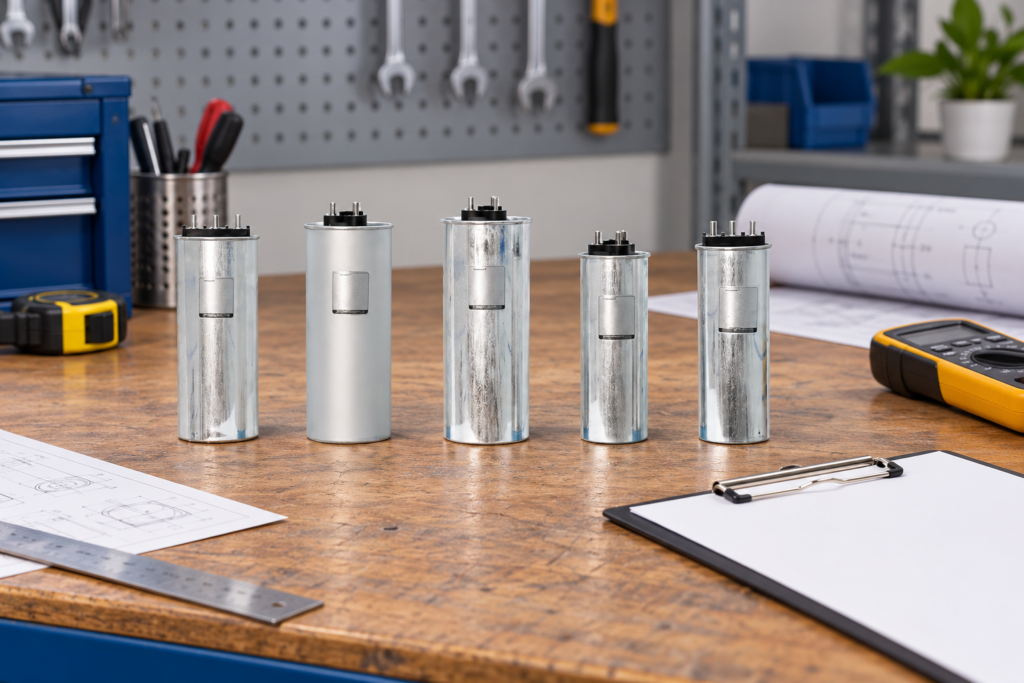
Pilih peringkat tegangan kapasitor untuk sistem 400 V dari tegangan garis aktual, toleransi, harmonik, beban saklar, pengaturan reaktor, suhu dan standar kapasitor yang berlaku. Jangan hanya memilih peringkat tegangan dari label nominal saja. Sebuah kapasitor yang terpapar tegangan harmonik, perilaku reaktor yang tidak disetel, transien atau sistem dengan tegangan lebih tinggi dapat mengalami stres listrik yang lebih besar daripada yang disarankan oleh plat nama 400 V.
Itu Keluarga kapasitor daya silinder CNBYG BSMJ memberikan konteks untuk kompensasi dinamis, sementara artikel ini fokus pada pemilihan tegangan bank kapasitor. Gunakan data dari produsen kapasitor, studi tegangan proyek, dan standar yang berlaku untuk penilaian akhir.
Apa arti dari peringkat ini
Peringkat tegangan kapasitor adalah batas desain di bawah kondisi frekuensi, suhu, beban dan bentuk gelombang yang dinyatakan. Sistem tiga fase 400 V mungkin memiliki tegangan nominal garis-ke-garis sebesar 400 V, tetapi tegangan aktual mencakup toleransi, sambungan trafo, ketidakseimbangan, transien dan komponen harmonik. Bank kapasitor juga berinteraksi dengan reaktor, perangkat saklar, sekering dan komponen pelepasan muatan.
Catat apakah nilai 400 V tersebut adalah garis-ke-garis, frekuensi, pengaturan koneksi, toleransi yang diharapkan, tingkat hubung singkat, spektrum harmonik dan desain reaktor yang tidak disetel. Jangan membandingkan peringkat tegangan kapasitor dengan nilai garis-ke-netral tanpa memeriksa koneksi.

Tabel pemilihan
| Faktor pemilihan | Pertanyaan | Bukti |
|---|---|---|
| Tegangan sistem nominal | Apakah 400 V adalah garis-ke-garis dan apakah koneksi sudah benar? | Diagram satu garis dan data trafo. |
| Toleransi tegangan | Berapa tegangan maksimum yang dapat muncul secara kontinu? | Rentang utilitas, studi tap dan pengukuran di lokasi. |
| Harmonik | Harmonik tegangan dan arus apa yang ada? | Spektrum yang diukur dan studi beban. |
| Pengaturan reaktor | Apakah reaktor yang tidak disetel atau disetel dipasang? | Desain reaktor, penyetelan dan data suhu. |
| Peralihan tugas | Seberapa sering panggung beralih dan transien apa yang terjadi? | Pengaturan pengendali, kontak dan desain arus awal. |
| Suhu | Temperatur lingkungan dan kotak yang berlaku apa? | Tata letak, ventilasi dan batasan pabrik pembuat. |
| Standar | Referensi kapasitor, perakitan dan keselamatan mana yang berlaku? | Pernyataan pemasok dan matriks proyek. |
Jangan hanya memilih dari tegangan nominal
Mulailah dengan tegangan kontinu tertinggi yang diharapkan, bukan hanya 400 V. Periksa posisi tap transformator, toleransi utilitas dan apakah bank dapat tetap terhubung selama kondisi beban ringan. Tegangan yang lebih tinggi meningkatkan output reaktif kapasitor dan stres listrik. Yang persyaratan keselamatan bank kapasitor membantu menjelaskan mengapa perubahan tegangan mempengaruhi peralatan arus reaktif, meskipun SVG bukan pengganti untuk pemilihan bank kapasitor.
Periksa koneksi. Dalam bank delta, setiap kapasitor melihat tegangan antar garis. Dalam pengaturan bintang, tegangan per-unit tergantung pada koneksi dan netral. Gambar, data pabrik pembuat dan desain perlindungan harus sesuai.
Harmonik dan reaktor
Beban elektronik daya dapat menciptakan arus dan tegangan harmonik. Sebuah kapasitor dapat berpartisipasi dalam resonansi dengan induktansi transformator dan sistem, sehingga bank memerlukan studi harmonik dan resonansi. Reaktor yang disetel ulang mengubah tegangan cabang kapasitor dan perilaku termal; penyetelan dan arus kontinu harus disesuaikan dengan sistem yang dimaksud.
Ukur tegangan fundamental, tegangan harmonik total, urutan harmonik, arus, suhu dan keadaan panggung. Yang tujuan reaktor dalam bank kapasitor menyediakan pendekatan batas pengukuran terkait. Jangan menyimpulkan keamanan harmonik dari satu pembacaan PF.

Peralihan, perlindungan dan suhu
Periksa pengalihan kontak atau thyristor, arus awal, waktu pelepasan, sekering, koordinasi pemutus sirkuit, perlindungan overvoltage dan ventilasi kotak. Panggung yang sering beralih dapat memiliki tugas termal dan mekanis yang berbeda dari panggung dasar. Sertakan keadaan beban minimum agar kapasitor tidak tetap terhubung saat permintaan induktif menurun.
Itu Panduan persyaratan instalasi SVG menutupi akses pendinginan dan layanan. Yang Checklist commissioning SVG dan daftar periksa pemeliharaan bank kapasitor menunjukkan cara mempertahankan pengaturan, alarm, dan bukti inspeksi untuk instalasi kualitas daya yang lebih luas.
Urutan pemilihan praktis
- Konfirmasi tegangan 400 V antar fasa, frekuensi, dan koneksi.
- Catat tegangan maksimum kontinu, toleransi, dan rentang tap.
- Ukur ketidakseimbangan, harmonisa, arus, suhu, dan transien.
- Daftar reaktor, penyetelan, kapasitor, kontak, sekering, dan perangkat pelepasan.
- Periksa tegangan pabrikan kapasitor, kvar, suhu, dan batas tugas.
- Tinjau studi resonansi dan hubung singkat.
- Verifikasi kvar tahap dan tegangan pada sambungan sebenarnya.
- Uji kondisi minimum, normal, puncak, dan switching.
- Catat perlindungan, alarm, suhu, dan pengaturan saat terakhir diperiksa.
- Recheck after a new VFD, rectifier, transformer or tariff change.
Kesalahan umum
Do not use a 400 V label without checking tolerance. Do not ignore the connection arrangement. Do not assume a reactor automatically makes every capacitor safe. Do not omit harmonic voltage, switching transients, temperature or discharge. Do not select kvar and voltage separately from the same design study.
Verify the chosen rating at the bank boundary
Use the highest expected continuous line-to-line voltage and the actual capacitor connection when checking stress. Include transformer tap range, utility tolerance, imbalance, harmonic voltage and the voltage rise produced by any series reactor. Confirm the manufacturer’s continuous and short-duration limits at the project ambient and frequency. If the bank operates in stages, check each stage and the worst combination.
Record the measured voltage before switching, during inrush and after the stage settles. Compare current, temperature, harmonic spectrum and stage status with the design values. If the bank is frequently blocked or reaches a temperature alarm, investigate the system conditions instead of simply increasing the voltage rating. A higher rating changes kvar and may change protection, tuning and control behavior.
Review the design after a new rectifier, VFD, UPS, solar inverter or EV charger is added. A new harmonic source can change resonance and capacitor current even when the nominal bus remains 400 V. Keep the one-line, reactor data, protection settings, discharge test and as-left voltage record together so maintenance can repeat the same checks.
Validate kvar, voltage and protection together
Voltage rating cannot be selected independently from kvar. A higher-rated capacitor at the same physical bank can produce a different reactive output, so confirm the stage kvar at the system voltage and frequency. Check the branch current, fuse or breaker, reactor current, discharge device and controller setpoint as one design. If the bank is detuned, use the approved tuning and current limits rather than copying a nominal percentage from another project.
At commissioning, measure each stage before switching, during inrush and after it settles. Record line voltage, capacitor current, reactor temperature, harmonic spectrum, alarms and the stage state. Test a light-load condition to confirm the bank does not remain connected when leading kvar is possible. Test the highest expected load to confirm the stage provides the intended reactive support without exceeding thermal or current limits.
Keep the voltage study with the maintenance record. A tap change, new transformer, VFD, rectifier, solar inverter or EV charger can change the voltage and harmonic environment. Recalculate or remeasure before changing the rating. The safest replacement is not always the one with the largest printed voltage; it is the one that matches the complete system study and manufacturer’s limits.
Record the final selection, rejected alternatives and the reason for the chosen rating.
Include the system voltage range, frequency, connection, reactor tuning, harmonic evidence, temperature, protection and the manufacturer data used. If any value is estimated, mark it as an assumption and schedule a site measurement before final energization.
The maintenance file should also show the stage sequence, discharge check, fuse or breaker settings, thermal inspection points and the conditions that require a new harmonic study. That record is more useful than a replacement label alone because it explains why the selected rating was safe for the complete 400 V installation.
Keep the final inspection signed and dated.
Store the measurement files with the equipment record. If the voltage, harmonic spectrum, transformer tap or connected load changes, reopen the selection rather than treating the old rating as permanently valid. This is especially important when a 400 V board gains more rectifiers, drives, solar inverters or EV chargers.
Keep the rejected options and assumptions beside the final selection so a later replacement does not repeat the study from memory.
This record should travel with the panel drawings.
Keep it available for commissioning and service.
Note the inspection interval.
Record the responsible person.
Keep the signed record.
Attach the final voltage trace.
Record the test instrument.
Keep the calibration record.
Store the final report.
Voltage calculations and applicable evidence
For an ideal series capacitor-reactor branch, define p = X_L/X_C at the fundamental frequency. Neglecting resistance, capacitor fundamental voltage relative to the corresponding branch supply is 1/(1-p). A 7% matched branch therefore gives about 1.075 and a 14% branch about 1.163. These calculated factors are not automatic capacitor ratings: harmonic voltage, tolerances, connection and actual duty still require assessment. OpenStax explains the series AC-circuit relationships.
IEC 60831-1 identifies the relevant self-healing low-voltage shunt capacitor standards family. Obtain product-specific voltage and duty criteria rather than inferring an allowable range from its public catalogue description. Praktik kerja kelistrikan OSHA address stored energy and qualified verification in their jurisdiction; the site procedure governs actual bank access.
Pertanyaan yang sering diajukan
Apakah kapasitor 400 V selalu benar pada sistem 400 V?
Not automatically. Check maximum voltage, connection, harmonics, reactor arrangement, switching, temperature and manufacturer requirements.
Mengapa reaktor dapat mengubah tegangan stres kapasitor?
Reaktor dan kapasitor membentuk cabang yang tegangan dan arusnya bergantung pada frekuensi, penyetelan, dan kondisi sistem. Gunakan desain dan pengukuran yang disetujui.
Harmonik apa yang harus diperiksa?
Measure the fundamental and relevant harmonic voltage and current at the bank boundary, then compare with the applicable design and manufacturer limits.
Rekaman apa yang harus disimpan?
Pertahankan data satu baris, studi tegangan, studi harmonik, kapasitor dan reaktor, pengaturan perlindungan, suhu, pengujian switching, dan inspeksi setelah selesai.
Kesimpulan
Capacitor voltage selection for a 400 V system is a system-design decision. Verify voltage tolerance, connection, harmonics, reactors, switching, temperature, protection and standards before choosing the rating. Test the real operating modes and keep the evidence with the bank settings.
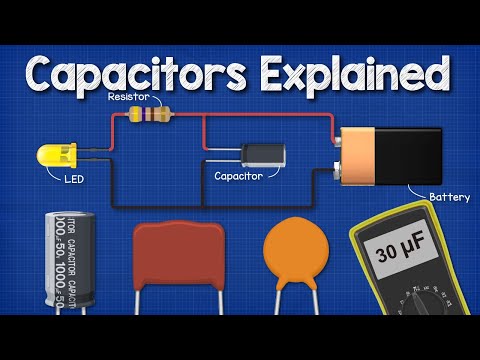
Educational video: capacitor fundamentals
The Engineering Mindset explains capacitor charge storage and basic behaviour. Small-component demonstrations are conceptual background, not an industrial testing or discharge procedure.