


Airport terminal HVAC VFD harmonic work should begin with a measurement question, not a device choice. The record needs to state whether it represents one drive lineup, a mechanical-electrical room bus, or the terminal point of common coupling (PCC), and it needs to identify the operating state that produced it. Chillers, air-handling units, pumps, cooling-tower fans, and standby arrangements do not necessarily run in the same combination throughout the day.
Прямой ответ
Airport terminal HVAC VFD harmonic work should begin with a measurement question, not a device choice. The record needs to state whether it represents one drive lineup, a mechanical-electrical room bus, or the terminal point of common coupling (PCC), and it needs to identify the operating state that produced it. Chillers, air-handling units, pumps, cooling-tower fans, and standby arrangements do not necessarily run in the same combination throughout the day.
An airport terminal is not simply a larger commercial building. HVAC loading can change with passenger flow, ambient conditions, tenant schedules, baggage-area ventilation, and equipment staging. A waveform without that context can describe a moment, but it cannot reliably define a system objective. For broader navigation, start with the руководства по системам качества электроэнергии.
Part 1. Define the terminal question before placing a meter
Start by naming the decision the data must support. A record at the input of a variable-frequency drive can help characterize that equipment. A record at a distribution bus can show how multiple HVAC loads interact. A PCC record is used for a broader supply-side question. These are connected observations, but they are not interchangeable.
For each capture, record the meter position on the one-line diagram, CT ratio and orientation, voltage reference, aggregation interval, capture duration, and the active load group. The result should also state whether emergency or standby equipment was available, running, or isolated. This makes later comparisons reviewable instead of relying on an unlabeled screenshot.
Важно: Do not use a drive-terminal reading as proof of terminal-level performance. The PCC boundary, the operating state, and the project acceptance method must be defined together (Source: Обзор IEEE 519).
Part 2. Capture HVAC operating states that change the record
The most useful airport HVAC log connects each electrical record to a real operating condition. That can include chiller staging, chilled-water pump speed, air-handler demand, cooling-tower fan duty, seasonal mode, and whether a generator or transfer arrangement is part of the observed interval. It is more valuable to capture comparable states than to collect many unrelated snapshots.
| Operating-state question | What to log | Why it changes the review |
|---|---|---|
| Which HVAC trains were enabled? | Chiller, AHU, pump, and fan identifiers | Different drive groups may share or leave a bus. |
| Was the terminal in a peak, transition, or reduced-load period? | Time stamp, schedule, and demand trend | A peak-load record and a low-load record answer different planning questions. |
| Did equipment stage during the capture? | Start, stop, bypass, and speed-change events | A transient may not represent a steady operating condition. |
| Was standby supply relevant? | Transfer state and source arrangement | The electrical boundary can change with the supply configuration. |
This approach extends the measurement-led logic in the existing HVAC VFD harmonic measurement guide, but keeps the airport terminal operating record distinct from a general commercial-building overview.
Part 3. Build a PCC record that can be compared responsibly
At the PCC or other agreed system boundary, collect voltage and current information over representative intervals and retain the linked demand record. The goal is not to generate a single universal percentage. The goal is to establish which loading condition, electrical boundary, and measurement settings were present when the record was taken.
| Comparison item | Keep constant or disclose | Decision use |
|---|---|---|
| Electrical location | Meter point, CT reference, and voltage source | Prevents a feeder result being compared as a PCC result. |
| Time basis | Interval, duration, and clock reference | Connects the electrical data to the operating log. |
| Load configuration | Running HVAC trains and major coincident loads | Distinguishes system behavior from a single drive event. |
| Acceptance context | Contractual metric and responsible reviewer | Prevents an article or a generic chart from becoming a compliance verdict. |
Земля Department of Energy Industrial Technologies Office provides wider industrial-system context. It does not establish the acceptance limit for a particular terminal installation. Similarly, an IEEE reference provides assessment context, not a shortcut for selecting a capacity from connected motor ratings alone.
Part 4. Separate harmonic mitigation from other terminal power-quality issues
VFD-related questions can overlap with voltage variation, reactive-power demand, switching events, unbalance, grounding, or protection behavior. Treating every electrical symptom as a harmonic-filter question can create an incorrect scope. The investigation should first establish whether harmonic current at the defined boundary is the problem to be solved.
| Observed concern | First review question | Не предполагайте |
|---|---|---|
| Harmonic-current record | Where was it measured and during which HVAC state? | That one drive is the only source. |
| Voltage event | Did the event align with a supply, transfer, or load change? | That a current-mitigation device resolves every voltage event. |
| Reactive-power objective | Is dynamic reactive behavior the stated target? | That it has the same selection basis as harmonic-current mitigation. |
| Protection or operational alarm | Is there a documented electrical relationship? | That an article can identify the root cause. |
For a related measurement workflow, see power quality metering before an APF or SVG RFQ. It helps teams frame the evidence needed before a product discussion.
Part 5. Review mitigation options against an integration scope
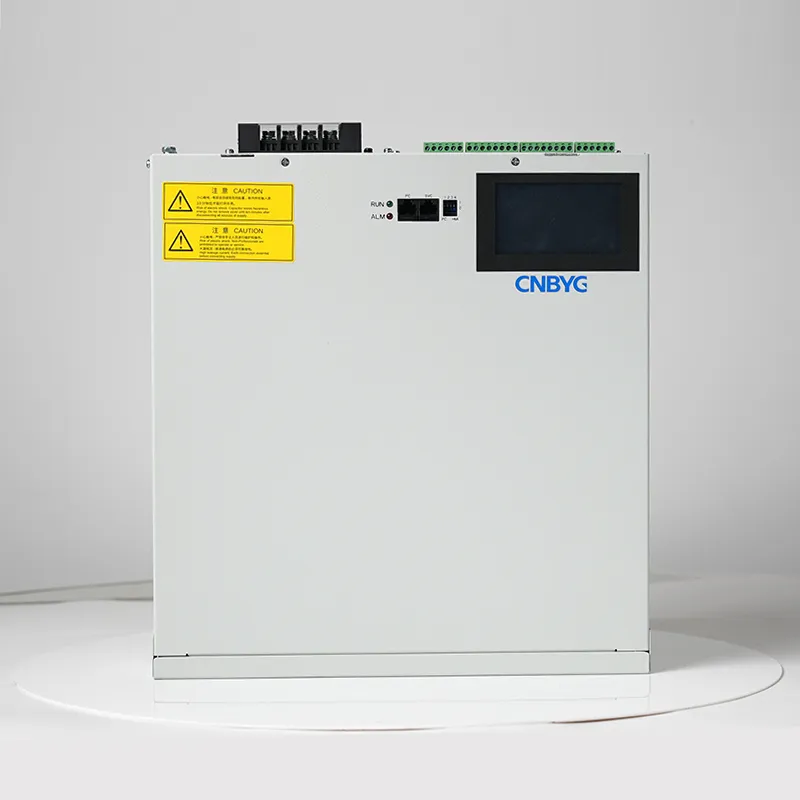
An AHF/APF review may be appropriate when measured harmonic current is the agreed project objective. It still needs a connection point, CT arrangement, load record, capacity basis, protection review, space, cooling, cable routing, and an acceptance method. The Активный фильтр гармоник AHF page is a product-line starting point, not a replacement for that engineering scope.
Other situations may call for a different review: a reactive-power objective, a network interaction, an upstream event, or a control issue may have a different evidence path. Do not select an option from a generic terminal profile alone.
Part 6. Prepare a project inquiry without promising a terminal outcome
An effective terminal-HVAC inquiry describes the electrical boundary and the operating condition, rather than just listing installed motor power. Send the following information with the project question:
| Покупатель должен предоставить | Почему это важно |
|---|---|
| Однолинейная схема и номинальные параметры системы | Establishes the connection point and supply context. |
| Meter, CT, and voltage-reference positions | Makes the measurement location unambiguous. |
| Representative voltage/current records with intervals | Shows the data set behind the request. |
| Chiller, AHU, pump, and fan operating-state log | Links each record to a terminal condition. |
| Existing capacitor, reactor, filter, and protection information | Identifies integration constraints. |
| Proposed equipment room, cooling, cable, and communication limits | Tests whether an installation concept is practical. |
CNBYG can discuss whether its product line fits a defined harmonic-current scope. It cannot promise airport uptime, passenger comfort, safety approval, code compliance, or a guaranteed electrical result from a general guide. Use the terminal project information form to begin a scope discussion.
Часто задаваемые вопросы
Why is a drive-terminal record not the same as a PCC record?
The drive-terminal record describes a local electrical location. A PCC record is taken at an agreed system boundary and may include the combined effect of multiple loads and the supply arrangement.
Which airport HVAC operating states should be logged?
Log the running chiller, air-handler, pump, and fan groups, their staging or speed changes, the time basis, major coincident loads, and any relevant standby-source arrangement.
Can connected motor kW determine an AHF or APF size?
No. A review needs measured current behavior, an operating-state record, the proposed connection point, and a defined objective before capacity is discussed.
Does an IEEE reference make a terminal result compliant?
No. The applicable boundary, data set, contractual requirement, network conditions, and acceptance process must be established for the specific project.
What should be included with an airport terminal HVAC harmonic inquiry?
Include the one-line diagram, nominal system information, meter and CT locations, representative records, HVAC operating-state log, existing equipment, protection details, and installation constraints.
Does this guide guarantee an airport operating result?
No. It supports a measurement-led project discussion and does not replace a protection study, utility review, code review, safety process, or acceptance test.
Ссылки


