


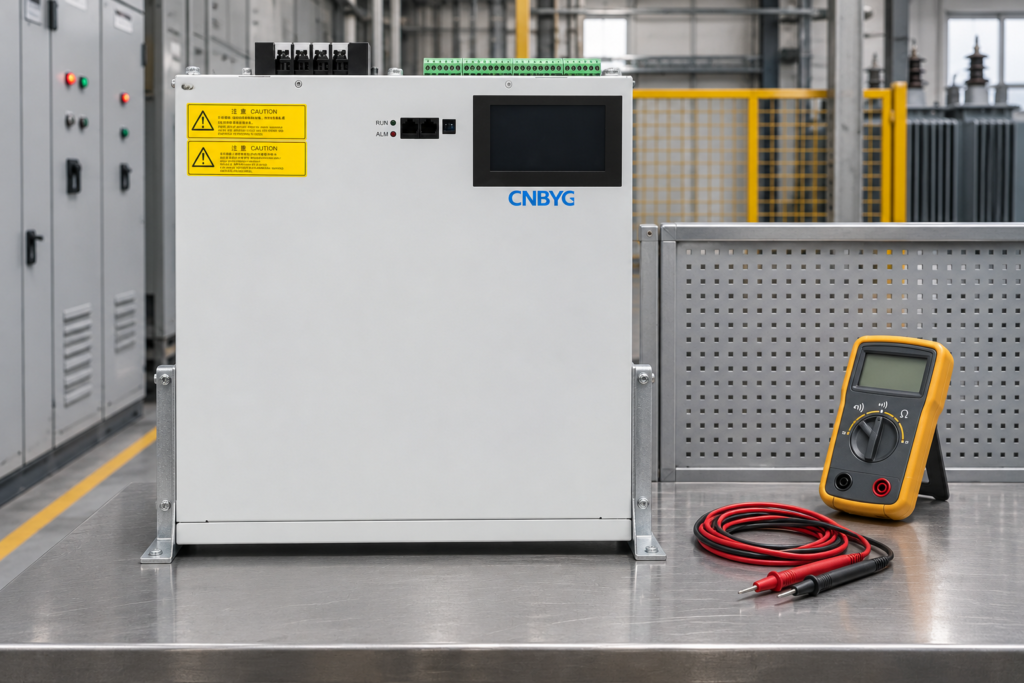
An active harmonic filter protective bonding inspection record should identify the installed assembly, the intended protective paths, the approved inspection and measurement method, the acceptance criteria, the instruments used and the person releasing the results. A green-and-yellow conductor in a photograph or a continuity buzzer alone is insufficient evidence of the complete protective arrangement. Keep the record separate from harmonic performance testing and obtain qualified electrical verification before energization. This guide helps purchasers and commissioning coordinators specify a traceable handover record; it does not prescribe test currents, resistance limits or wiring changes for an unidentified AHF model.
Define the inspection boundary
Begin with the exact assembly and the boundary between factory work and site installation. A filter module inside a panel, a supplied cabinet and the building protective conductor system have related but different responsibilities. Identify the incoming protective connection, the enclosure and the conductive parts included in the approved design. Use the supplier’s drawings and the project electrical documentation to define the intended paths.
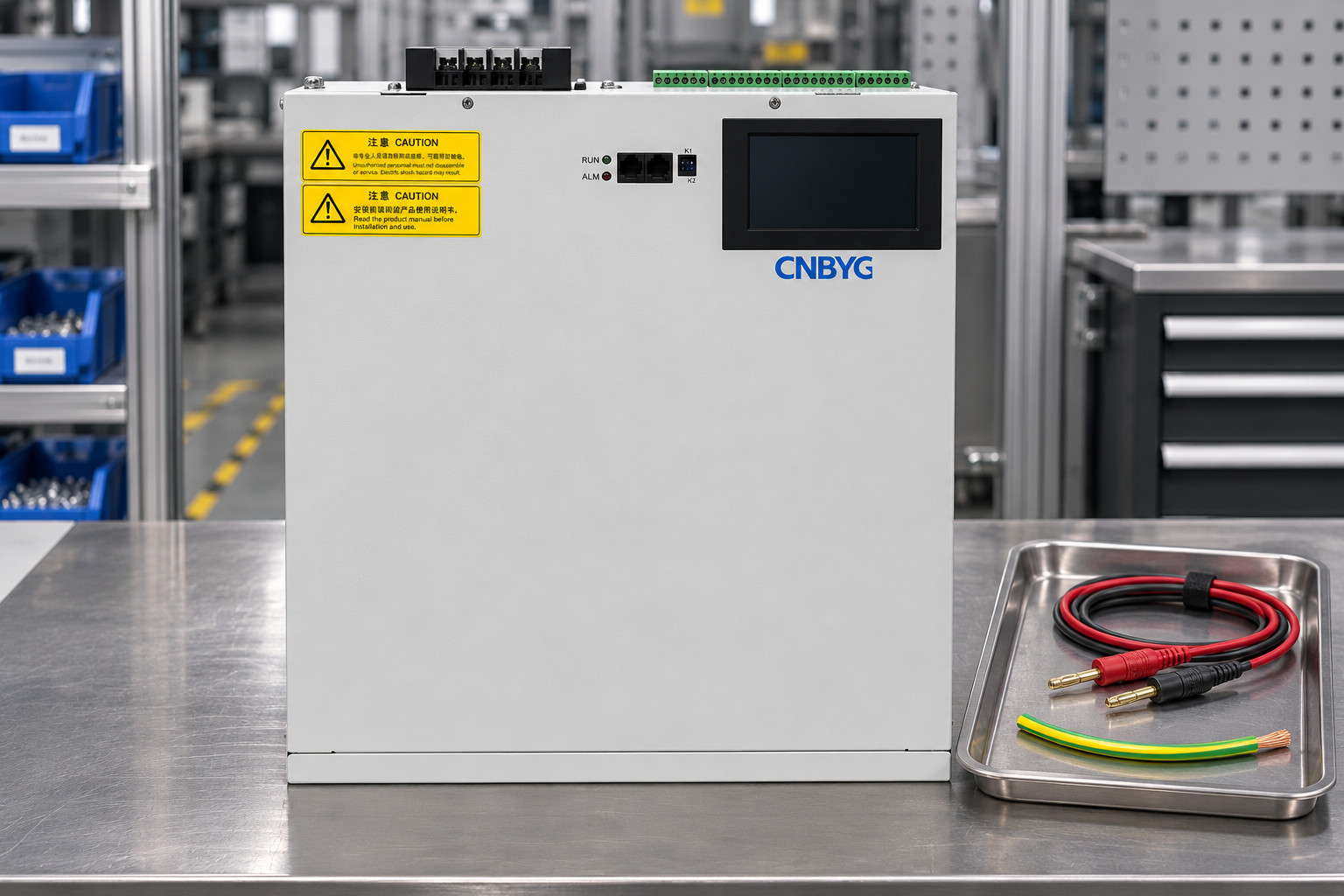
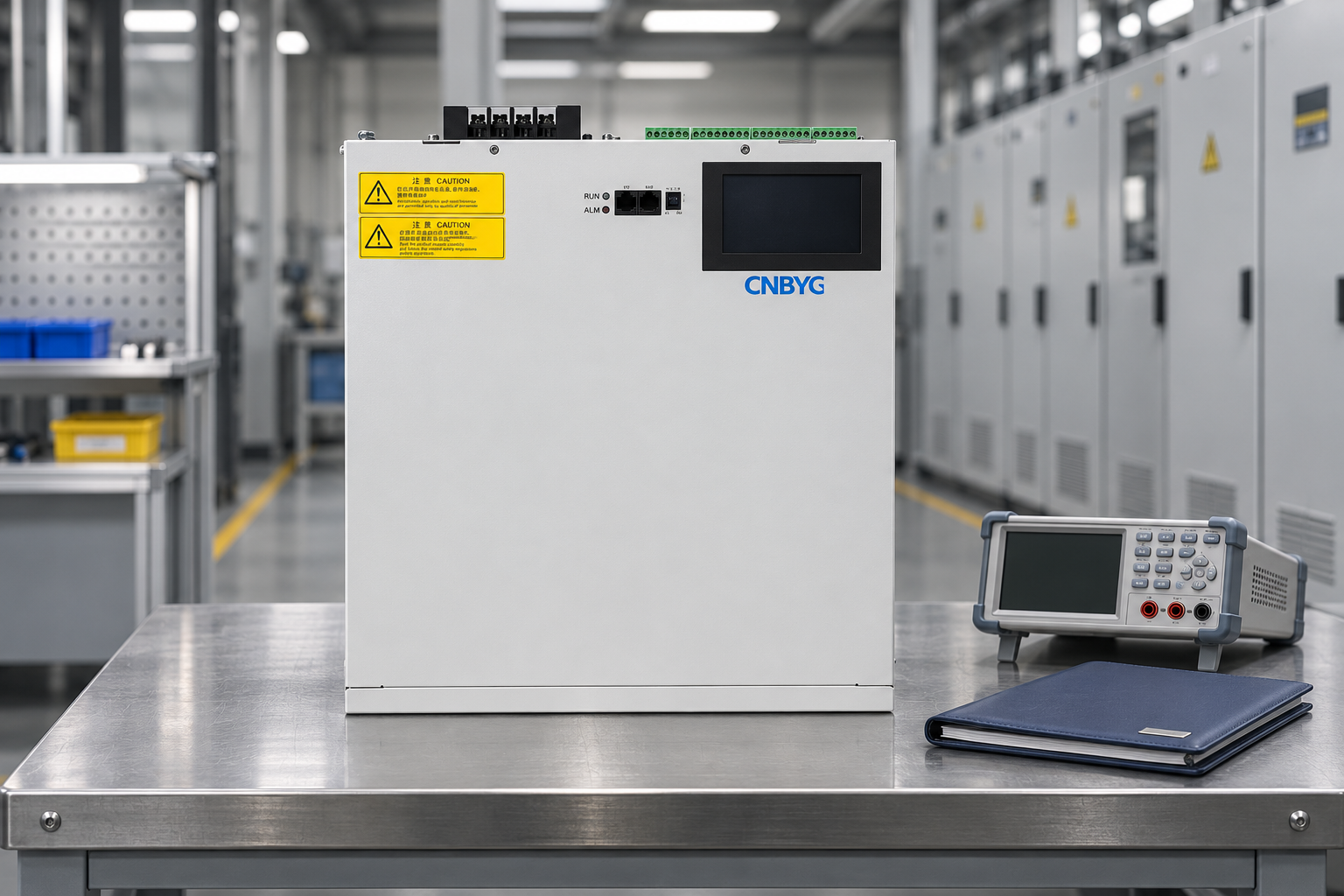
For the CNBYG active harmonic filter product family, request the documentation for the actual ordered assembly. A public product image cannot establish terminal identification, conductor size, connection torque or the details of an internal protective circuit. These must come from applicable equipment instructions and the responsible electrical design, not from assumptions about another filter with a similar enclosure.
State what the inspection record covers and what it does not cover. It may document accessible enclosure connections and the site protective conductor interface while referencing a separate factory verification report for internal assembly work. Any excluded part needs a reason and an identified source of evidence, so an omission cannot be mistaken for a completed check.
Distinguish protective bonding from other connections
Protective bonding contributes to protection against electric shock by connecting the relevant conductive parts within the designed protective arrangement. Functional earthing, signal references, cable shields and the neutral conductor serve different purposes. Their relationship depends on the installation design. Do not approve a protective path merely because a nearby terminal uses a ground symbol or a cable screen is present.
The NEN preview of IEC 60364-6:2016 describes inspection and verification of low-voltage installations, including continuity of relevant conductors. Its scope and the applicable national requirements should be assessed by the responsible verifier. It does not establish a universal resistance limit for every cabinet or authorize applying a test method to connected electronics without review.
For an AHF installation, keep the protective verification distinct from CT polarity, control wiring and harmonic measurements. Those subjects can affect operation, but a satisfactory current waveform does not prove that the protective circuit is correct. The cURL Too many subrequests by single Worker invocation. To configure this limit, refer to https://developers.cloudflare.com/workers/wrangler/configuration/#limits provides the broader installation context for organizing these separate checks.

Specify the record before the inspection starts
Agree the required fields with the verifier and the equipment supplier. If the commissioning form only provides a single pass box, it may hide which points were actually checked. A record should allow a reviewer to understand the intended path, the evidence collected and the basis for the result without guessing what the inspector meant.
The following is a proposed record structure. It is a coordination aid rather than a replacement for the test form required by the project or local authority. Numerical limits belong in the approved procedure, with their applicable references.
| Kayıt alanı | Useful detail | Neden önemli |
|---|---|---|
| Assembly identity | Location, equipment identifier, model and relevant drawing revision | Connects the result to the installed equipment |
| Scope and test points | Intended protective path and uniquely identified endpoints | Shows what was included and what remains outside scope |
| Inspection method | Approved visual checks and measurement procedure reference | Prevents a generic pass statement from hiding the method |
| Acceptance basis | Applicable requirement, design criterion and revision | Makes the conclusion reviewable without inventing a universal limit |
| Instrument | Identifier, range or method as relevant, and calibration status | Supports traceability of measured results |
| Results | Actual readings and units where measurements are required | Preserves evidence beyond a continuity indication |
| Defects and retests | Defect reference, correction, affected checks and final result | Connects release to the completed corrective work |
| Yetkilendirme | Inspector, reviewer, date and release decision | Identifies responsibility for moving to the next stage |
Choose point identifiers that appear on the drawing or annotated inspection image. A description such as “door checked” may be ambiguous where a cabinet has several doors or removable panels. Record the relevant equipment section and endpoint clearly enough that a future inspector can repeat the check.
cURL Too many subrequests by single Worker invocation. To configure this limit, refer to https://developers.cloudflare.com/workers/wrangler/configuration/#limits
cURL Too many subrequests by single Worker invocation. To configure this limit, refer to https://developers.cloudflare.com/workers/wrangler/configuration/#limits.
The UK’s cURL Too many subrequests by single Worker invocation. To configure this limit, refer to https://developers.cloudflare.com/workers/wrangler/configuration/#limits cURL Too many subrequests by single Worker invocation. To configure this limit, refer to https://developers.cloudflare.com/workers/wrangler/configuration/#limits.
cURL Too many subrequests by single Worker invocation. To configure this limit, refer to https://developers.cloudflare.com/workers/wrangler/configuration/#limits.
cURL Too many subrequests by single Worker invocation. To configure this limit, refer to https://developers.cloudflare.com/workers/wrangler/configuration/#limits
cURL Too many subrequests by single Worker invocation. To configure this limit, refer to https://developers.cloudflare.com/workers/wrangler/configuration/#limits.
cURL Too many subrequests by single Worker invocation. To configure this limit, refer to https://developers.cloudflare.com/workers/wrangler/configuration/#limits.
cURL Too many subrequests by single Worker invocation. To configure this limit, refer to https://developers.cloudflare.com/workers/wrangler/configuration/#limits.
Preserve measurements and their limitations
Where resistance measurement is required, retain the actual value, unit, test points and relevant method settings. A pass label without the measured evidence prevents later comparison. Conversely, a very small displayed number is not automatically valid: the procedure must address the measurement arrangement, instrument suitability and factors that can influence the result.
The qualified verifier should assess possible parallel paths and how the method demonstrates the intended protective connection. A reading through an unintended route can be misleading. Do not disconnect a protective conductor merely to investigate this issue without an approved safe procedure. Record the conditions of the measurement and any limitations affecting interpretation.
Separate a conductor continuity result from other electrical protection checks. Protective measures can also depend on the supply arrangement and associated protective devices. Passing one continuity check does not demonstrate insulation integrity, automatic disconnection performance or complete installation compliance. Keep those results in their proper reports and cross-reference them where the release process requires it.
Close defects with a traceable retest
Give each defect a reference, location, description and responsible owner. Examples include a missing record for an inspected point, a discrepancy against the approved drawing or a result outside the procedure’s acceptance criterion. Distinguish missing evidence from a physical defect so that the corrective action addresses the actual problem.
After correction, record which checks were repeated and why. If a repair affects neighboring connections or previously accepted results, the verifier should determine the necessary retest scope. Retain the original result and the corrected result rather than overwriting the earlier evidence. This makes the history understandable during future maintenance.
A hypothetical example illustrates the difference: a report marks all enclosure points as passed, but one endpoint cannot be matched to the drawing. Closing the issue requires identifying the point and obtaining the missing verification evidence. It does not necessarily require replacing a conductor. The release decision should follow the resolved evidence, not the desire to clear the paperwork quickly.
Connect bonding evidence to energization release
At handover, confirm that the installed configuration still matches the inspected configuration. Later cable work, door removal or component replacement may have disturbed an accepted path. The responsible team should review affected work and decide what reinspection is needed before release. Preserve the final drawing revision and the list of closed or outstanding items.
Link this record to the AHF devreye alma prosedürü and keep it separate from AHF performance verification against IEEE 519. Electrical protective verification establishes a different part of readiness from harmonic acceptance. Neither report should be used as a substitute for the other.
A grounding concepts lesson
The RealPars lesson below explains common grounding terms and their different uses. It supports the terminology discussion, rather than specifying a cabinet test procedure. Use the approved drawings, equipment instructions and applicable requirements to decide the actual protective arrangement and verification method for the installation.

Sık sorulan sorular
Is a continuity buzzer enough for the handover record?
Not by itself. Use the approved verification method and retain the required evidence, including identified test points, actual readings where applicable, acceptance criteria and instrument details. A simple indication does not describe the complete protective arrangement.
Can the same resistance limit be used for every AHF cabinet?
Do not assume a universal value. The qualified verifier must establish the applicable criterion from the relevant requirements, equipment documentation and installation design, then record that basis with the results.
Does a harmonic performance test prove protective bonding?
No. Harmonic measurements assess a different function. Protective bonding and the wider electrical protective measures require their own inspection and verification evidence before the responsible party authorizes energization.
What should happen after a bonding connection is modified?
Record the approved change, the work performed and the affected inspection or test results. Qualified personnel should determine the necessary reinspection and retest scope and confirm restoration before releasing the equipment.