Power Quality in Shopping Malls: HVAC, Elevators and Lighting
Shopping mall power quality depends on how HVAC drives, elevator drives, lighting power supplies and tenant equipment interact with the shared electrical network. A useful investigation separates current harmonics, voltage distortion, voltage events, reactive demand and equipment faults. Start by recording these conditions at the mall supply and affected feeders during representative trading periods. Then select a remedy for the measured mechanism. An active harmonic filter may address compatible current harmonic problems; it cannot restore an interrupted utility supply, repair damaged wiring or guarantee that every electronic load will ride through a voltage dip.
This guide is for mall facility managers and electrical engineers preparing a practical investigation. It treats the mall as a changing collection of loads, rather than assuming one device explains every complaint. Measurements and any electrical work require qualified personnel, an approved safety procedure and equipment suitable for the installation.
Why a shopping mall needs a coordinated investigation
A mall combines landlord services with independently managed tenant installations. Chillers and air handling units change demand with weather and occupancy. Elevators respond to passenger traffic. Restaurants, shops and entertainment areas introduce different operating schedules. Lighting remains energized for long periods, while signage and tenant equipment may switch at opening and closing. These patterns create opportunities to compare electrical symptoms with identifiable events.
However, correlation is only the first clue. A lighting flicker complaint during an elevator journey does not establish that the elevator is defective. Both circuits may share a supply affected by a voltage event, or the lighting circuit may have its own connection problem. Similarly, a warm neutral needs investigation of current, connections, conductor arrangement and loading. A photograph or a total harmonic distortion number alone cannot identify the cause.
Keep operational and electrical records together. Include timestamps, affected floors, tenant locations, equipment alarms and the mall operating schedule. Agree on one clock reference before comparing instruments. A mismatch of several minutes can turn an apparent sequence of causes into a misleading story.
Separate the problems before selecting equipment
The first decision is whether the complaint concerns waveform distortion, voltage variation, supply interruption or a local installation defect. These categories can occur together, but their remedies differ. Describe what is observed before naming a product. “Checkout terminals restarted at 14:12” is more useful than “the mall needs a filter.”
| Observation | Evidence to collect | What the evidence can distinguish | Initial action |
|---|---|---|---|
| Lighting flicker or dimming | Voltage trend and events at affected circuit and upstream point | Shared voltage variation versus local driver or connection issue | Inspect circuit condition and correlate events |
| Repeated drive trips | Alarm code, voltage events, current and drive operating state | Supply event versus overload or equipment fault | Review manufacturer diagnostics alongside recordings |
| High current distortion | Harmonic spectrum, fundamental current and operating load | Specific harmonic components and changing nonlinear demand | Investigate contributors before sizing mitigation |
| Neutral overheating | Neutral RMS current, harmonic content and connection condition | Imbalance, triplen components or connection heating | Qualified thermal and electrical investigation |
| Poor billed power factor | Billing definition, demand profile and measured reactive demand | Displacement problem versus distortion contribution | Match remedy to the actual billing and load condition |
| Tenant equipment resets | Event timestamps, supply recording and equipment specifications | Voltage event versus application or equipment issue | Compare ride-through requirements with evidence |
This is a qualitative investigation table, not a list of acceptance limits. Apply the relevant local requirements, utility agreement, equipment specifications and project standards before deciding whether a measured value is acceptable.
HVAC: compare operating modes, not just installed capacity
Variable speed HVAC drives are potential nonlinear current sources, but the connected motor rating does not directly state the harmonic current at the mall supply. Drive topology, loading, line components, supply impedance and the number of simultaneously operating drives all matter. Record the actual operating state of major HVAC equipment when gathering measurements.
Compare a warm occupied afternoon with a lighter-load morning or evening. If current distortion rises with a group of drives, measure that feeder and the upstream point during the same period. A distorted feeder current does not automatically mean unacceptable supply voltage distortion. The effect on voltage depends on the network as well as the current being injected.
Use existing building controls to interpret the recordings. Chiller enable signals, fan speed commands and equipment alarms can establish when a load changed. They do not replace waveform measurements. For a more focused discussion of HVAC drive contributions at the supply boundary, see the existing commercial building HVAC harmonic investigation. Keep that feeder-specific investigation separate from the mall-wide coordination process described here.
Elevators and escalators: record short operating events
Elevator demand varies during acceleration, travel and deceleration. Escalators may also change operating conditions depending on controls and occupancy. A single average reading can hide events that matter to other equipment. Record voltage events and current behavior with sufficient timing information to compare against journeys and drive alarms.
Do not infer regeneration capability from the presence of a modern drive. Obtain the equipment documentation and identify the actual supply arrangement. Different installations may handle braking energy differently. If the concern is voltage behavior during operation, capture that behavior rather than assuming that all lift systems interact with the network in the same way.
The elevator maintenance provider should review equipment-specific alarms and restrictions. Mall engineers can provide synchronized supply evidence without modifying the lift controls. This division prevents a general power quality project from becoming an undocumented change to a safety-critical transport system.
Lighting and tenant loads: investigate the distribution paths
LED lighting drivers, computers and other electronic supplies can draw nonlinear current. Their aggregate effect depends on the equipment, loading and distribution arrangement. Do not apply a generic distortion percentage to every driver or tenant circuit. Check product information where available, then measure representative circuits to establish the installed behavior.
In three-phase four-wire systems, selected harmonic components can add in the neutral rather than cancel. Phase balance therefore does not prove that neutral loading is acceptable. Measure neutral current with appropriate equipment and investigate the spectrum and connection condition. Include the actual conductor arrangement and installation conditions when assessing heating.
Tenant changes can alter the mall load profile without a major landlord project. A new restaurant, entertainment installation or shop refurbishment may introduce a different set of electronic loads. Maintain a current tenant equipment register and request relevant electrical information during fit-out approval. Avoid treating the original building survey as a permanent description of present operating conditions.
Build a measurement plan around the complaint
Define the question before deciding where to place instruments. If the issue affects several tenants simultaneously, an upstream recording point helps identify shared events. If only one distribution board is affected, compare that board with its upstream supply. For a harmonic allocation question, simultaneous recordings are preferable to measurements taken on unrelated days.
Include voltage, phase currents, relevant neutral current, power quantities and harmonic information appropriate to the investigation. Event recording requirements depend on the symptom. Ordinary panel indication may help with trends, but it should not be assumed to capture short disturbances or comply with a specialized measurement standard.
See power quality meter placement for the logic of comparing supply and feeder locations, and reading a harmonic spectrum for separating individual components from a single distortion summary. The industrial power quality survey workflow provides a useful record structure that can be adapted to mall operations.
Record enough representative operation to include the complaint conditions, not merely a convenient quiet period. Explain missing operating modes in the report. If a seasonal HVAC condition was absent during testing, state that limitation and arrange a later check rather than extrapolating unsupported results.
Use standards with the correct measurement boundary
The IEC 61000-4-30 measurement-method publication is relevant when defining how power quality quantities are measured. Confirm the current edition and the instrument evidence needed for the project. An instrument marketing label alone is insufficient proof that every required method has been implemented and verified.
For harmonic measurement methods, consult the applicable IEC 61000-4-7 publication. Method selection, grouping and aggregation affect how results can be compared. Keep the adopted standard and settings in the report alongside the measured location and operating state.
Do not transfer a limit from one context to another. A tenant feeder, a mall service entrance and a utility-defined point of common coupling may serve different assessment purposes. The contractual boundary and adopted requirements must be identified before claiming compliance. This article deliberately avoids presenting a universal percentage limit for every mall circuit.
Match mitigation to the established mechanism
Start with equipment or installation defects that have been independently confirmed. A poor connection, incorrect sensing arrangement or damaged component requires correction before using a compensation device to address the symptoms. After repairs, repeat the relevant measurements so that the remaining power quality problem is clear.
For compatible harmonic current problems, an active harmonic filter may be considered. Selection requires the actual harmonic current profile, network arrangement, operating range, sensing location and manufacturer application information. Do not size a filter solely from the transformer rating or a percentage THD reading.
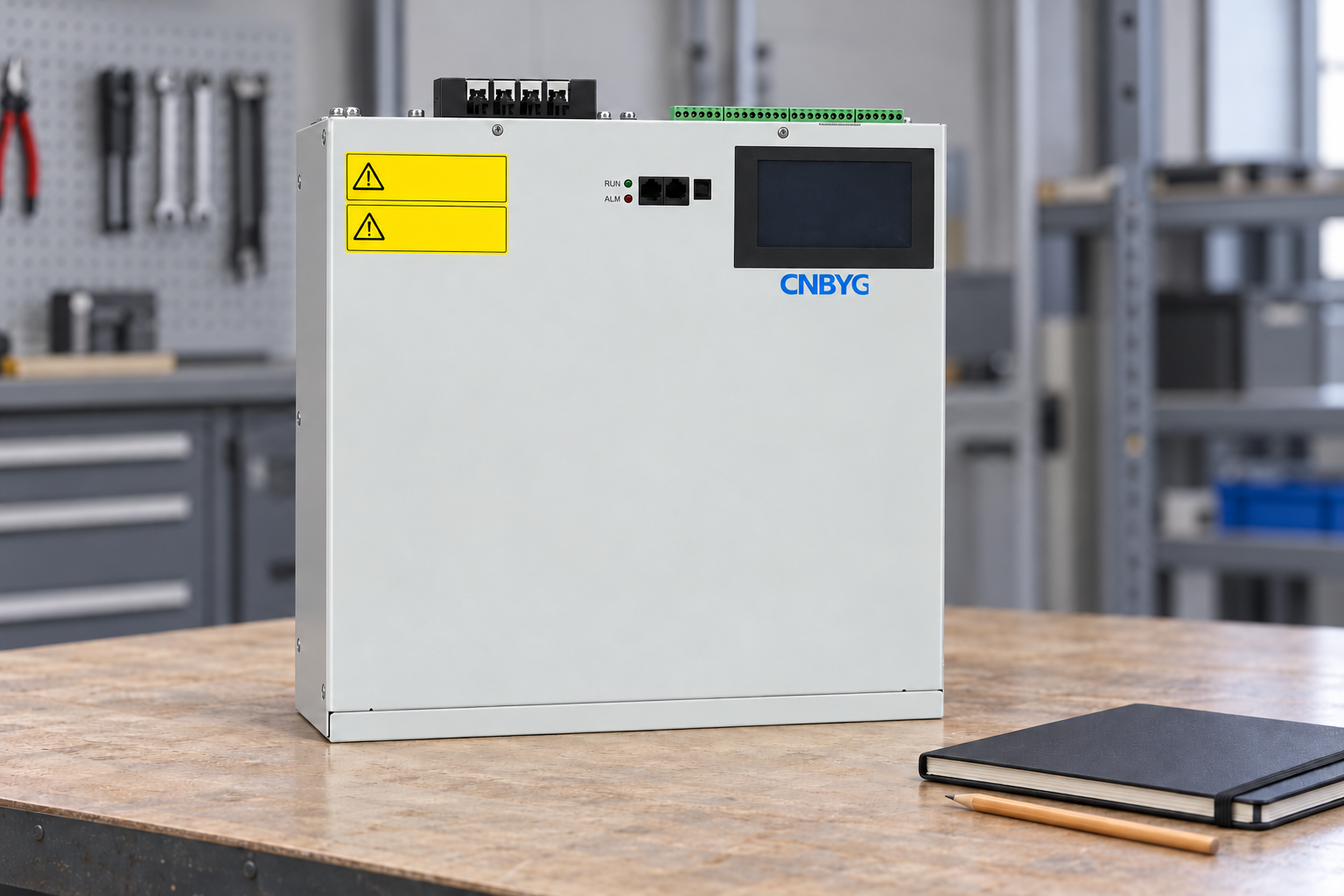
The illustration shows the product exterior as a planning reference. It is not an installed wiring example or evidence of a completed mall project. Actual terminal assignments, sensing connections, clearances and installation requirements must come from the approved product documentation.
Reactive compensation requires a separate review of demand and the network. Conventional capacitors should not be added blindly to a distorted system because resonance and component stress may become relevant. Where rapidly changing reactive demand is established, evaluate the suitable compensation technology and response requirements with measured evidence. A filter or compensator cannot replace backup supply or equipment ride-through measures when interruptions are the actual issue.
Commission the result against the original complaint
Write the acceptance plan before purchasing equipment. It should state the measurement points, operating conditions, adopted requirements and criteria for the original operational problem. “Device runs without an alarm” is insufficient proof that tenant resets or harmonic problems have been resolved.
Repeat baseline and post-installation measurements using comparable methods and representative operation. Record changed occupancy, temperature or equipment schedules that could affect the comparison. If the improvement occurs only during a lighter load period, further measurement may be necessary before attributing it to the intervention.
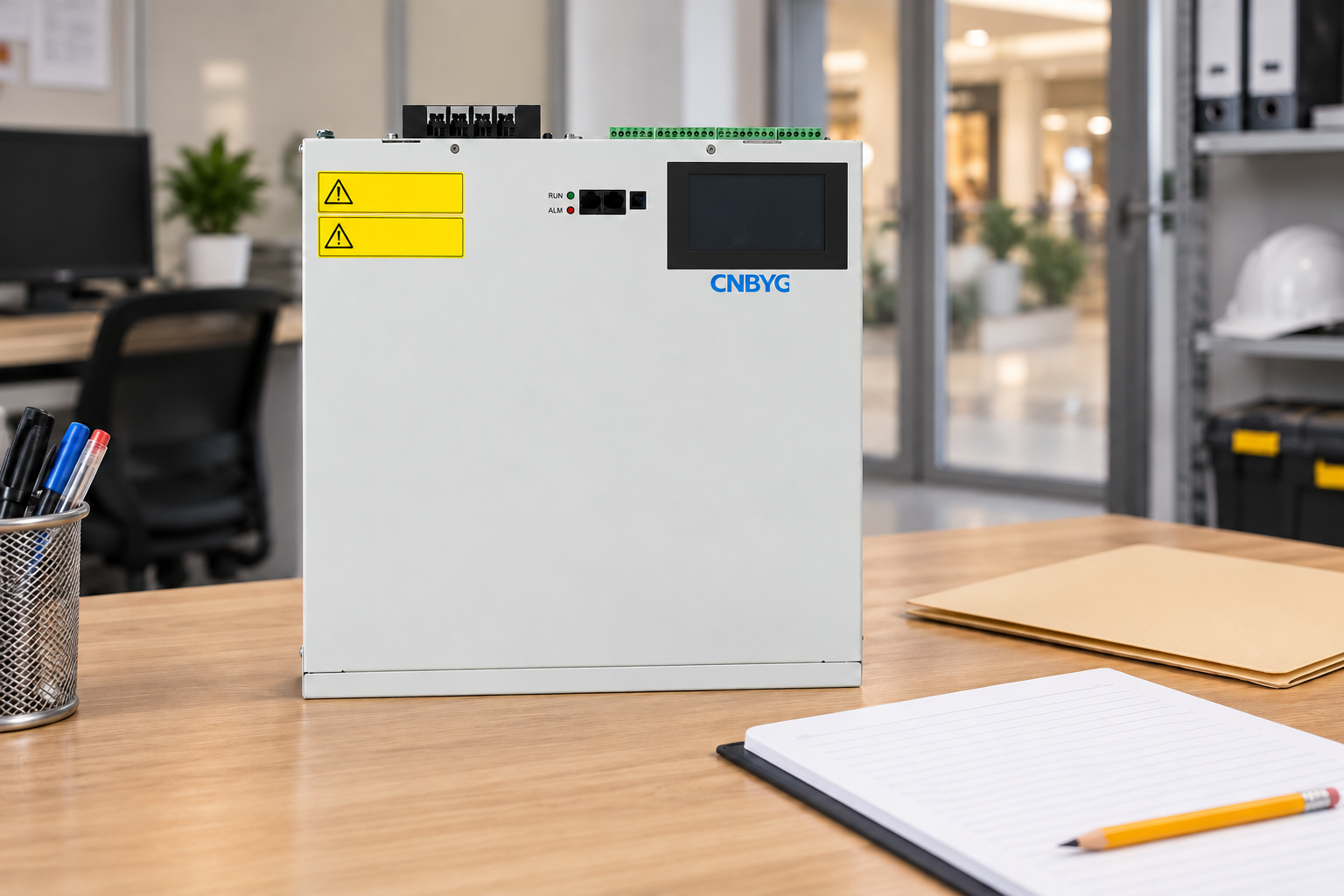
Maintain a record of settings, sensing arrangements, firmware where applicable, alarms and the accepted operating range. Keep these records accessible to facility staff and the equipment service provider. Subsequent tenant changes should trigger a proportionate review, especially if symptoms return or the load profile changes materially.
Further learning: standards and monitoring
The following NPTEL lecture explains power quality standards and monitoring as background for designing a measurement campaign. It is general engineering education, not a mall-specific equipment endorsement. The mall investigation should still follow the installation safety procedure, adopted standards and actual equipment documentation.

Watch Power Quality: Standards and Monitoring
For a complementary engineering check, see investigating elevator and escalator drive harmonics.
Frequently asked questions
Does every shopping mall need an active harmonic filter?
No. Establish the harmonic current profile, network conditions and applicable requirements first. A filter may address a compatible measured harmonic problem, but it will not resolve every voltage event, interruption or equipment fault.
Can balancing the phases eliminate neutral heating?
Not necessarily. Neutral current may include harmonic components that do not cancel like balanced fundamental currents. Qualified personnel should assess current, harmonic content, conductor conditions and connections before choosing a remedy.
Is one day of measurement enough?
It depends on whether that day includes representative operation and the complaint conditions. Missing seasonal HVAC demand, tenant activities or intermittent events should be disclosed, with further recording arranged where necessary.
What information should a mall send with a mitigation inquiry?
Provide the single-line diagram, supply arrangement, measurement locations, harmonic and reactive demand records, operating schedule, complaint timestamps, available installation space and adopted acceptance requirements. Keep equipment specifications and safety responsibilities explicit.