AHF Cabinet Lifting Plan: Evidence to Confirm Before Delivery
An active harmonic filter cabinet lifting plan should identify the exact delivered assembly, its confirmed handling mass, approved lifting or support arrangements, the route into the building and the prepared landing position. Obtain those details before booking handling equipment. A photograph, electrical current rating or cabinet footprint cannot establish lifting capacity. If the supplier has not confirmed how a particular unit may be handled, keep that movement on hold. The following checklist helps purchasers and installation coordinators assemble the information a competent lifting planner needs; it does not provide a rigging design or authorize a lift.
Define exactly what will move
Start with the purchase order, assembly identification and delivery configuration. A wall-mounted filter module, an empty enclosure and a populated floor-standing cabinet are different loads. The mass of one should never be assigned to another. Record whether packaging, support frames, removable modules or loose accessories are included in the proposed movement. A supplier drawing should have a revision and a clear relationship to the equipment being delivered.
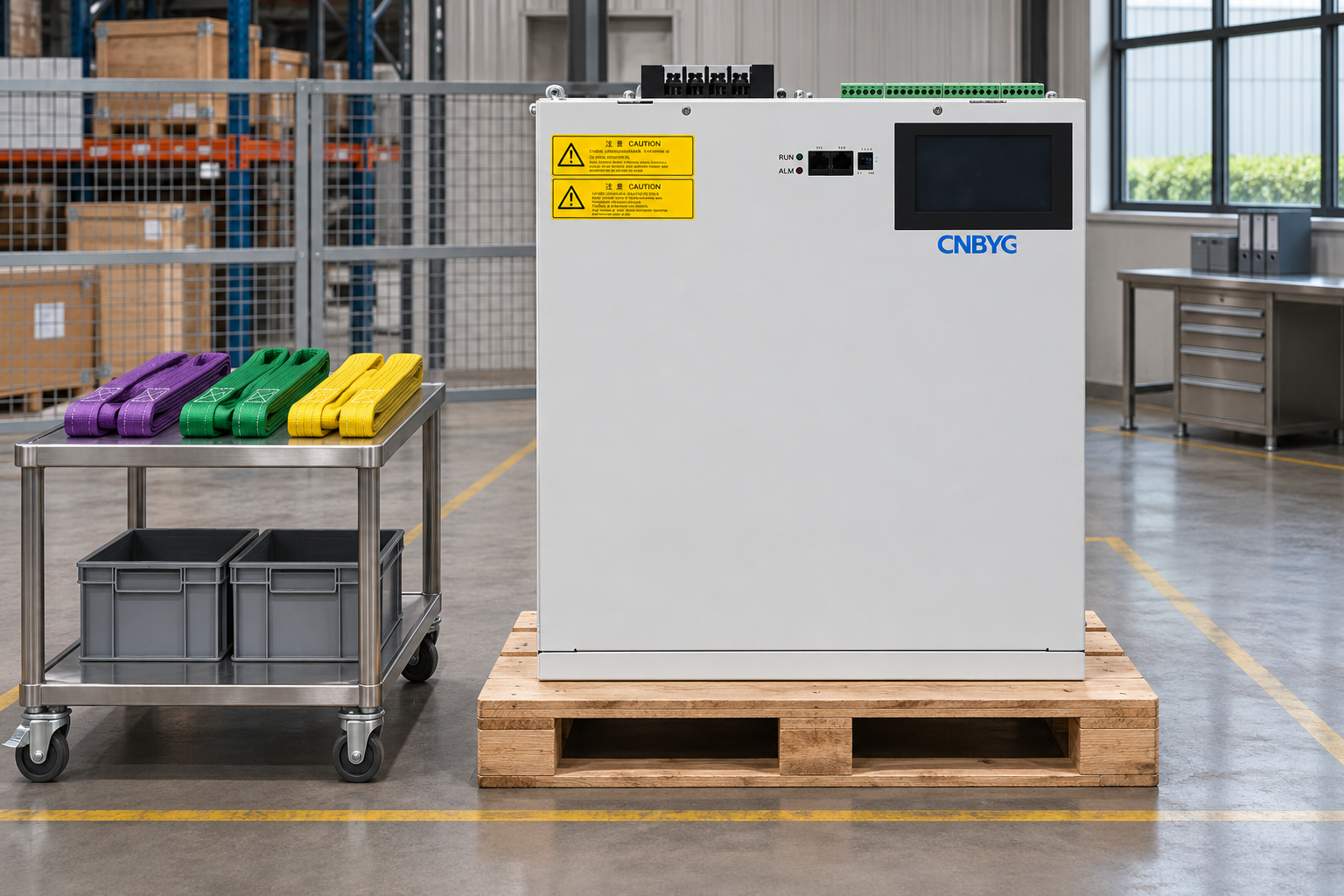
For a CNBYG active harmonic filter, request the handling information for the ordered configuration. The product illustration identifies a product family; it does not establish a lifting method. Do not interpret top terminals, mounting screws, cooling openings or panel edges as lifting attachments. If the delivered assembly differs from the approved drawing, resolve that mismatch before the handling team starts.
Separate delivery unloading from later movements. The truck may arrive with a packaged assembly that is subsequently unpacked, transferred through a doorway and positioned inside a switchroom. Each stage can change the load, its support and the equipment required. A statement that unloading is included does not explain who will perform the internal transfer.
Build a handling information pack
The table below is a proposed coordination tool. It lists questions to close before movement, rather than universal engineering limits. The project lifting planner decides the method and the evidence needed for the actual conditions.
| Item | Information to obtain | Hold condition |
|---|---|---|
| Load identity | Ordered assembly, delivery configuration and drawing revision | Drawing cannot be matched to delivered equipment |
| Handling mass | Confirmed mass for the item being moved, including relevant packaging or accessories | Only a catalogue estimate for another configuration is available |
| Approved support | Supplier handling drawing and designated lifting or support locations | Team proposes using terminals, covers or undocumented holes |
| Load balance | Supplier centre-of-gravity information or an approved assessment | Uneven internal construction has not been considered |
| Transfer route | Survey of openings, turns, overhead obstructions and floor conditions | Route depends on an unverified clearance or support capacity |
| Landing position | Prepared support, positioning tolerances and stability arrangements | Unit would be left unsupported or obstructing essential access |
| Responsibilities | Named planner, supervisor, handling contractor and receiving representative | Unloading and internal transfer fall between contracts |
Keep the pack with the equipment identification. A drawing emailed to one contractor is easily lost when another crew arrives. Give the supervisor an accessible, controlled copy and identify who can answer technical queries. Mark unresolved information clearly; a blank field should not silently mean that the issue has been approved.
Confirm attachment and support arrangements
The supplier should distinguish permanent mounting features from features intended for lifting, and identify any temporary handling hardware. Ask whether the proposed method applies before or after unpacking and whether any component must remain fitted during movement. Do not add lifting eyes, drill holes or modify the enclosure as a site convenience without written engineering approval.
The lifting contractor then selects suitable equipment for that approved arrangement. Accessories, configuration, connection compatibility and the intended operating conditions matter together. Simply selecting a crane with a larger headline capacity does not validate the complete system. Likewise, a sling identification tag does not prove that the cabinet connection is suitable for that sling.
The UK’s HSE guidance on lifting operations emphasizes competent planning, supervision and appropriate equipment. Its jurisdictional requirements should be checked where applicable. For this checklist, the practical lesson is to make the planning responsibility explicit rather than leaving it to the delivery driver. The project must also apply its own local rules and approved procedures.
Treat balance as a separate question
An enclosure can look symmetrical while internal reactors, modules or buswork make its mass distribution uneven. Do not assume that the geometric centre is the centre of gravity. Request the supplier’s information and let the competent planner assess how the load will remain stable throughout the intended movement, including changes in direction and the transition to its final support.
The NSW Government rigging guide on centre of gravity explains why the relationship between the suspension and load balance matters. It is general rigging education, not approval for a particular AHF assembly. Do not copy a sling arrangement from a generic diagram into a supplier-specific handling plan.
If the supplier changes the internal configuration after a handling drawing was issued, ask whether the handling information remains valid. A replacement module or added accessory may be electrically acceptable yet still require a handling review. Record the supplier’s response against the drawing revision so that the crew does not have to infer the answer on delivery day.
Survey the complete route before delivery
Walk the proposed route with the receiving and handling teams. Record door openings, turning areas, thresholds, ramps, overhead services and locations where the route crosses other operations. Check the movement envelope of the handling equipment as well as the load. The available floor area may be enough for the cabinet while still being insufficient for the equipment that positions it.
Where floors, trenches, covers or temporary platforms will carry handling loads, obtain the responsible party’s assessment. Do not substitute the cabinet’s average mass divided by footprint for a structural check: wheels, supports and handling equipment can apply loads differently. The route survey should identify who has confirmed those conditions and what restrictions apply.
Coordinate the final route with the active harmonic filter installation checklist. A convenient delivery position may obstruct the future electrical working space or interfere with cable access. Resolve those conflicts while the installation layout is still adjustable, rather than moving the equipment twice after unpacking.
Agree the landing and handover sequence
Define what counts as the end of the handling contractor’s work. Is the unit merely unloaded, positioned on temporary supports, fixed to its permanent foundation, or handed to an installation crew? Specify the stability arrangements at that boundary. A cabinet should not be left in an uncertain state while teams debate which contract includes anchoring or final positioning.
Plan how packaging and temporary handling materials will be removed without compromising support or damaging the enclosure. The supplier should identify any transport restraints that have a defined removal stage. Record the condition of the assembly after positioning, with photographs of accessible external surfaces and any observed damage. Keep damage reporting separate from proof that the lift itself was approved.
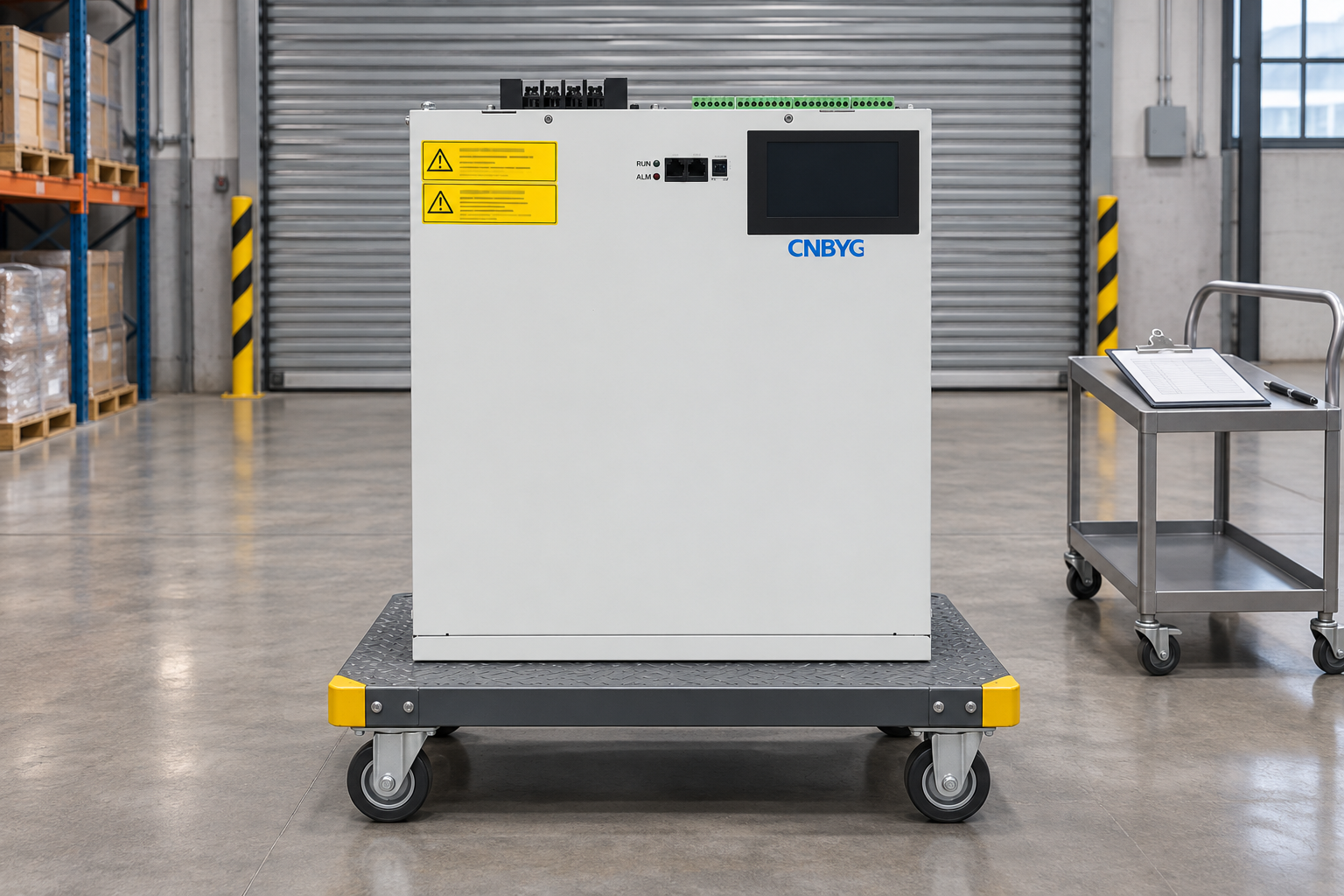
The handover record can reference the movement date, equipment identification, handling drawing revision, receiving inspection and outstanding issues. It should also indicate whether the installation team may proceed. This coordination record is useful evidence of responsibility; it does not replace certificates, inspection records or permits required by the site.
Resolve changes through a clear stop point
Write down the conditions that require the supervisor to stop and obtain a revised decision. Examples include a different delivered assembly, unavailable approved accessories, unexpected route obstructions, damaged support points or a landing surface that is not ready. Do not allow an informal workaround to become the only record of a changed method.
A workable change process identifies the decision maker and the evidence needed to restart. If the original route is blocked, record the replacement route and reassess its constraints. If unpacking must occur earlier, confirm the handling method for the unpacked unit. The aim is to prevent schedule pressure from quietly changing the assumptions of the approved plan.
After positioning, continue with the equipment-specific installation checks and later AHF commissioning procedure. Handling acceptance does not establish electrical readiness. Similarly, the cabinet location should be coordinated with AHF ventilation and cooling requirements so that a successfully delivered unit can actually operate and be maintained in the intended space.
A safety lesson for the handover briefing
The OSHA educational film below examines a crane accident. Use it to discuss why equipment condition, planning and controlled work matter; it is not an AHF lifting demonstration or a substitute for the supplier’s handling instructions. The crew briefing should stay focused on the approved method for this delivery and the authority to stop when conditions differ.

Frequently asked questions
Can cabinet mounting screws be used as lifting points?
Only if the supplier explicitly approves them for the exact assembly and handling arrangement. A mounting feature is not automatically a rated lifting attachment. Obtain the handling drawing and resolve any uncertainty before movement.
Is the product catalogue weight enough to select handling equipment?
Use a confirmed mass for the actual delivery configuration. Packaging, accessories and populated assemblies can differ from a catalogue illustration. The competent planner must assess the complete handling arrangement, not mass alone.
Who should prepare the AHF cabinet lifting plan?
Assign a competent person with experience appropriate to the planned movement, supported by supplier handling information and the site survey. Make planning, supervision, unloading and internal transfer responsibilities explicit in the delivery scope.
Does successful delivery mean the AHF is ready to energize?
No. Handling and positioning are separate from electrical installation, protective measures, inspection and commissioning. Release the equipment to the next stage only after the responsible teams close the requirements for that stage.