AHF Repair Returns: RMA Evidence and Packing Handover
An AHF repair return should begin with manufacturer confirmation of the equipment identity, the fault evidence, the permitted service scope and the receiving destination. A return material authorization, often called an RMA, connects that agreement to the physical shipment. It is not proof that the product is defective, covered by warranty or safe to handle. This guide explains the records a plant can prepare before sending an active harmonic filter for evaluation. CNBYG return conditions, packing requirements and service availability must be confirmed for the actual order; no general policy is assumed here.
Confirm that a return is the agreed next step
An alarm, reduced harmonic compensation or a communications problem can have several causes. Before arranging freight, give the service contact the available evidence and ask whether the appropriate next step is further diagnosis, an authorized site visit, a component evaluation or return of the complete unit. Do not remove equipment merely because a fault message mentions a part.
Describe the operating symptom without claiming a confirmed root cause. Record when it started, whether it is continuous or intermittent, the operating condition at the time and what changed beforehand. Include any existing diagnostic record collected through an approved method. Repeatedly restarting a faulted unit to create a video may add risk or destroy useful evidence; request a suitable capture plan instead.
Use the AHF alarm troubleshooting guide to organize initial questions, while retaining the exact model instructions as the controlling reference. A remote conversation cannot verify every electrical condition. The return decision should state what has been established, what remains unknown and why off-site evaluation is appropriate.
Create an identity record that survives unpacking
Collect the model designation, serial number where supplied, purchase order, delivered configuration and site asset reference. Photograph the accessible identification without opening equipment or entering an unsafe area. If the identification cannot be obtained safely, tell the service contact and agree another way to reconcile the asset.
The CNBYG active harmonic filter product page identifies the relevant product family. It does not establish the exact configuration of a unit installed at a particular site. Screen layout, external dimensions or a similar-looking enclosure are insufficient to authorize an interchangeable replacement or decide which subassembly can be removed.
List the items proposed for return. Distinguish the whole assembly from separately supplied accessories, external sensors and documents. Ask which parts the receiving organization needs and which should remain on site. Include the agreed list in both the service record and packing record. This avoids a diagnostic delay caused by a missing necessary item or unnecessary shipment of unrelated plant equipment.
Preserve a concise fault history
Build a timeline from first observation to the current state. Include alarms as displayed, relevant operating conditions, authorized actions already taken and the observed results. Separate measured values from operator recollections. When timestamps come from different systems, note their time zones and any known clock discrepancy.
Document changes that may matter: maintenance, wiring work, altered loads, protection events or environmental incidents. Do not assume that a change caused the fault merely because it occurred shortly before it. A useful history identifies a sequence and makes uncertainty visible. It should help the evaluator choose diagnostic work without presenting speculation as a confirmed failure mechanism.
Keep copies of approved configuration information where the equipment and procedures permit access. Do not assume that the unit supports export, USB access, user firmware changes or remote service. The NIST configuration management guide provides a general framework for controlled changes and documented configurations. It is not an AHF service manual or evidence of CNBYG software capabilities.
Agree the return scope in writing
Ask the receiving organization to confirm its reference number or equivalent written approval, destination, contact, accepted items and required documentation. Clarify whether the initial scope is inspection, diagnosis, repair quotation or another service. Evaluation acceptance is not the same as agreement to carry out every possible repair.
Resolve commercial questions through the actual terms: transport responsibility, quotation approval, warranty assessment and what happens if repair is declined. Do not infer these from another manufacturer’s published policy. Save the correspondence alongside the technical record so that the people packing the product can see the current agreement.
The following preparation matrix is a suggested plant record. It does not replace manufacturer instructions, dangerous-goods requirements or the applicable transport contract.
| Record | Useful evidence | Question to resolve before dispatch |
|---|---|---|
| Equipment identity | Model, serial reference, order and accessible identification photographs | Is the receiving team expecting this exact asset? |
| Reported symptom | Alarm text, timeline and approved operating records | What has been observed rather than inferred? |
| Previous intervention | Work record, approved change and outcome | Has the equipment changed since the original symptom? |
| Electrical release | Responsible person’s completed isolation and removal record | Has removal and handling been authorized under the site procedure? |
| Return approval | Service reference, destination and agreed item list | Is the shipment authorized and correctly addressed? |
| Condition and packing | External condition photographs and agreed packing method | Can arrival condition be compared with dispatch condition? |
| Receiving contact | Named role, arrival instructions and tracking reference | Who will acknowledge receipt and identify discrepancies? |
Control isolation and removal as a separate job
Service paperwork does not establish a safe electrical state. A competent person must plan isolation, verify the relevant conditions and control stored energy using the actual installation instructions and site procedures. Do not use an assumed waiting period taken from another filter model. An inactive screen does not prove that accessible parts are safe.
The HSE guidance on electricity at work explains the importance of suitable precautions and competence around electrical systems. Its UK context must be considered alongside the requirements applying at the installation. This article provides no live-work method, discharge recipe or permission for an unqualified person to remove cables.
Agree how the installation will be left after removal. The remaining panel, cables, current-transformer circuits and associated controls may require engineering decisions that cannot be settled by the freight team. Keep those site decisions distinct from the returned asset’s service scope. Record the responsible person and the permitted state of the remaining system.
Request packing instructions for the actual unit
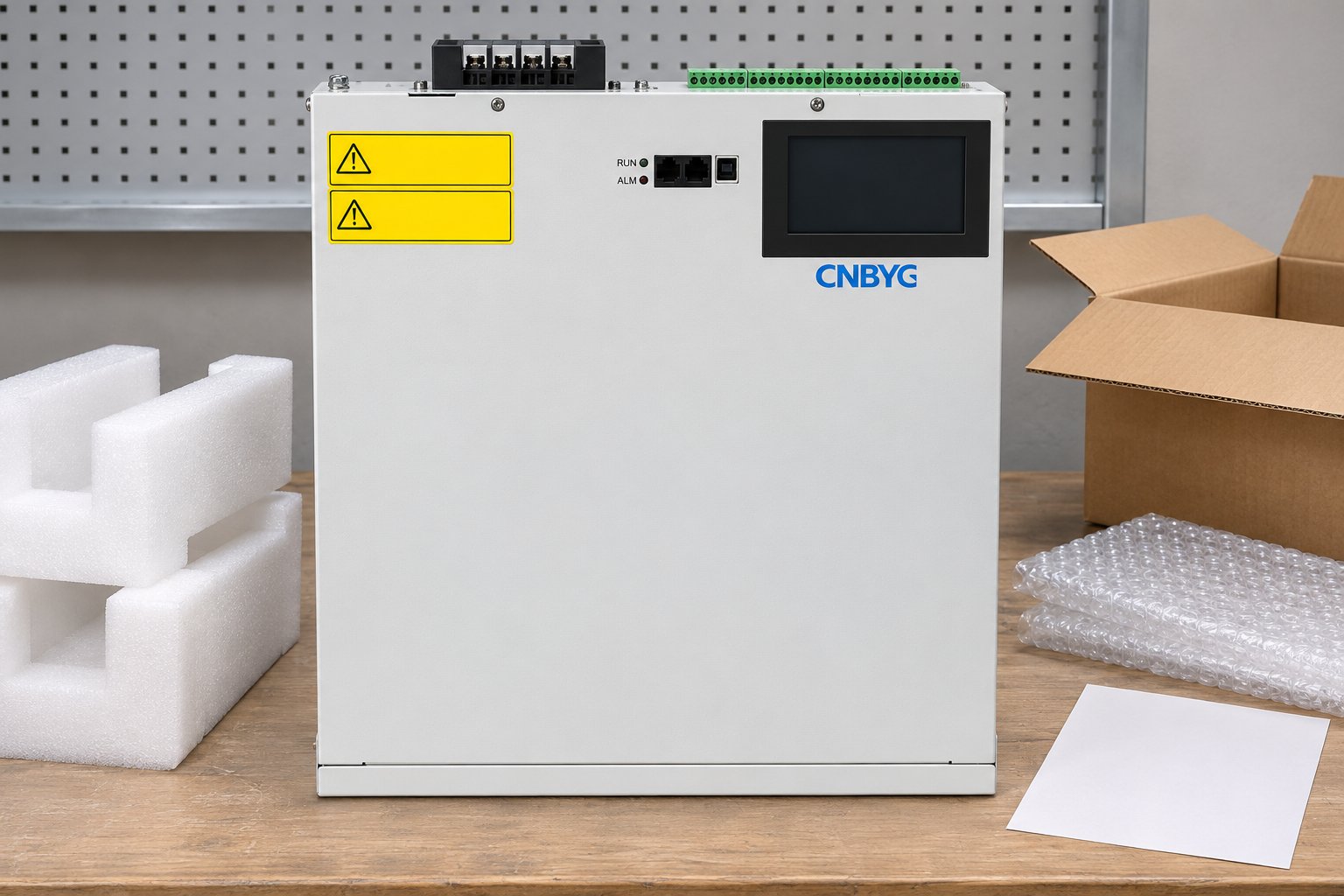
Confirm the approved orientation, support points, protection of exposed interfaces and packing arrangement with the manufacturer or responsible packaging specialist. A crate that fits the enclosure may still load a screen, terminal block or unsupported panel. Do not assume the packing used for a smaller module is suitable for a complete assembly.
Inspect reusable original packaging before relying on it. Water exposure, crushed supports or missing inserts can invalidate its intended protection. If the original packaging is unavailable, obtain an accepted alternative rather than improvising support from loose filling. Handling and lifting must follow the actual mass, center of gravity and designated provisions established for the delivered equipment.
Photograph the external condition before packing and the accepted support arrangement before closing the package. Include the listed accessories without allowing them to move against the unit. Keep loose documents in a protected location agreed with the receiver. Avoid placing anything inside the enclosure unless expressly instructed through an approved procedure.
Declare unusual condition before the carrier arrives
Tell the manufacturer and carrier about contamination, liquid exposure, fire exposure, visible damage or other unusual conditions. Do not clean away evidence or ship an affected unit as ordinary clean electronics without an appropriate assessment. Different conditions may change whether the receiving organization can accept it and how it must be handled.
Avoid inferring material composition from the product category. A plant needs the applicable product information and competent assessment to determine any special transport or waste requirements. A repair return and a waste transfer are different decisions. If evaluation results in disposal, agree the subsequent route and records rather than allowing the original return reference to stand for all later actions.
For recurring work, connect the return history to the AHF maintenance record. A repaired unit may need a revised maintenance entry, while a replacement needs its own identity. The service history should remain intelligible after the equipment has changed location or the plant team has changed personnel.
Use a dispatch and arrival handover
The dispatch handover should connect the equipment identity, package count, packing list, condition photographs, service reference and tracking information. Record who released the shipment and who accepted it for transport. Do not leave the factory service team to infer the site asset from an unlabelled box and a separate email with no serial reference.
Ask the receiving organization to acknowledge arrival and report package damage or missing items before evaluation changes the condition. Retain the arrival acknowledgement with the dispatch record. If damage is identified, preserve the evidence and coordinate the response through the agreed carrier and service process rather than assuming whether the fault predated transport.
When a repaired or replacement unit comes back, its arrival is not permission to energize it. Confirm the returned identity, service report, approved configuration and required installation checks. The active harmonic filter commissioning guide provides a separate framework for planning return to service with the appropriate personnel.
A practical example of a useful return record
In a hypothetical case, an AHF intermittently stops compensating after a plant load change. The plant records the displayed alarm, operating timeline and authorized checks. The manufacturer requests the complete unit for evaluation and confirms the destination and item list. The plant then plans safe removal, obtains packing instructions and creates dispatch photographs.
The return record states that the symptom is unresolved, rather than declaring a failed power component. If the evaluator later identifies a different cause, the initial history remains accurate. On return, the plant compares the service findings with the original symptom and determines the appropriate commissioning scope. This example describes a record method, not an actual CNBYG incident or guaranteed service outcome.
Hazardous energy awareness before removal
This US Department of Labor electrical panel accident lesson supports general hazardous energy awareness. It supports planning and communication; it does not provide AHF-specific isolation instructions or replace the competent person’s assessment.

Frequently asked questions
Is an RMA number a warranty approval?
No. A return reference identifies an agreed receiving or evaluation process. Warranty coverage, repair approval and costs depend on the actual terms and the manufacturer’s assessment.
Should all accessories be sent with the filter?
Send the agreed item list. Ask the receiving team which accessories are required for evaluation and which must remain at the installation, then document the decision in the packing record.
Can the original crate always be reused?
Only after confirming that it remains complete, sound and suitable for the actual unit and journey. Obtain accepted packing instructions if supports are damaged, missing or uncertain.
Can a returned repaired AHF be energized immediately?
Receipt alone does not authorize energization. Confirm identity, service findings, configuration and the applicable installation and commissioning checks through the responsible personnel.