AHF Service Report Acceptance: Evidence for Maintenance Closeout
AHF service report acceptance should confirm which filter was serviced, what the approved task required, what was actually found and done, and which evidence supports the final operating decision. A signature acknowledging a technician’s attendance does not establish that every required check passed. Review the report against the work order and the installed model’s instructions, retain unresolved items, and identify who can authorize return to service. This guide provides a maintenance closeout framework; it does not supply universal AHF test limits, repair instructions or a substitute for competent electrical assessment.
Separate attendance, completed work and technical acceptance
A service visit can finish while the equipment remains restricted or unavailable. The report should distinguish arrival and departure, tasks performed, tests completed, results obtained and the final condition. “Service complete” is ambiguous unless the contract and accompanying evidence explain what that phrase means. Ask the report author to use specific descriptions.
Identify the person signing and the meaning of their signature. A stores employee might acknowledge receipt of a returned component, while the responsible electrical engineer reviews the technical evidence. The owner may separately accept the commercial service delivery. Keeping these decisions explicit prevents one signature from being interpreted as approval of matters outside that person’s authority.
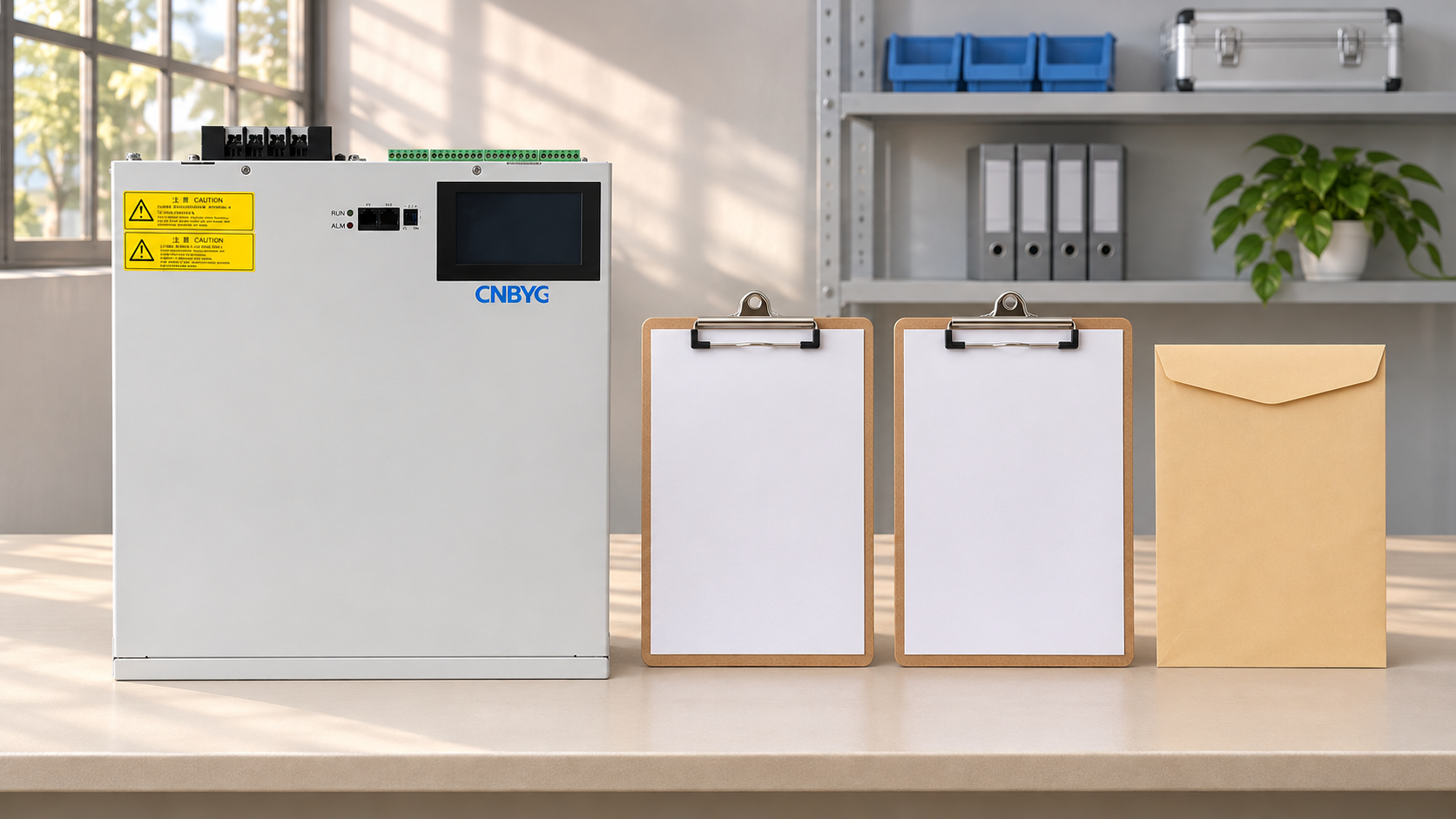
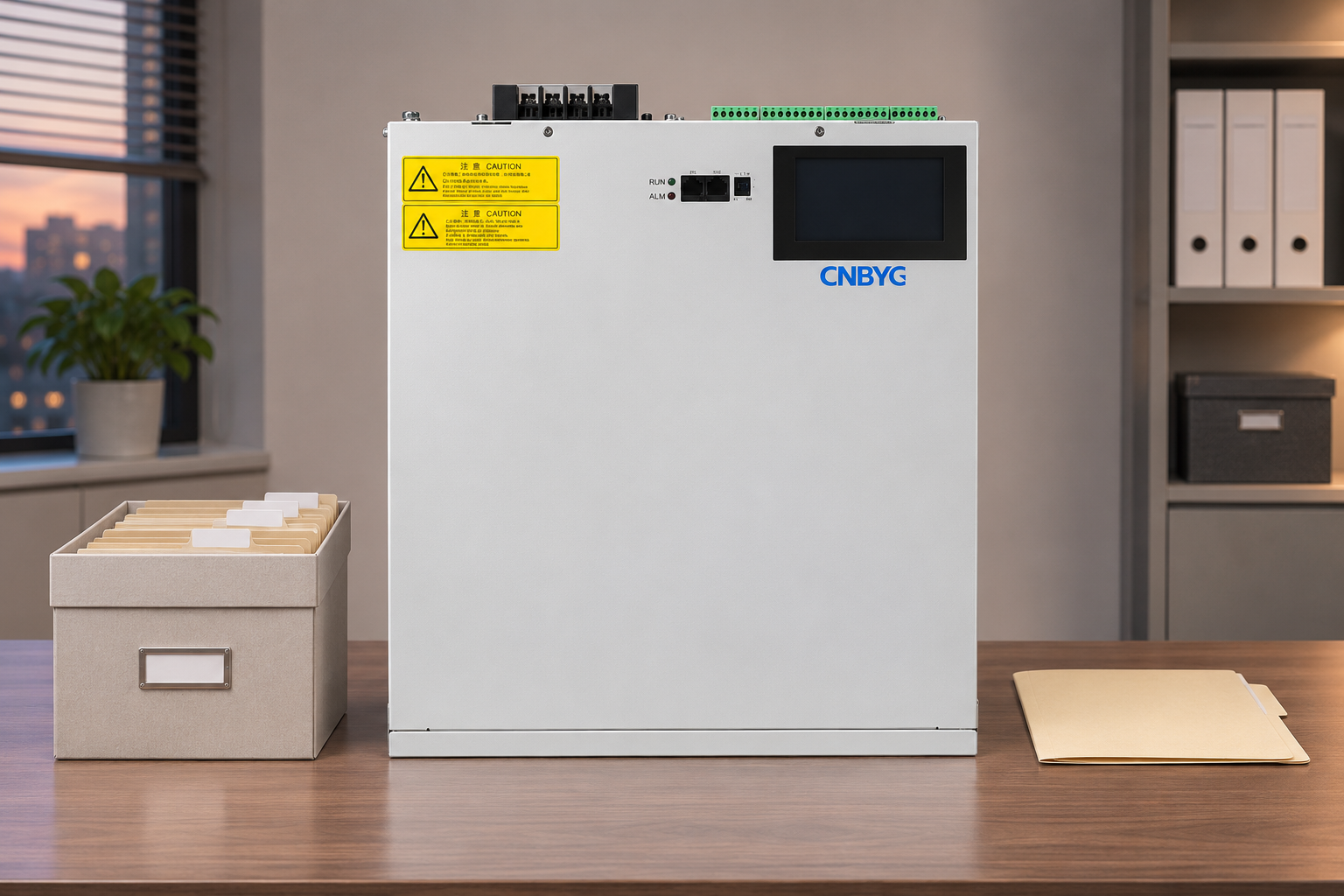
The CNBYG active harmonic filter page provides the relevant product context. Review the actual installed model, serial number and manufacturer documentation. A public product description or generated illustration cannot establish that a particular intervention was performed on the customer’s unit.
Match the report to the authorized scope
Start with the work order, reported problem, approved procedure and any agreed exclusions. Compare each required task with the report’s corresponding observation or result. A checklist marked “done” without supporting detail may be insufficient where the task required a measurement, inspection finding or documented setting check.
Record deviations rather than hiding them in narrative. Examples include an inaccessible inspection area, an unavailable operating state or a replacement deferred pending manufacturer advice. Assign an owner to each deviation and state whether it prevents acceptance. A missing photograph and an unresolved protective fault have different consequences; the responsible reviewer should classify them using the actual job requirements.
Do not expand the original request retrospectively to make incomplete work appear satisfactory. If the site agrees to a reduced scope, retain the amended authorization and state what remains outside it. The record should allow a later engineer to see why a task was omitted and who accepted that limitation.
Confirm asset identity and intervention history
The report should connect the site tag, model, serial number and location with the work performed. Where multiple units share a cabinet or parallel arrangement, identify the affected unit precisely. A photograph of an enclosure is helpful, but an image without a reliable link to the job and asset can create uncertainty rather than resolve it.
For a repair return, connect the service report to the return authorization and the equipment received back on site. Record any approved assembly replacement or change in identification. Do not assume that visually similar modules are interchangeable. Manufacturer confirmation and the site’s asset records should support any replacement relationship.
The AHF maintenance schedule article explains how operating history informs planned attention. A closeout report adds the outcome of one intervention to that history; it should not silently reset all future maintenance obligations or erase earlier unresolved findings.
Use an evidence matrix for the acceptance review
The following table is a suggested review aid. Exact tests, limits, personnel qualifications and statutory records depend on the equipment, project and jurisdiction. The matrix does not create a new test requirement or declare that any CNBYG model supports a particular diagnostic function.
| Review item | Evidence the report should identify | Follow-up when evidence is insufficient |
|---|---|---|
| Equipment identity | Site tag, model, serial and work location | Resolve the identity before attaching results |
| Initial condition | Complaint, observed state and relevant event history | Separate reported symptoms from verified findings |
| Authorized work | Work order and procedure revision | Obtain approval for deviations or extra work |
| Measurements | Value, unit, method, instrument and conditions | Request the missing context; avoid a false comparison |
| Parts or settings | Approved item identity or change reference | Confirm suitability and the resulting baseline |
| Final condition | Completed checks, remaining limits and restrictions | Keep unperformed or failed checks visible |
| Acceptance | Reviewer role, decision, date and open-item owner | Clarify whether signature means receipt or approval |
The EMSD electrical installation O&M framework supports traceable maintenance records and reference to manufacturer requirements. Its broader installation guidance is useful for record organization. It does not certify a service contractor or establish product-specific acceptance thresholds for an AHF.
Check whether measurements answer the question
A measurement needs context to be useful. Record where it was taken, the operating condition, instrument identity, applicable setup and the criterion used to interpret it. If a value is compared with a baseline, establish that the observation point and relevant conditions are comparable. Preserve units and the distinction between measured quantities.
For harmonic performance, a changed production load can alter the result even when the filter itself is unchanged. The report should describe the witnessed operating state and any limitation on representing other states. Avoid converting a short observation into a claim of continuous compliance. The agreed project method determines the required duration and assessment boundary.
Use the AHF commissioning guide when the intervention requires re-establishing performance evidence. The service report should identify which commissioning observations were repeated and why. It should not copy a generic commissioning checklist into the attachment and mark every item passed without a corresponding record.
Review findings, diagnosis and corrective action separately
A good report distinguishes what the technician saw, the conclusion reached and the action taken. “Overtemperature message displayed” is an observation. The cause needs appropriate investigation. Cleaning or replacing an approved component is an action. None of those statements alone proves the fault will not recur under a different load or ambient condition.
Preserve abnormal readings and failed observations alongside the eventual result. If the technician repeats a check after correction, connect the two records rather than replacing the first result. This makes the reasoning understandable and helps a future engineer recognize repeated problems.
The AHF alarm troubleshooting guide explains why a reset does not demonstrate a repair. At closeout, the report should state whether the original symptom was reproduced, which cause was confirmed, what correction was authorized and which observation supports the final conclusion. Unconfirmed causes should remain labeled as such.
Confirm safe restoration through the responsible process
The service report should reference the applicable site permit and restoration process. Electrical personnel must determine the required checks before return to service. Do not invent universal discharge times, insulation test voltages or access methods for power-electronic equipment. The manufacturer’s instructions and local requirements govern the actual work.
HSE’s work-equipment guidance emphasizes competent maintenance and maintaining equipment safely. Its discussion of records also makes clear that maintenance-log obligations are not identical for every circumstance. Use that guidance as context, rather than asserting a worldwide legal requirement for one particular report format.
The closeout decision should state the actual condition: available for the approved operating scope, restricted, isolated pending further work, or another explicitly defined site status. The reviewer should identify who communicates that condition to operations. A report filed in an archive is ineffective if operators continue under an outdated assumption.
Manage open items without losing the service outcome
List each open item with its evidence reference, owner, action and due date. State whether it concerns documentation, follow-up monitoring, an operational restriction or work required before release. If the classification changes after review, retain the decision history and notify the people relying on the equipment status.
For example, a missing instrument reference may require a corrected report, while an uncompleted safety-critical check may prevent return to service. These are illustrative distinctions, not a determination for a particular installation. The responsible engineer must judge the actual consequence and supporting evidence.
Avoid open items with no meaningful completion condition, such as “monitor later.” Identify what observation is needed, under which operating state, who reviews it and what would trigger escalation. This turns a vague recommendation into a manageable next action without pretending that the observation has already occurred.
File the accepted report where it can be used
Link the accepted report to the asset register, work order, relevant drawings, approved changes and retained evidence. Keep the original technician submission and the accepted revision distinguishable. If a corrected report is issued, make the current version easy to find while preserving the earlier record where the site’s retention process requires it.
The next maintenance planner should be able to identify the final equipment condition, repeated faults, changed parts or settings and remaining actions. Commercial acceptance should not obscure technical restrictions. Review access to sensitive attachments separately so the information needed for operations is available without exposing credentials or restricted service material.
Electrical safety learning for report reviewers
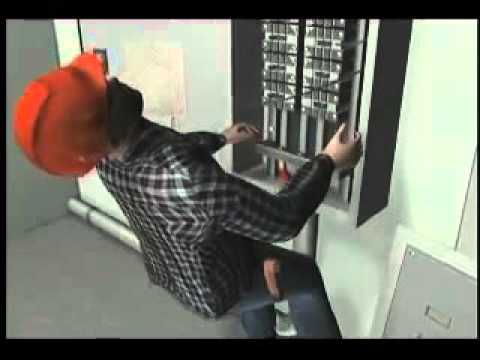
The US Department of Labor video below examines a fatal panel repair incident. It illustrates why a completed attendance sheet cannot establish a safe intervention. The lesson supports safety review; it does not provide an AHF repair method or validate a particular service report. The written report must stand on the actual job evidence and authorized decisions.
Frequently asked questions
Is a technician’s signature enough to accept an AHF service report?
No. The signature identifies a statement or acknowledgement, but acceptance also depends on the authorized scope, supporting evidence and the signer’s responsibility. Record whether each signature means attendance, receipt, technical review or another defined decision.
Can a report be accepted with open items?
Some documentation or follow-up items may remain open if the authorized reviewer permits it. Safety or performance limitations must remain explicit, with the equipment status, action owner and release conditions defined by the responsible site authority.
What if before-and-after harmonic readings differ?
Check the observation point, instrument setup, operating load and other relevant conditions before interpreting the difference. A changed value alone does not prove that maintenance improved or worsened the filter’s performance.
Should failed checks be removed after a successful retest?
No. Retain the original finding, corrective action and retest evidence as a connected history. The final accepted result should explain how the earlier problem was addressed and identify any remaining limitations.