AHF Service Contractor Competence: Check Evidence for the Exact Task
An AHF service contractor competence review should match the named person’s evidence to the exact work being assigned, the equipment involved and the site’s controls. Review relevant training, comparable experience, understanding of the proposed method and the limits of the person’s authority. A company brochure or a general electrical qualification alone does not explain whether a particular specialist task is covered. Record the decision, any supervision required and the work that remains outside scope. This guide helps procurement and maintenance teams organize that review without creating a new qualification scheme or replacing local licensing requirements.
Specify the task before requesting qualifications
“Service the AHF” is too broad to assess consistently. An external condition observation, a planned measurement, a replacement intervention and a proposed configuration change can require different knowledge and permissions. Write a task description with the responsible technical person before asking the contractor for evidence. It should identify the work boundary, relevant equipment documents, expected deliverables and activities that are explicitly excluded.
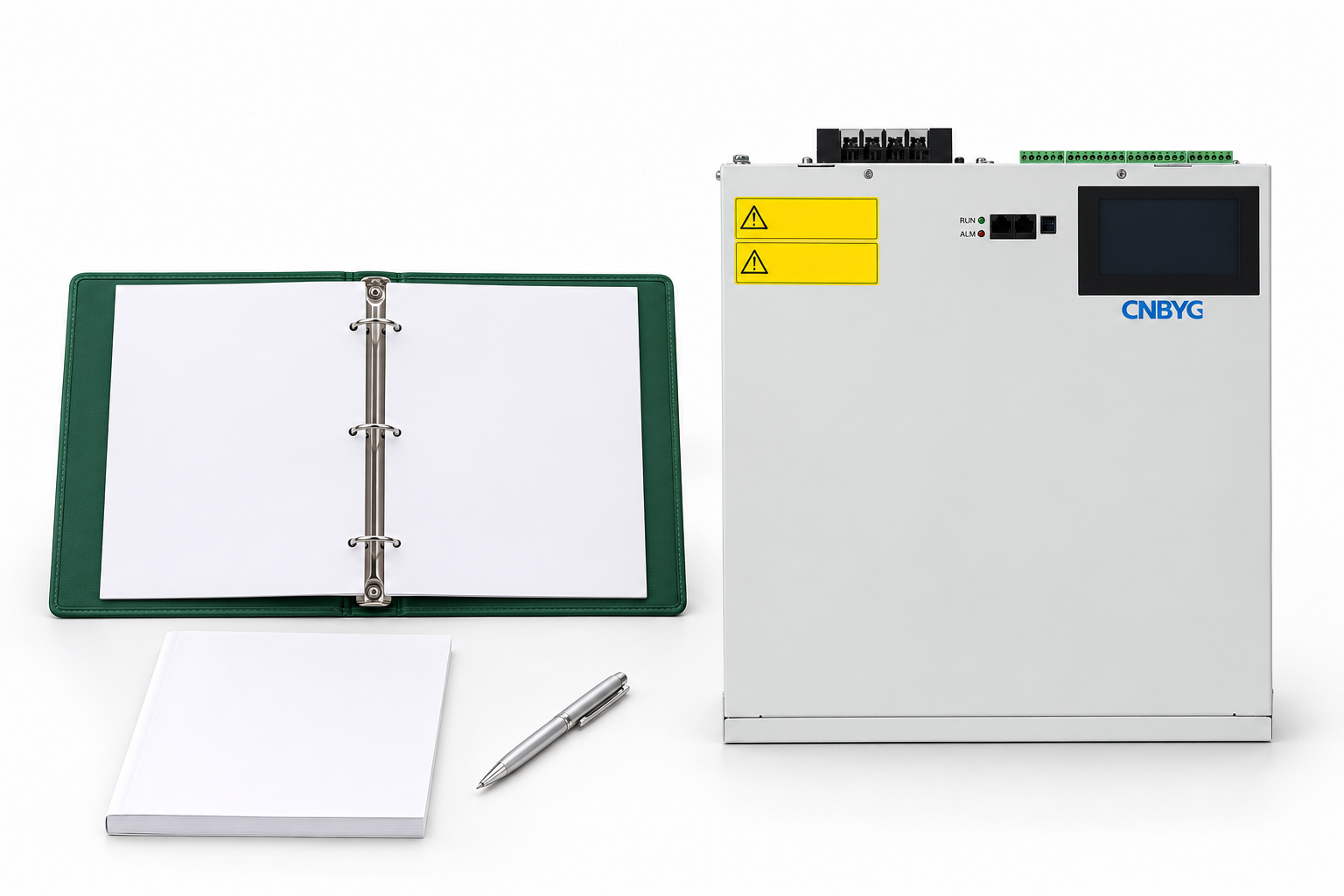
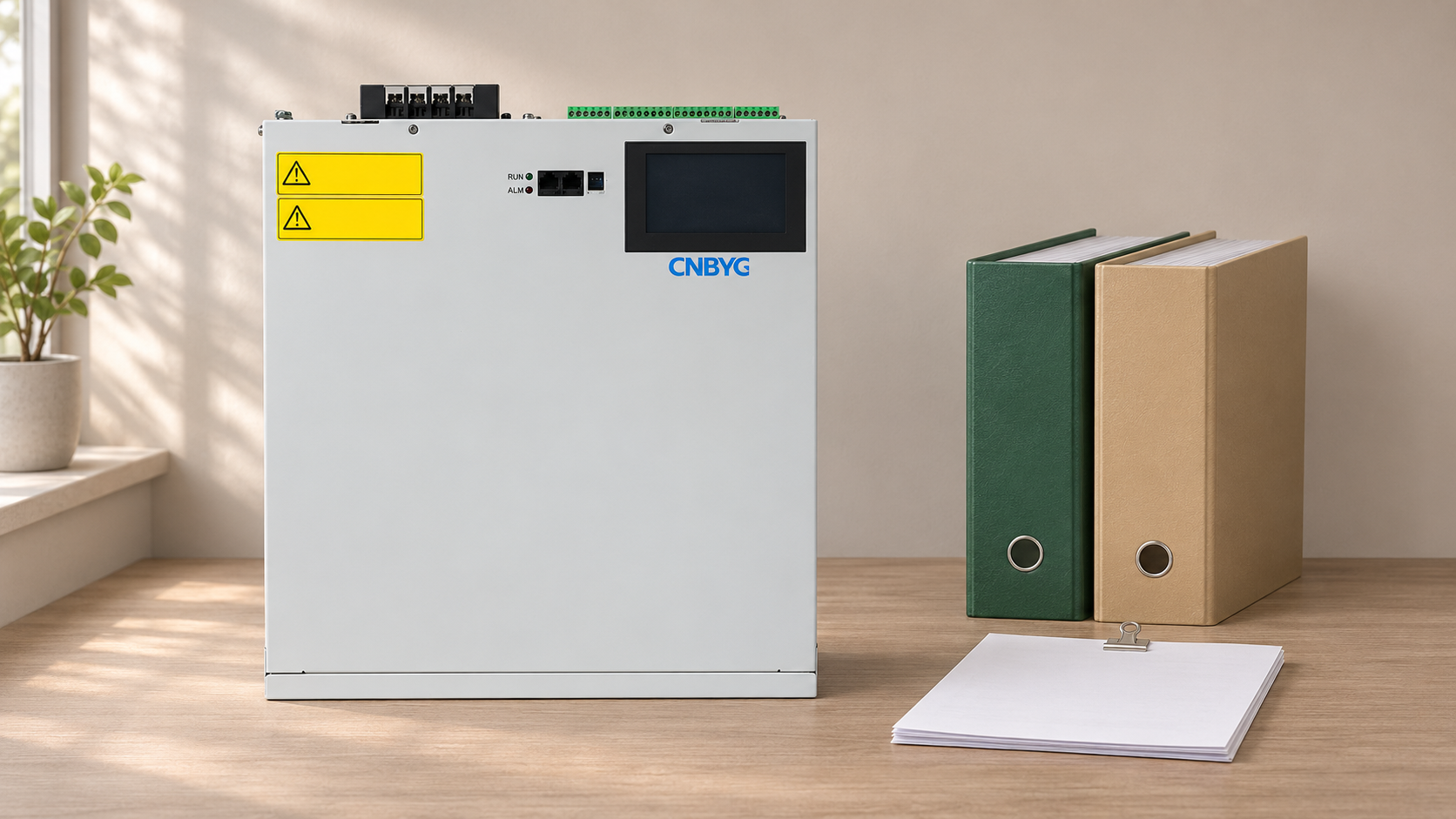
Start with the actual CNBYG active harmonic filter product and the installed model and revision records. Do not infer service methods or qualifications from the front panel’s appearance. Obtain manufacturer instructions applicable to the supplied unit. If the proposed work involves a method that the available documents do not cover, resolve that question with the appropriate technical authority before treating the contractor’s commercial offer as an approved work plan.
The HSE guidance on work with electrical equipment connects competence with the complexity of the task and evidence of relevant training and experience. It also discusses supervision where competence has not been demonstrated. That is general UK safety guidance, not a CNBYG certification program. Local legal requirements and the site’s approved arrangements still need to be checked for the actual job.
Separate company capability from the assigned person’s capability
A supplier may have an experienced engineering department while assigning a different individual to the visit. Request the names and roles of the people who will perform, supervise and review the work. If personnel may change, specify how a substitute will be reviewed before taking over. A long company reference list cannot answer questions about a particular person’s familiarity with the proposed task.
Check the evidence source as well as the document title. A training certificate should identify the person and the scope of the training sufficiently for the reviewer to judge relevance. Where verification is necessary, use the issuing organization’s legitimate route. Do not collect unrelated personal information simply because it is available. Retain the minimum evidence needed under the site’s procurement and privacy rules.
Distinguish attendance from assessment when the documents allow that distinction. Participation in a product presentation is useful background but does not automatically demonstrate practical ability. Ask how the person has applied the relevant knowledge under comparable conditions, and who reviewed that work. If the evidence is incomplete, record the gap instead of converting a familiar employer name into an assumption of competence.
Use a task-specific evidence matrix
The following is a proposed review aid. It organizes questions rather than assigning a universal pass score. The responsible reviewer should determine the actual acceptance requirements from the work, applicable law and site procedures.
| Review area | Useful evidence | Question that remains for the reviewer |
|---|---|---|
| Person and role | Named technician, supervisor and technical reviewer | Who will actually perform each part of the work? |
| Relevant training | Training scope and assessment details where applicable | Does it cover the proposed activity? |
| Comparable experience | Documented examples with a verifiable scope | Is the experience relevant to this equipment and task? |
| Equipment knowledge | Applicable instructions and explanation of their limits | Can the person locate the correct method and recognize uncertainty? |
| Site controls | Required induction, authorization and communication route | Is permission for this site separately established? |
| Supervision | Named supervisor and defined oversight arrangement | Is the arrangement suitable and actually available? |
| Deliverables | Proposed records and responsible acceptance owner | Can the completed work be assessed against the agreed scope? |
For US workplaces, OSHA’s electrical safety training rule provides a separate jurisdiction-specific reference on training for employees exposed to electrical risk. It does not establish a globally interchangeable contractor license. The matrix above is an administrative proposal; it should not be presented as an OSHA or HSE prescribed form.
Test the connection between evidence and the proposed method
Ask the contractor to explain which instructions govern the work and where the proposed task stops. The purpose is to expose a mismatch before mobilization, not to run an improvised technical examination by an unqualified buyer. The appropriate technical reviewer should evaluate the response. A clear acknowledgement that a particular operation is outside the contractor’s scope can be more useful than an unsupported promise to handle everything.
Useful review questions concern the exact work: how the person confirms the equipment identity, what information must be available before starting, how uncertainty is escalated, and which changes require new authorization. Do not ask the contractor to demonstrate competence by opening equipment or improvising a live test during a procurement meeting. Any practical assessment must itself be planned and authorized with suitable controls.
For installation-related work, the AHF installation checklist helps identify documentation topics that may need a responsible owner. It does not turn a completed checklist into proof of personal competence. The review should link the evidence to the actual responsibilities rather than treating the number of documents supplied as the acceptance criterion.
Record supervision and authorization as separate decisions
When supervision is part of the approved arrangement, identify who provides it, what work it covers and when that person must be present or available under the site’s procedure. “Engineer on call” may be too vague to evaluate. The responsible authority needs to decide whether the proposed arrangement is suitable for the task; an administrative reviewer should not invent the required level of oversight.
Site authorization also needs its own record. A technically experienced contractor may still need induction, access permission, an accepted method and the relevant work authorization before starting. Conversely, a visitor badge or completed induction does not demonstrate specialist electrical ability. Keep these records connected while retaining the difference between permission to enter, competence for the task and permission to perform the planned work.
If the scope expands during the visit, return the new activity for review. Approval to observe an external condition does not automatically cover a component replacement or a configuration change. Record the requested change and the person responsible for assessing the additional evidence. Do not rely on an informal conversation to expand a carefully bounded purchase order.
Define what an acceptable service record must contain
Agree the expected evidence before work starts. The deliverables may include the applicable work reference, confirmed equipment identity, tasks completed, relevant observations, outstanding limitations and the responsible person’s report. The exact requirements depend on the agreed scope. A maintenance photo can support an observation, but it should not replace a required measurement or an authorized technical conclusion.
Use the broader AHF maintenance schedule guide to connect the visit to the maintenance program. A competence review evaluates who can carry out the assigned work; the maintenance program determines which work is needed and when. Keeping those questions separate helps prevent a contractor’s available skills from becoming the sole basis for deciding what the equipment needs.
The person accepting the report should be named independently of the contractor’s salesperson. Report acceptance checks the agreed deliverables and technical disposition where required. It should not retroactively supply missing work authorization. If an activity was not covered by the approved scope, preserve that fact and follow the site’s escalation process rather than rewriting the original plan to make the file appear complete.
Illustrative review: an experienced technician with an uncovered task
Consider a hypothetical contractor offering general electrical maintenance experience for a visit that includes a specialist AHF change. The evidence supports routine work on comparable installations but does not establish familiarity with that particular change method. The reviewer records the gap and separates the supported work from the proposed additional activity. The commercial offer remains a proposal until the responsible authority accepts the necessary evidence and method.
Possible outcomes include revising the scope, assigning a suitably reviewed specialist or arranging an approved supervision plan. The right choice depends on the job. There is no universal certificate count or number of years that this article can use to approve the person. This example illustrates a review decision, not a claim about an actual contractor, completed CNBYG service case or guaranteed competence threshold.
When the assigned task involves an approved service computer, also review the AHF service laptop authorization guide. Permission for a particular workstation is a separate control and does not establish the technician’s competence or authorize an equipment change.
Electrical work safety context
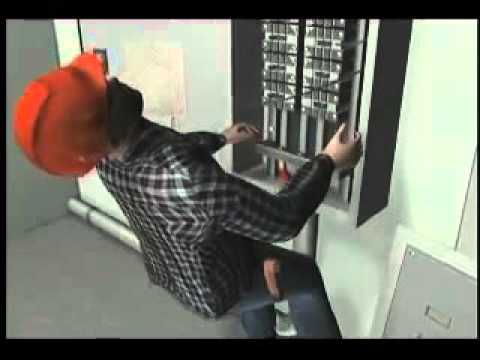
The US Department of Labor video below presents an electrical repair safety lesson. It gives context for taking task boundaries and controls seriously. It does not demonstrate AHF servicing, award a qualification or replace the evidence review described above.
Frequently asked questions
Is a general electrical qualification enough for every AHF task?
It should not be assumed to cover every specialist activity. The responsible reviewer must match the person’s evidence to the exact task, equipment and applicable local requirements.
Can company experience replace named technician evidence?
Company experience can support supplier review, but the assigned person’s role and relevant capability still need to be assessed. Personnel substitutions should follow the agreed review process.
Does site induction prove technical competence?
No. Induction addresses site information and rules. Technical capability and authorization for the particular work require their own appropriate review and records.
Can the contractor expand the work during the visit?
A changed scope requires the site’s applicable review and authorization process. Approval for one bounded task should not be interpreted as permission for every additional service activity.