Data Center Neutral Harmonics: 3P4W APF Selection Guide
Data center neutral harmonics are a distinct 3-phase, 4-wire (3P4W) problem. Single-phase IT loads, PDU branches, and many UPS-supported feeders can create triplen harmonic current—especially 3rd, 9th, and 15th orders—that adds in the neutral instead of canceling across phases. Phase currents may look acceptable while the neutral conductor, bus tie, or transformer becomes the limiting element.
This guide focuses on neutral-current investigation and 3P4W APF selection. For broader data-center APF/SVG strategy, see the data center APF and SVG guide.

Part 1. Why is neutral harmonic current a separate data-center problem?
In a balanced 3P4W system, fundamental currents cancel in the neutral. Triplen harmonics are zero-sequence components. Under balanced nonlinear loading they remain in phase across all three phases and therefore add at the neutral.
| Symptom | What operators often see | What measurement may reveal |
|---|---|---|
| Neutral overheating | Normal-looking phase loading | Elevated neutral RMS current |
| Breaker nuisance trips | Suspected overload on one phase | High triplen content with modest phase THDi |
| Transformer hot spot | IT load within nameplate | Neutral path carrying harmonic current |
| PDU alarm on neutral monitor | Intermittent during peak IT load | 3rd/9th/15th orders rising with server activity |
Schneider Electric technical FAQs note that a high third-harmonic current can create a high neutral current even when phase loading appears balanced. That is why neutral-focused guides must not be collapsed into a generic “data center harmonics” article.
For facility context, see the CNBYG Data Center solution page.
Part 2. What must be measured before selecting a 3P4W APF?
Start with time-aligned measurements at the affected bus, PDU, or switchboard—not only at the utility PCC.
| Measurement | Why it matters |
|---|---|
| Phase RMS current | Establishes load level and diversity |
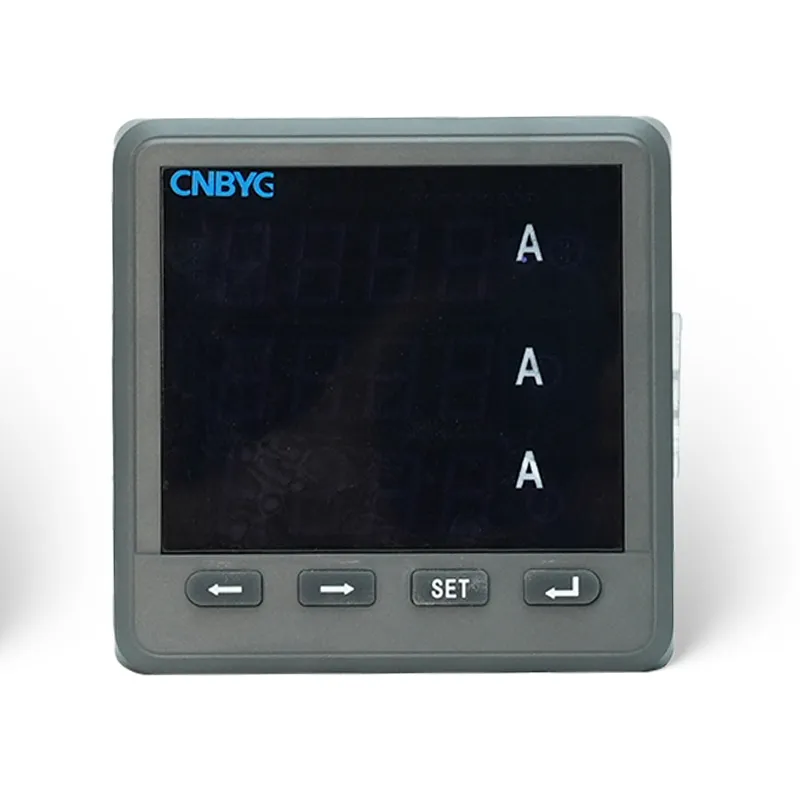
| Neutral RMS current | Confirms whether the neutral is the stressed path |
| Individual harmonic orders | Separates triplen from other distortion |
| THDi and TDD with defined method | Supports planning comparisons |
| UPS operating mode | Online, eco, or mixed modes can change the spectrum |
| Load step events | Captures server refresh, batch jobs, and transfer tests |
Fluke’s data-center monitoring guidance recommends checking phase and neutral conductors and reviewing harmonic order, not relying on one headline THD value. Record at least one representative operating window that includes normal IT load, maintenance activity, and any UPS transfer or redundancy test that changes feeder current.
Part 3. How do findings become a selection basis?
Translate the measurement file into a decision record before any supplier quote is compared.
| Finding | Engineering interpretation | Next step |
|---|---|---|
| Neutral RMS above conductor planning margin | Triplen current is material | Confirm conductor rating and upstream protection |
| Dominant 3rd/9th/15th current | Classic single-phase electronic loading | Evaluate 3P4W APF with explicit neutral capability |
| High phase THDi without neutral stress | Harmonic issue may not be triplen-dominated | Re-check wiring, load balance, and measurement point |
| Low PF with modest harmonics | Reactive-power issue may be separate | Consider SVG only after neutral-harmonic need is ruled out |
Important: A high neutral THDi percentage is not the same as a high neutral ampacity problem (Source: Eaton neutral-conductor FAQ). Eaton’s neutral-conductor FAQ distinguishes distortion percentage from actual RMS heating risk. Size and protect conductors using measured RMS current and the project’s study method, not a single alarming THD figure alone.
Part 4. What makes an APF suitable for 3P4W neutral harmonics?
A generic harmonic filter label is not enough. A 3P4W data-center APF discussion must confirm:
| APF requirement | Why buyers should verify it |
|---|---|
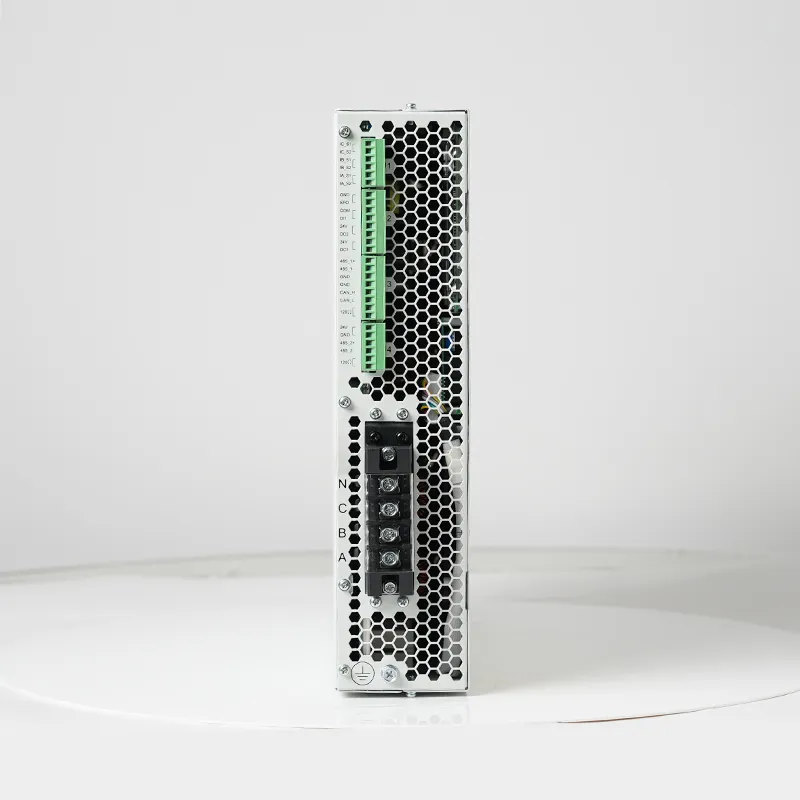
| Four-wire / neutral compensation capability | Triplen current must be addressed at the neutral path |
| Rated neutral-current compensation | Supplier documentation must match the measured need |
| CT scheme on phase and neutral conductors | Incorrect CT placement defeats compensation |
| Topology compatible with UPS feeder location | Upstream vs downstream placement changes performance |
| Redundancy, bypass, and protection coordination | Data-center availability rules still apply |
Peer-reviewed 3P4W studies and Schneider AccuSine FAQs both treat neutral-current compensation as a distinct selection task, not an automatic by-product of phase-only filtering. CNBYG discusses APF on the AHF Active Harmonic Filter page, but any product recommendation still requires measured neutral current, wiring review, and engineering confirmation.
For general APF selection workflow, see the active harmonic filter selection guide.
Part 5. Where should the APF be installed and commissioned?
Location matters because data-center feeders often include UPS, static transfer switches, PDU transformers, and redundant paths.
Typical installation review points:
- Identify whether the nonlinear load is concentrated on one PDU bus or distributed upstream
- Decide whether correction is needed at the switchboard, UPS output, or dedicated harmonic bus
- Verify neutral bus rating, lug access, and fault-duty compatibility
- Confirm CT polarity on phases and neutral before energizing
- Test under normal load, peak load, and maintenance transfer sequences
Hubbell and Eaton data-center technical papers both emphasize that mitigation selection depends on source location and UPS operating conditions. Commissioning should compare before-and-after neutral RMS current and harmonic spectrum under the same IT load profile.
Part 6. Is SVG an alternative for neutral harmonics?
Usually not as a substitute for verified neutral-harmonic mitigation.
| Equipment | Primary function | Neutral-harmonic relevance |
|---|---|---|
| APF / AHF | Harmonic-current compensation | Relevant when topology supports 3P4W neutral compensation |
| SVG | Dynamic reactive-power compensation | Does not replace measured neutral-harmonic mitigation |
| Capacitor bank | Reactive support | Not a stand-alone cure for triplen neutral current |
| Oversized neutral only | Conductor ampacity | May be required, but does not remove harmonic current |
SVG may still be evaluated when the same bus also has fast reactive-power swings or low power factor, but that is a separate decision from neutral-harmonic control.
Part 7. What belongs in an RFQ and what is outside fit?
Buyer should provide
| RFQ input | Why it matters | Typical mistake |
|---|---|---|
| Single-line diagram with grounding | Defines 3P4W paths and neutral routing | Sending only PDU schedules |
| Phase and neutral RMS logs | Supports ampacity and filter rating | Quoting from one THD screenshot |
| Harmonic spectrum by order | Shows triplen dominance | Using only aggregate THDi |
| UPS make, mode, and redundancy scheme | Changes source impedance and spectrum | Omitting eco-mode operation |
| Existing filters, capacitors, transformers | Reveals alternate harmonic paths | Ignoring K-rated or zigzag transformers |
| CT locations and cabinet constraints | Drives installability | Leaving neutral CT placement undefined |
Share the package through the CNBYG contact page for engineering review.
Fit Boundary
This article is for engineers investigating measured neutral harmonic current in 3P4W data-center switchboards. It is not a guarantee of THD reduction, uptime improvement, utility compliance, or energy savings. Do not treat SVG, capacitor correction, or conductor upsizing alone as a verified substitute for a 3P4W APF when neutral triplen current is the confirmed issue.
FAQ
What are data center neutral harmonics?
They are harmonic currents—often triplen orders—that add in the neutral conductor of a 3P4W system.
Why do triplen harmonics add in the neutral?
They are zero-sequence components and remain in phase across the three phases under balanced nonlinear loading.
Can neutral current exceed phase current?
Yes. Heavy triplen content can make the neutral the limiting conductor even when phase currents look moderate.
What is the first measurement step?
Record phase and neutral RMS current, harmonic spectrum, and UPS operating mode at the affected bus.
Can SVG replace an APF for neutral harmonics?
No. SVG addresses reactive power. Neutral-harmonic mitigation requires an APF topology with verified neutral capability.
What APF feature matters most in 3P4W systems?
Explicit neutral-current compensation, correct CT placement, and a rating matched to measured neutral harmonics.
Where should the APF be connected?
At the switchboard or feeder serving the nonlinear IT and UPS loads identified by measurement.
Is high neutral THDi automatically an emergency?
No. Distinguish distortion percentage from RMS ampacity and protection risk using a full study.