

A dominant harmonic order can make a comparison easier to frame, but it does not remove the need for topology, operating cases and measurement boundaries. Compare passive filtering and APF as two evidence paths, not as universal answers.

Direct answer
Use the measured dominant order to define the question, then test whether the passive-filter or APF evidence path matches the changing system. Keep source impedance, resonance risk, load movement and the decision boundary visible; one spectrum does not prove fit.
Part 1. Name the dominant-order question
Start by stating which harmonic order is dominant, where it was measured and what decision the comparison must support. Record whether the order is stable, intermittent or different across operating states.
| Question | Evidence | Not proved |
|---|---|---|
| Is one order consistently dominant? | repeated spectra and load notes | a filter rating |
| Does the order move with production? | operating-case captures | a universal solution |
| Is the decision at the PCC or feeder? | one-line and measurement point | project acceptance |
Part 2. Compare passive-filter evidence
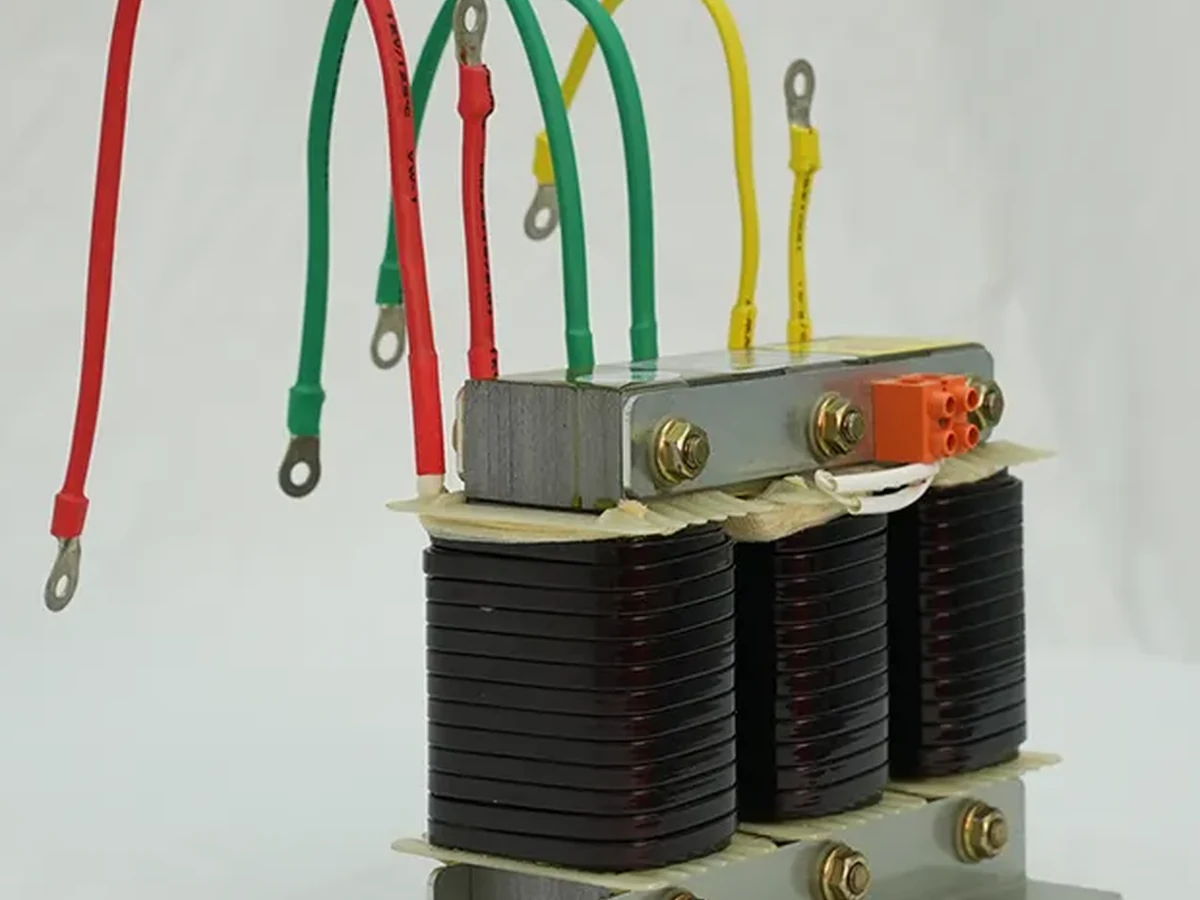
Passive filtering requires a clear study boundary around tuning, source impedance, capacitor interaction and expected operating cases. A reactor or filter image provides product context; it does not establish a tuning point or resonance outcome.
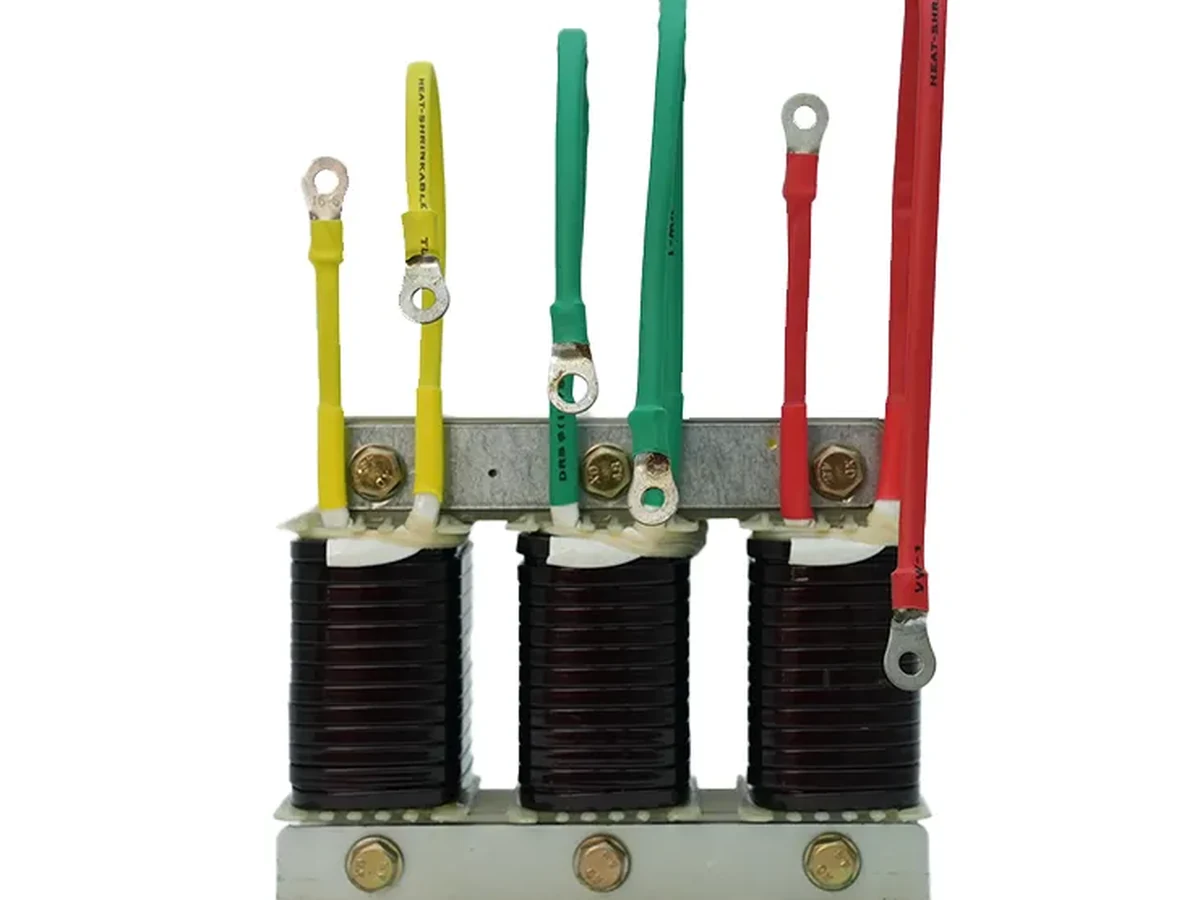
The Schneider harmonic-solutions guide places passive arrangements within the wider system context. Carry the source and load assumptions into the review rather than treating the dominant order as a standalone specification.
Part 3. Compare APF evidence
APF review should identify the load profile, current or voltage measurement point, control objective and expected operating variation. The CNBYG APF product context is a product-line reference, not proof that an unnamed installation will meet a target.
Important: A dominant harmonic order is a study input, not a promise that either a passive filter or APF will deliver a fixed result. Source: IEEE 519 context.
Part 4. Test the operating envelope
Compare at least the operating cases that could change the measured order: minimum and typical production, major nonlinear loads in and out, capacitor stages, source changes and maintenance states. Note gaps instead of smoothing them away.
| Operating case | Record | Comparison value |
|---|---|---|
| typical load | spectrum and power data | baseline |
| high nonlinear load | order magnitude and duration | stress case |
| changed source or capacitor state | topology and switching note | resonance boundary |
Part 5. Make the comparison decision-ready
Build a short evidence matrix. The matrix should show which observations support a passive study, which support APF review and which require more data.
| Evidence | Passive path | APF path | Gap to close |
|---|---|---|---|
| stable order | useful study input | still requires load boundary | repeat capture |
| moving order | check each operating case | supports variable-load review | event log |
| unclear source impedance | study blocker | system-design input | one-line and utility data |
Part 6. Prepare an RFQ review
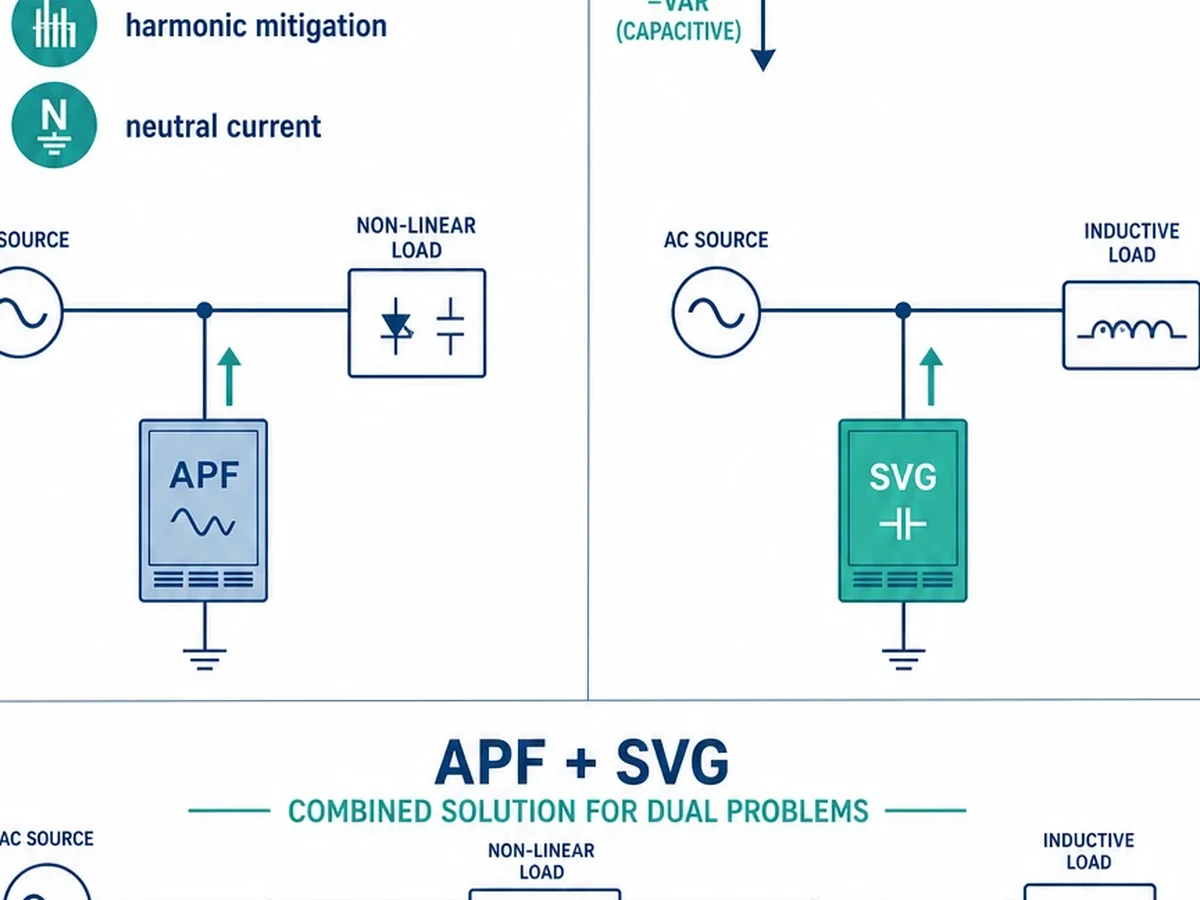
Send the APF/SVG comparison method as a related evidence pattern, then include the project-specific records below.
| Send with quote / RFQ | Why it matters | Avoid |
|---|---|---|
| one-line and measurement point | defines the boundary | a screenshot without location |
| repeated spectra and load cases | tests dominant-order stability | one capture as proof |
| capacitor, source and protection notes | exposes interaction questions | a tuning promise |
| decision objective | keeps review bounded | an assumed result |
Product recommendation: use the CNBYG APF product page only as product context after those inputs are assembled. Send the comparison package when the evidence is ready. This workflow does not authorize switching, approve protection settings or establish compliance.
FAQs
What is a dominant-order load?
It is an operating case in which one measured harmonic order is more prominent than the others at a stated point and time. It is not a complete system description.
Is a passive filter always better for one order?
No. The answer depends on topology, source impedance, operating cases, resonance questions and the decision boundary.
When does APF evidence matter?
APF evidence matters when load conditions vary, multiple orders matter or the project needs a review of changing current conditions.
Why are operating cases needed?
They show whether the dominant order remains stable when loads, sources or capacitor states change.
Can one spectrum select a product?
No. It can frame a study question, but it does not establish rating, tuning, fit or acceptance.
What should an RFQ include?
Include the one-line, measurement point, repeated spectra, load cases, source and capacitor notes, objective and known constraints.
When is engineering review required?
Use qualified review for live switching, protection, resonance, unclear measurements, acceptance decisions or conclusions beyond the evidence.