Power Capacitor Nameplate Replacement: Confirm Identity Before Approval
Power capacitor nameplate replacement approval should start with confirmed equipment identity, not a newly printed label. Preserve the remaining markings and asset records, ask the original manufacturer to establish the correct identification and ratings, and obtain the owner’s approval for the proposed replacement method. Do not copy values from a nearby capacitor or infer the rating from enclosure size. A damaged nameplate is also a reason to review the equipment’s condition and permitted use. The record framework below helps procurement and maintenance teams handle that uncertainty without pretending that a replacement label repairs an electrically damaged capacitor.
Separate a missing label from an unidentified capacitor
A readable asset number may locate a maintenance record, but it does not necessarily identify the capacitor currently installed at that location. Previous replacements, moved components and incomplete records can break the connection between a cabinet position and a serial number. Begin by checking whether the physical unit can be linked to an original purchase, delivery record, inspection photograph or manufacturer record. Keep those evidence types separate so that conflicts remain visible.
Das CNBYG BSMJ self-healing low-voltage capacitor page identifies the product family relevant to this discussion. Its images are useful for matching the general product category. They cannot establish the precise electrical rating, production identity or internal construction of an unmarked unit in a customer’s cabinet. Even similar enclosures may contain different approved configurations, so a catalog photograph must not become the basis for printing a new rating label.
Define the request clearly: is the original plate partly illegible, detached, missing entirely or inconsistent with the records? A plate that is difficult to photograph may still be readable by a qualified person under an appropriate inspection arrangement. Do not remove or clean a label aggressively just to improve an image. Preserve the condition as found and ask the manufacturer which evidence and handling methods are appropriate.
Preserve the evidence before requesting a label
Create an identity query linked to the asset and work order. Save original photographs of the complete unit, surviving markings and its installed position where access is safe and authorized. Distinguish actual site photographs from catalog or generated illustrations. An edited or enhanced image may help a reviewer see context, but it should not replace the original file or turn an uncertain character into a supposedly confirmed model code.
Useful documentary evidence may include the purchase order, approved submittal, packing list, delivery inspection and earlier maintenance records. Record the document date and the particular unit each item identifies. A purchase order for several capacitors does not by itself show which serial number occupies a specific stage today. Note that limitation instead of treating the quantity on the order as complete traceability.
Yale Facilities’ equipment nameplate data guidance provides an owner-side example of recording as-installed manufacturer, model, serial and related asset information. Its workbook requirements are specific to Yale. The transferable principle is that equipment identity should be connected to the actual installed asset and its records, rather than reconstructed from an unrelated product description.
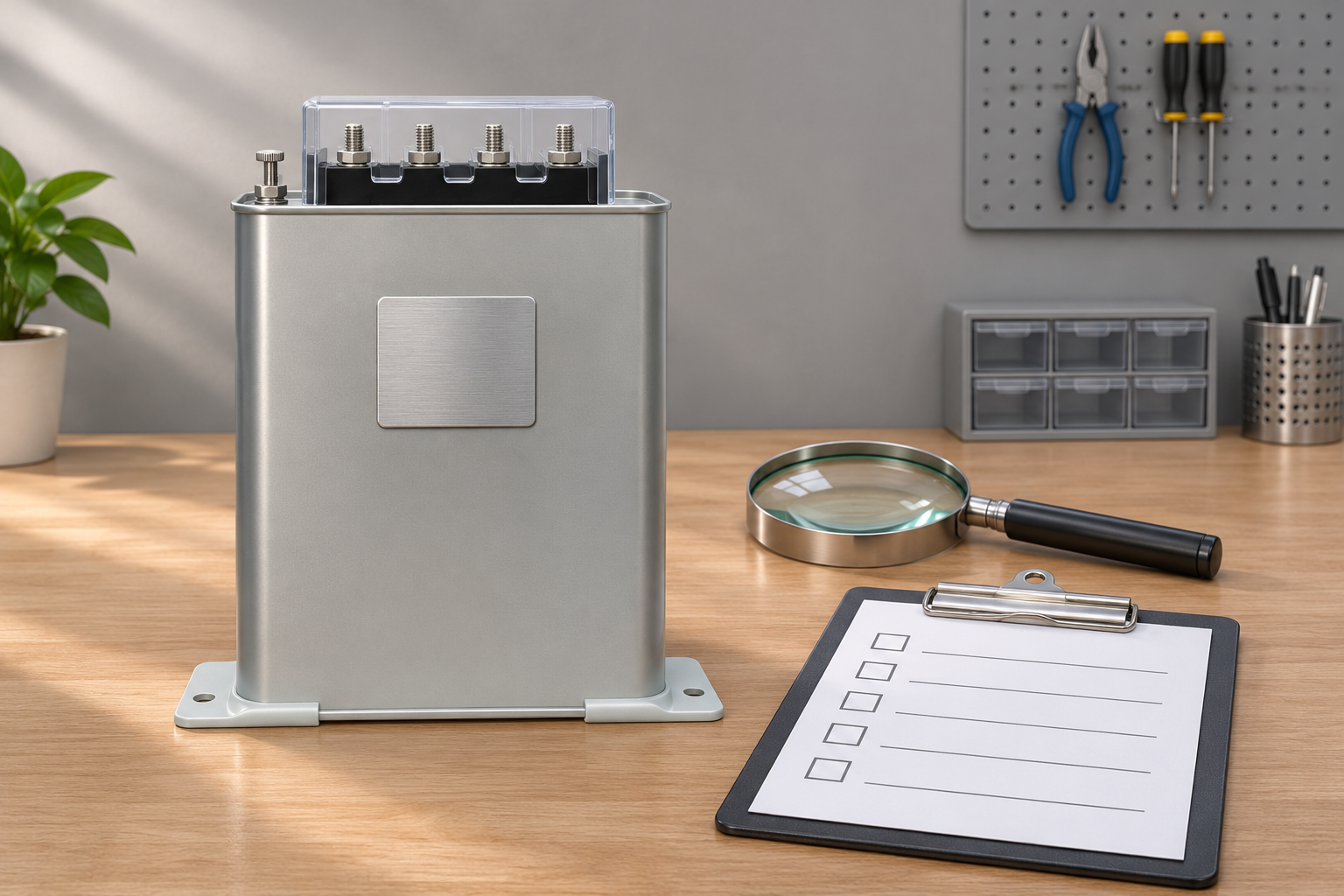
Record unknown values explicitly
Use “unconfirmed” or the site’s equivalent when a field cannot be established. Do not fill a required box with an estimated value simply to complete the request. In particular, a measured capacitance does not independently establish all nameplate characteristics or the intended application. The qualified engineer and manufacturer must determine what evidence is acceptable for identifying the exact unit.
The following is a recommended evidence register. It is a document-control aid, not a statement of universal nameplate requirements. The applicable product standard, jurisdiction, supplied design and manufacturer determine the actual required markings and acceptance route.
| Frage | Anzufordernde Beweismittel | What should remain unresolved until confirmed |
|---|---|---|
| Which unit is involved? | Asset position, surviving serial or production reference, original photographs | A location alone does not prove manufacturer identity |
| Which product was supplied? | Purchase record and approved submittal tied to the unit | Similar appearance does not establish the model |
| Which ratings belong on the plate? | Manufacturer confirmation for the identified unit | Do not copy values from adjacent capacitors |
| Why was the marking lost? | Condition report and inspection findings | Label damage may coexist with other damage |
| Who approves the replacement? | Manufacturer response and owner review reference | A printer’s artwork is not technical approval |
| How will it be fitted? | Approved material, position and attachment instructions | Do not obstruct protective features or existing markings |
| What closes the request? | Installed-label photograph and updated asset record | Do not confuse label acceptance with functional release |
Ask the manufacturer a bounded question
Send the evidence package through the established supplier or manufacturer channel. State exactly which identifiers are readable, which are uncertain and which documents may relate to the unit. Ask whether the available evidence establishes its identity and whether a replacement plate can be supplied or approved. Do not describe an unconfirmed character as certain merely because a supplier search produces a plausible model.
The request should also explain the condition that led to the label problem. A lost plate during controlled handling is different from markings destroyed by heat, corrosion or a broader equipment event. Provide the factual observations without diagnosing the internal condition from appearance. The manufacturer may require further assessment, identification evidence or replacement of the equipment rather than issuing a duplicate plate.
cURL Too many subrequests by single Worker invocation. To configure this limit, refer to https://developers.cloudflare.com/workers/wrangler/configuration/#limits.
cURL Too many subrequests by single Worker invocation. To configure this limit, refer to https://developers.cloudflare.com/workers/wrangler/configuration/#limits
cURL Too many subrequests by single Worker invocation. To configure this limit, refer to https://developers.cloudflare.com/workers/wrangler/configuration/#limits cURL Too many subrequests by single Worker invocation. To configure this limit, refer to https://developers.cloudflare.com/workers/wrangler/configuration/#limits cURL Too many subrequests by single Worker invocation. To configure this limit, refer to https://developers.cloudflare.com/workers/wrangler/configuration/#limits.
cURL Too many subrequests by single Worker invocation. To configure this limit, refer to https://developers.cloudflare.com/workers/wrangler/configuration/#limits.
cURL Too many subrequests by single Worker invocation. To configure this limit, refer to https://developers.cloudflare.com/workers/wrangler/configuration/#limits.
cURL Too many subrequests by single Worker invocation. To configure this limit, refer to https://developers.cloudflare.com/workers/wrangler/configuration/#limits
cURL Too many subrequests by single Worker invocation. To configure this limit, refer to https://developers.cloudflare.com/workers/wrangler/configuration/#limits power capacitor swelling and leakage guide explains why physical findings deserve their own assessment. Do not return a suspect unit to service merely because its identity has been restored.
Electrical inspection and testing must be performed by qualified people using the applicable procedures. Do not energize an unidentified capacitor to discover what it “seems to tolerate,” or propose a field test as a substitute for manufacturer identity. The Wartungs-Checkliste für Kondensatorbanken can support broader planning, but it does not create acceptance criteria for an unknown unit.
When the exact identity cannot be established, document that outcome. The owner and responsible engineer should determine the permitted next action, which may include further investigation or an approved replacement unit. An honest unresolved record is more useful than an attractive plate containing guessed values. It also prevents an uncertain item from later entering spare stock as if its identification had been confirmed.
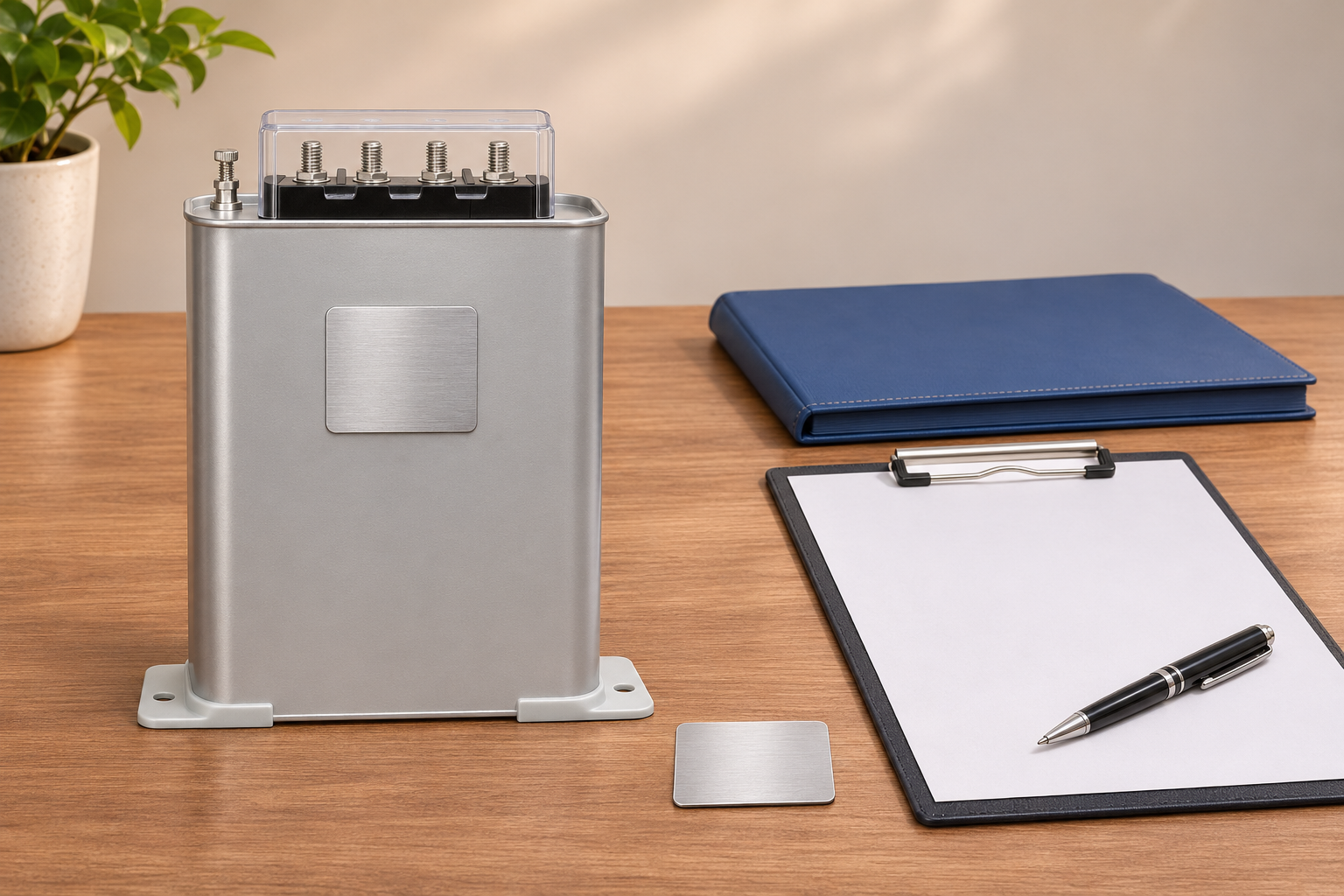
Approve installation and close the record
Arrange label attachment only through the approved process. The responsible team should verify the surface, material, location and method against the manufacturer guidance. Do not drill, alter the enclosure or obstruct a protective feature merely to fit a plate. Photograph the completed marking and preserve the earlier condition photographs so the history remains visible rather than being overwritten by a clean final image.
Update the asset register with the final approved identity and the evidence reference. Keep owner-assigned tags distinguishable from product markings. If the review resulted in equipment replacement, record removal and installation as separate events and retain the identity of the replacement unit. Do not change the old asset’s history to make it appear that the new capacitor was always installed there.
If the decision is to replace the capacitor, start a separately approved specification review. The Leitfaden zur Auswahl von Niederspannungs-Leistungskondensatoren can help organize the information request. It should not be used to assign a guessed rating to the unidentified old unit, and any proposed substitute needs its own acceptance evidence.
Example: two similar capacitors and one unreadable plate
Consider a hypothetical cabinet containing two visually similar capacitors, one with an unreadable plate. The surviving plate can help identify a question for the manufacturer, but it cannot establish that both units have the same rating or manufacturing history. The evidence package should therefore show both positions while clearly identifying which unit is uncertain. The example illustrates record discipline, not an actual CNBYG customer installation.
If the original delivery paperwork lists multiple ratings, the reviewer must establish which record belongs to the affected unit before approving artwork. A disagreement between a historical photograph and the current location should be preserved as a discrepancy. Resolve the link through the responsible parties, rather than selecting the rating that best matches the current stage calculation or procurement budget.
Electrical safety learning
Reading or replacing markings can involve proximity to electrical equipment. The US Department of Labor lesson below provides general electrical-work safety context. It is not a capacitor discharge procedure, a label-attachment demonstration or permission to inspect energized terminals.

Häufig gestellte Fragen
Can I copy the plate from the capacitor beside it?
No. Similar appearance and location do not establish identical ratings or identity. Obtain evidence for the affected unit and have the manufacturer and responsible owner review the replacement request.
Does a capacitance measurement identify the full rating?
No. One measurement does not independently establish the complete original specification, permitted application or manufacturing identity. The manufacturer and responsible engineer must decide what evidence is sufficient.
Can a new label make a damaged capacitor acceptable?
No. Identity restoration and equipment condition are separate issues. Damage requires its own assessment and any return to service must follow the applicable approval process.
What if the manufacturer cannot identify the unit?
Keep the identity unresolved and record the limitation. The owner and responsible engineer should determine further investigation or an approved replacement rather than authorizing a plate with guessed information.