Que Tipo de Contactor é Usado com um Banco de Capacitores?
Para um banco de capacitores, contactor de potência vs contactor de serviço de capacitor a escolha deve seguir o duty de comutação: use um contactor de capacitor classificado pelo fabricante para a fase de capacitor, e selecione um contactor de potência comum apenas para o duty resistivo ou de motor indicado para esse dispositivo. Classificações de corrente constante semelhantes não tornam as duas categorias intercambiáveis. O duty de carga e o evento de energização estabelecem a categoria correta; os dados de estágio e controle então restringem o modelo final.
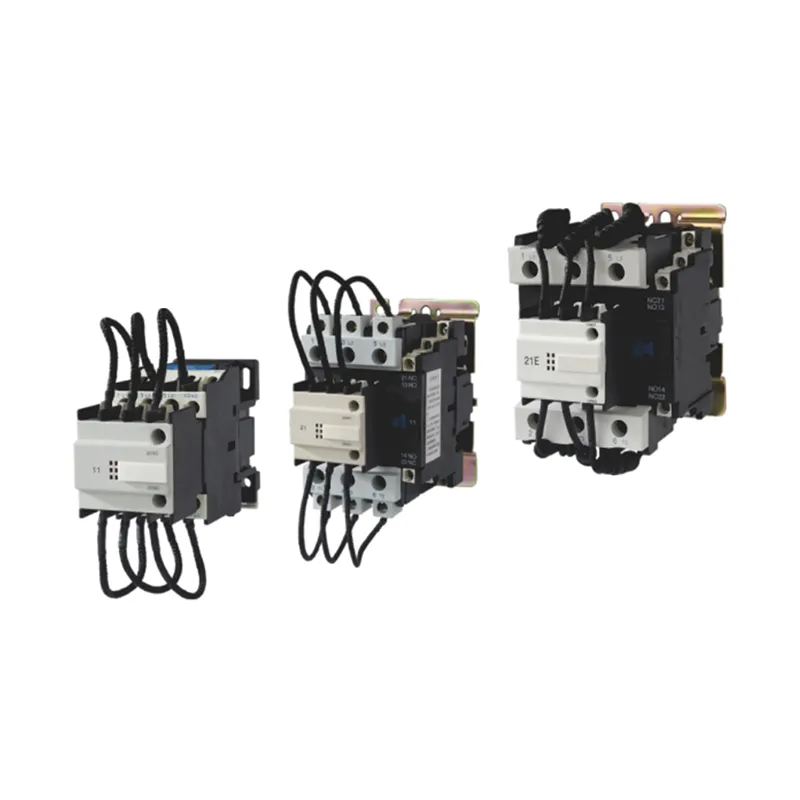
Contactor de Potência vs Contactor de Serviço de Capacitor: A Decisão de Um Olhar
Escolha pelo duty de carga: um contactor de potência geral serve à categoria de carga comum indicada na sua documentação, enquanto um contactor de duty de capacitor é destinado e classificado para a comutação de banco de capacitores.
A adequação de um contactor de potência está ligada a uma categoria de utilização, que descreve o tipo de carga e evento de comutação que se espera que ele lide. Um contactor de duty de capacitor é o ramo especializado dessa família de dispositivos usado para uma fase de capacitor PFC, onde o evento de fechamento é mais exigente do que a corrente constante posterior sugere.
| Ponto de decisão | Contactor de potência comum | Contactor de duty de capacitor |
|---|---|---|
| Decisão de carga típica | Carga resistiva, ligeiramente indutiva ou de motor de acordo com a categoria indicada | Banco de capacitores ou fase de capacitor PFC |
| Categoria a examinar | Frequentemente AC-1 ou AC-3, dependendo da carga | AC-6b ou serviço explícito de comutação de capacitor |
| Preocupação com o serviço de acionamento | Deve corresponder ao comportamento documentado da carga comum | Deve abordar o pico de energização do estágio do capacitor |
| Arranjo de contactos | Arranjo padrão de contactos principais para o serviço declarado | Algumas famílias adicionam contactos de pré-acionamento e resistores limitadores de corrente |
| Evidência de seleção | Tipo de carga, corrente de funcionamento, tensão, dados da bobina e categoria | Dados do estágio, tensão, arranjo de comutação, dados da bobina, capacidade de acionamento e tabela de produtos exata |
Considere uma lista de compra contendo dois dispositivos com valores de amperagem semelhantes. Se um estiver catalogado para serviço de motor de gaiola de esquilo e o outro para comutação de banco de capacitores, as etiquetas descrevem trabalhos diferentes. O valor de amperes permanece importante, mas pertence à decisão de categoria de serviço, não substituindo-a.
Por que a Energização do Banco de Capacitores Altera o Duty do Contactor
O primeiro instante de energização do capacitor cria uma tensão de corrente de acionamento que uma etiqueta de corrente constante não descreve.
A energização do capacitor cria um evento de pico de corrente de curta duração. Essa corrente de entrada atinge os contactos durante o acionamento, portanto uma seleção baseada apenas na corrente após o transiente perde o evento que diferencia o serviço de capacitor do serviço de carga comum.
Em um painel de correção de fator de potência automático, um controlador APFC determina quando um estágio de capacitor é comandado. O contator ainda deve realizar o serviço de comutação do capacitor em cada fecho.
Essa distinção importa durante a substituição. Um construtor de painéis pode ter um contator de motor familiar com uma etiqueta de corrente constante correspondente na prateleira, mas sua documentação de serviço de motor não estabelece a capacidade de acionamento de banco de capacitores. A decisão de substituição deve retornar à categoria de carga e aos dados de comutação de capacitor do fabricante.
Leia AC-1, AC-3 e AC-6b Antes de Comparar as Classificações de Corrente
AC-1, AC-3 e AC-6b identificam comportamentos de carga diferentes; AC-6b é a categoria de utilização para comutação de banco de capacitores.
Uma categoria de utilização vincula o desempenho de acionamento e desconexão do contator a uma aplicação definida. Em linguagem simples, o código AC informa ao procurement que tipo de carga o dispositivo foi construído para comutar, não apenas quantos amperes aparecem ao lado do nome do modelo.
| Categoria de utilização | Significado da aplicação | Erro de decisão que impede |
|---|---|---|
| AC-1 | Cargas de corrente alternada não indutivas ou ligeiramente indutivas | Considerar uma classificação de carga resistiva como uma classificação de motor ou banco de capacitores |
| AC-3 | Arranque de motor de gaiola de esquilo e interrupção durante o funcionamento normal | Considerar um contator de serviço de motor como um contator de banco de capacitores |
| AC-6b | Comutação de bancos de capacitores | Selecionar corrente constante sem confirmar o dever de comutação de capacitores |
AC-6b identifies switching of capacitor banks in the utilization-categories overview. It gives the buyer the correct category starting point, while the final model still has to match the stage and control data.
If the unanswered question is how a coil, armature, and main contacts produce the switching action, see how the CJ19 contactor works. That operating-principle question is separate from deciding which utilization category belongs on a capacitor stage.
Como Contatos de Abertura Antecipada e Resistores de Amortecimento Protegem o Caminho Principal de Comutação
In documented capacitor-contactor families, an early path and resistor can limit the initial peak before the main contacts close.
An early-make contact closes before the main power contacts. When that path contains damping or current-limiting resistance, the stage first connects through the resistor; the main contacts then close and carry the normal current. In product families built this way, the pre-closing path limits current before the main path closes.
Looped leads and upper assemblies can make a capacitor switching contactor look different from an ordinary contactor. Their electrical role comes from the documented contact sequence rather than appearance alone.
The arrangement is product-family specific. A Schneider TeSys family uses early-make poles with damping resistors, while CNBYG documents a pre-closing current-limiting circuit for its GJ19/CJ19 family. Other capacitor-contactors may use a different documented arrangement, so construction should be read from the product data rather than inferred from the category name alone.
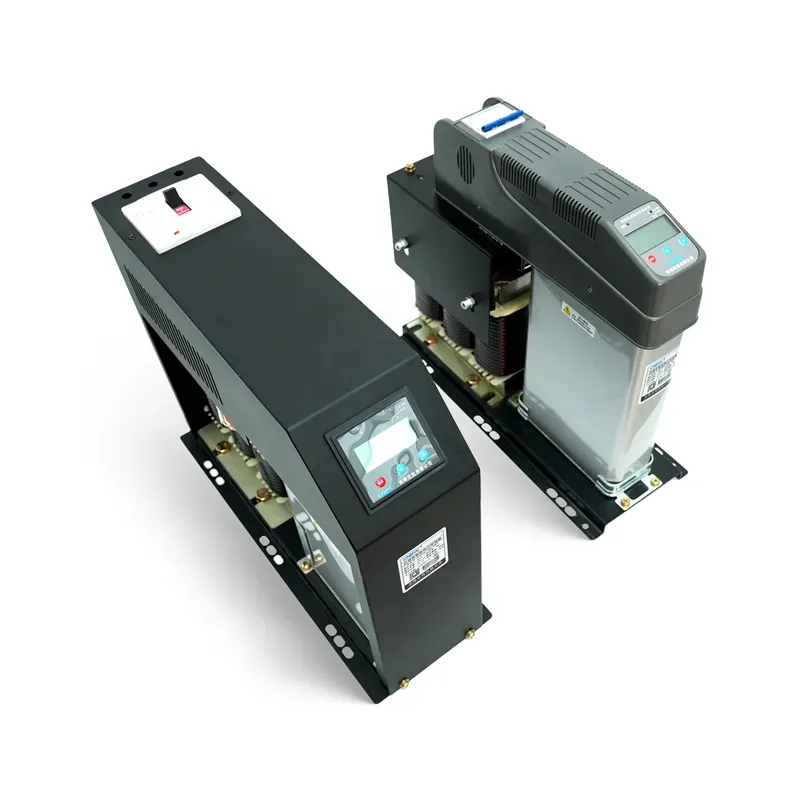
Selecione um Contactor de Capacitor com base no duty, estágio, tensão e dados de controle
Start with capacitor-duty or AC-6b documentation, then match the stage voltage, kVAR or current, switching arrangement, coil supply, mounting, and the model-specific making data.
The duty category answers “which kind of contactor?” The project inputs answer “which model?” A buyer who has only a capacitor-stage kVAR value is missing the voltage and control information needed to connect those two decisions.
| Input to collect | Why it changes the choice | Where to compare it |
|---|---|---|
| Tensão e frequência do sistema | Establishes whether the product family and rating table apply | Product electrical data |
| Capacitor-stage kVAR or operating current | Identifies the stage duty at the stated voltage | Model table for that voltage |
| Stage arrangement and switching sequence | Describes what the contactor connects and how the bank is stepped | Panel design and capacitor-switching documentation |
| Categoria de utilização | Confirms that the stated rating belongs to capacitor-bank duty | Category or application-rating line |
| Published making or inrush capability | Addresses the closing event that steady current omits | Manufacturer’s exact family data |
| Coil voltage and frequency | Matches the controller or control-power supply | Coil and ordering table |
| Mounting and terminal arrangement | Confirms mechanical and wiring compatibility | Dimension and installation document |
| Exact model revision | Keeps all ratings tied to the item being ordered | Current datasheet and product table |
The connection schematic below is a document-reading aid for CJ19-63/21 and CJ19-95/21 arrangements. It is not a substitute for the project’s wiring drawing or the electrical data for the selected model.
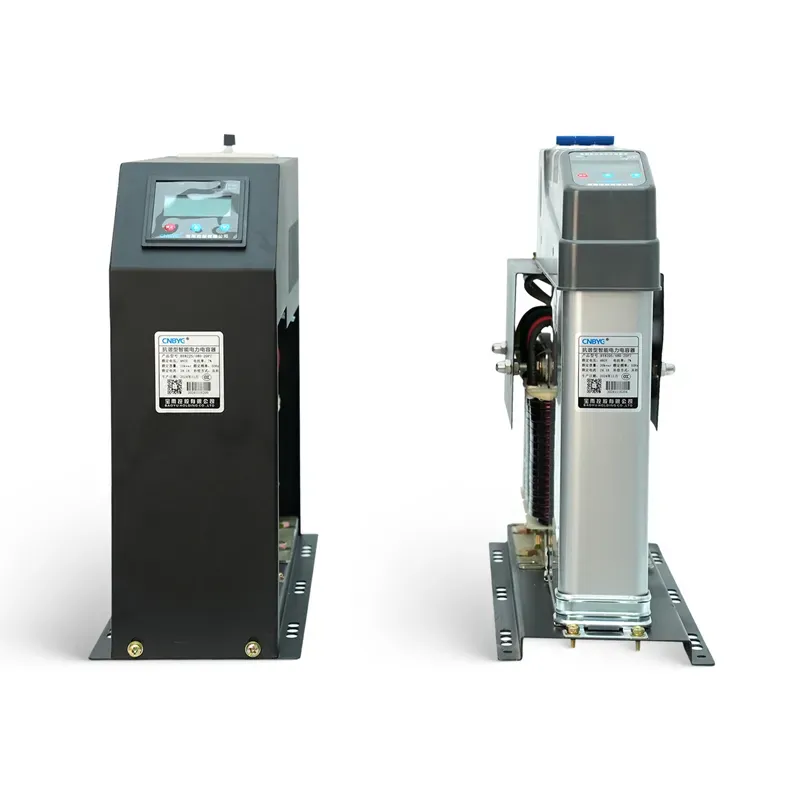
One universal multiplier cannot replace these inputs. Published making capabilities and capacitor ratings stay with the named product family and stated conditions. Compare the actual stage record with the applicable model table rather than transferring one family’s value to another.
Calculating the compensation value still leaves a practical specification gap. In this capacitor-bank practitioner discussion, cURL Too many subrequests by single Worker invocation. To configure this limit, refer to https://developers.cloudflare.com/workers/wrangler/configuration/#limits.
Evite Seleções Apenas de Ampere, kVAR ou Foto
cURL Too many subrequests by single Worker invocation. To configure this limit, refer to https://developers.cloudflare.com/workers/wrangler/configuration/#limits.
cURL Too many subrequests by single Worker invocation. To configure this limit, refer to https://developers.cloudflare.com/workers/wrangler/configuration/#limits.
cURL Too many subrequests by single Worker invocation. To configure this limit, refer to https://developers.cloudflare.com/workers/wrangler/configuration/#limits.
Importante: cURL Too many subrequests by single Worker invocation. To configure this limit, refer to https://developers.cloudflare.com/workers/wrangler/configuration/#limits cURL Too many subrequests by single Worker invocation. To configure this limit, refer to https://developers.cloudflare.com/workers/wrangler/configuration/#limits cURL Too many subrequests by single Worker invocation. To configure this limit, refer to https://developers.cloudflare.com/workers/wrangler/configuration/#limits.
cURL Too many subrequests by single Worker invocation. To configure this limit, refer to https://developers.cloudflare.com/workers/wrangler/configuration/#limits.
Onde o CNBYG GJ19 Encaixa — e Quando Escalar a Revisão do Duty
cURL Too many subrequests by single Worker invocation. To configure this limit, refer to https://developers.cloudflare.com/workers/wrangler/configuration/#limits.
O GJ19 Series switching capacitor contactor is presented for switching low-voltage parallel capacitors. Its product information describes an upper current-limiting contact and resistor circuit that connects before the working contacts, and it supplies model and coil-ordering data for the next selection step.

Review that family when the load is a capacitor stage and the project inputs can be compared with its product table. Do not select it merely because its current resembles an ordinary power contactor, and do not treat it as the answer to a motor-load or general resistive-load requirement. The broader compensador de potência reativa page places the contactor beside the other components used in compensation systems.
The decision becomes a system-duty question when a detuned bank, reactors, harmonic-producing loads, controller sequence, or measured switching records shape the stress. When harmonic conditions or reactor topology determine contactor stress, continue with the capacitor switching contactor duty review for harmonic networks before fixing the contactor model.
Perguntas Frequentes
Why use a capacitor-duty contactor?
Use it because capacitor-bank energization creates a distinct making-current peak. A capacitor-duty contactor is rated for that switching job, and some documented families add a pre-closing resistor path to limit the initial peak.
What is a capacitor-duty contactor?
It is a contactor intended for switching capacitor banks or PFC stages. Its application category, making capability, and product construction are documented for capacitor duty rather than inferred from an ordinary-load ampere rating.
Can a normal power contactor switch a capacitor bank?
Only when the exact manufacturer documentation approves that device for the capacitor-switching duty and the stage conditions. A motor-duty or resistive-load rating with a similar current value is not enough to establish that fit.
What does AC-6b mean on a contactor?
AC-6b is the utilization category for switching capacitor banks. It separates capacitor-bank duty from AC-1 resistive or slightly inductive duty and AC-3 motor duty.
Is AC-3 the same as capacitor duty?
No. AC-3 applies to squirrel-cage motor duty, while AC-6b applies to capacitor-bank switching. The two codes describe different load behavior and should not be substituted on current rating alone.
Does a contactor supply reactive power to the capacitor?
No. The contactor connects or disconnects the capacitor stage from the power circuit. The energized capacitor supplies reactive power; the contactor performs the switching action.
How should I choose the contactor size for a capacitor bank?
Confirm capacitor-duty or AC-6b suitability, then match system voltage, stage kVAR or current, switching arrangement, making capability, coil supply, mounting, and the exact manufacturer’s model table. Avoid a cross-manufacturer sizing multiplier.
Are early-make contacts and resistors used in every capacitor contactor?
Not necessarily. They are documented in specific capacitor-contactor families, including the GJ19/CJ19 arrangement discussed here. Read the construction and sequence for the exact family being considered.
When does a comparison become a harmonic-network duty review?
Escalate when harmonics, reactors, detuning, switching records, or bank topology influence the contactor stress. Those conditions require a system-level duty assessment rather than a category comparison alone.
Referências
Perguntas Frequentes Práticas
Que tipo de contactor é utilizado com uma bateria de condensadores?
Use a capacitor-duty contactor rated for the bank kvar, system voltage, inrush duty, switching frequency, ambient conditions, and protection scheme.
Um contactor de motor comum pode comutar passos de capacitor?
Do not assume so from continuous amperes. Capacitor energization has high inrush and requires a published capacitor-duty rating.
Por que os contactores de condensador usam contactos de início precoce?
They insert an impedance briefly to limit inrush before the main contacts carry steady capacitor current.
O que significa AC-6b?
AC-6b is the utilization category associated with switching capacitor banks under the applicable low-voltage contactor standard.
Quando deve ser considerada a comutação por tiristor?
Consider it for fast-changing loads or high switching frequency after checking losses, cooling, harmonics, and protection.