Power Factor Correction Standards and Common Requirements
Power factor correction standards and common requirements depend on the application, voltage level, capacitor or converter technology, measurement method, protection design and local utility rules. A responsible specification separates mandatory requirements from project preferences. It identifies the applicable standard edition, the equipment scope, the test method and the site conditions instead of claiming that one generic PF number applies everywhere.
Земля Страница продукта CNBYG SVG provides product context for dynamic compensation. Final compliance requires the equipment manufacturer’s declaration, the project specification, local regulations and the authority having jurisdiction.
Separate requirement layers
Use four layers: utility or grid-code rules, product and safety standards, power-quality measurement standards, and the project design specification. A utility may define PF, reactive-energy or demand behavior at the PCC. A product standard may address capacitors, reactors, converters, insulation, enclosure or testing. A measurement standard may define how voltage, current and power-quality quantities are evaluated. The project specification then selects ratings, alarms, communications and acceptance tests.

Standards planning table
| Requirement area | Typical question | Доказательства для сохранения |
|---|---|---|
| Utility or grid rule | What PF, kvar, voltage or export behavior is required at the PCC? | Tariff, interconnection agreement and approved study. |
| Product scope | Which standard applies to the capacitor, SVG, AHF, reactor, enclosure and protection? | Manufacturer declaration, drawings and test records. |
| Измерение | How are PF, voltage, current, harmonics and events measured? | Instrument setup, time base and calibration records. |
| Установка | Are clearances, ventilation, earthing, isolation and cable entry suitable? | Layout, one-line, inspection and commissioning checklist. |
| Защита | Are fuses, breakers, discharge, overtemperature and faults coordinated? | Protection study, settings and trip tests. |
| Acceptance | Which load states and operating modes must pass? | Signed traces, alarms, settings and as-left report. |
Use authoritative references carefully
For measurement-method context, consult the Вставка из каталога IEC 61000-4-30 and use the edition required by the project. For capacitors, reactors, converters and switchgear, identify the exact product standard and edition with the manufacturer or standards body. Do not copy a standard limit from an unrelated voltage level or technology.
Record the reference title, edition, clause or requirement, applicability and evidence. A competitor marketing page can help reveal SERP language but it is not a compliance authority. The Руководство по компенсации реактивной токи SVG explains engineering checks that should accompany, not replace, the applicable standard.
Common technical requirements
Most projects need a defined PCC, correct CT polarity and phase reference, safe isolation, earthing, overcurrent protection, thermal limits, fault behavior, enclosure access and documented settings. Capacitor installations often require discharge provisions and harmonic-resonance review. Converter systems require current capability, cooling, control priority, alarms and a response to communication loss.
Do not assume that a PF target proves compliance. The test must show the measurement boundary, voltage, load, device state, THD, alarms and averaging interval. If the plant has a generator, solar inverter, battery or export mode, include those states in the study and acceptance plan.

Write a compliance matrix
Create one row per requirement: source, requirement text, applicability, design response, evidence owner, verification method and status. Link each row to a drawing, calculation, declaration, test report or site record. Mark items that require authority approval separately from items the supplier can verify.
Земля Руководство по установке SVG covers practical mounting, cooling and service space. The Список задач по настройке SVG helps record CT checks, phase sequence, settings and alarms. The SVG maintenance checklist provides a continuing record after handover.
Acceptance sequence
- Confirm the applicable utility, product, measurement and safety references.
- Freeze the standard editions and project assumptions.
- Mark the PCC, CTs, voltage references and operating modes.
- Review ratings, protection, cooling, earthing and isolation.
- Test dead inspection, phase sequence, CT polarity and settings.
- Test minimum, normal, peak, transition, generator and export states.
- Record PF, kvar, voltage, current, THD, alarms and temperature.
- Verify interlocks, fault response and communication fallback.
- Close the compliance matrix with signed evidence.
- Record as-left settings, deviations and future review triggers.
Common mistakes
Do not quote a standard without checking its scope and edition. Do not apply a utility PF rule to a product test without defining the PCC. Do not treat a certificate as proof of correct site installation. Do not omit harmonics, resonance, thermal, protection or export modes. Do not hide an unresolved deviation in a general “compliant” statement.
Build an evidence trail
For each reference, record the exact title, edition, clause or requirement, applicability decision, design response, owner and verification method. Link the row to a drawing, calculation, supplier declaration, factory test, site test or authority approval. If a requirement does not apply, state why. If the wording is ambiguous, record the interpretation and the person who approved it instead of silently choosing the easiest reading.
Keep the project assumptions frozen: voltage, frequency, earthing, short-circuit level, harmonics, ambient, enclosure and operating modes. A change to any of these can change the applicable design response. Update the matrix after a new VFD, transformer, inverter, capacitor, reactor or controller firmware is added.
Separate factory evidence from site evidence. A product declaration can support the equipment scope, but it does not prove correct CT wiring, cooling, clearances, protection settings or a compliant PCC result. The site report should show the actual instrument, time base, load state, voltage, current, PF, THD, alarms and as-left settings.
This structure is useful during maintenance as well as first acceptance. It lets the team find the requirement before changing a setting and makes deviations visible rather than burying them in a generic compliance claim.
Factory and site checks are different
Factory checks can confirm construction, ratings, controls, insulation, alarms and declared tests under stated conditions. Site checks confirm that the equipment is connected to the correct phases, that CTs face the right direction, that voltage references match, that ventilation and clearances are available, and that the plant reaches the required PF or kvar at its actual PCC. Keep both records linked but do not substitute one for the other.
The site acceptance plan should include dead inspection, phase sequence, CT polarity, protection, control settings, communication loss, minimum load, normal load, peak load and transitions. If a generator, solar inverter, battery or export mode exists, include it. Record the instrument, calibration status, time base, averaging interval, voltage, current, PF, kvar, THD, temperature, alarms and as-left settings.
When a standard is revised, determine whether the project is governed by the edition in the contract, the edition in the authority approval or the current edition required for a new change. Record the decision and any gap assessment. This avoids silently mixing clauses from different editions.
The final matrix should identify open deviations, responsible owners, due dates and the condition for closure. A project is easier to maintain when a technician can see both the requirement and the evidence without searching through unrelated supplier marketing material.
Keep the matrix under revision control and attach the approved one-line diagram. That simple link prevents an old CT boundary or obsolete standard edition from being reused during a later expansion.
When a test fails, record the failed condition, measured values, responsible owner and retest method. Do not simply repeat the same test with a changed label. The compliance matrix should show whether the fix is a wiring correction, a design change, a setting change, additional evidence or an authority decision.
For procurement, write the required evidence into the request for quotation: applicable declarations, drawings, ratings, protection data, installation limits, test records and as-left information. This makes supplier responses comparable and prevents a low price from omitting the documents needed for acceptance.
Keep a clear distinction between “submitted,” “reviewed” and “accepted.”
It keeps the handover status unambiguous for the next reviewer.
Attach the authority response when one is required.
Keep deviations open until the evidence is complete.
Record the responsible owner and due date.
Attach the retest report when closed.
Preserve the original failed result as well.
This keeps the corrective action auditable.
Include the retest date and approver.
Archive the approved matrix.
Keep the signed deviation log.
Attach the authority response and closure evidence.
Keep the final matrix with the handover package.
Make it available to maintenance.
Keep the signed copy.
Record the handover date.
And the owner.
Confirm the product scope of each cited standard
IEC 60831-1 describes a standards family for self-healing low-voltage shunt capacitors. IEC 60076-6 covers several reactor categories, including filter reactors. Neither scope establishes universal requirements for every converter or entire switchboard. Record the supplied equipment, applicable edition and verification evidence in the compliance matrix.
Правила OSHA по электробезопасности при проведении работ address deenergization and hazardous stored-energy control in their jurisdiction. Identify the installation jurisdiction and approved procedure separately from product conformity. A catalogue standard reference or declaration does not demonstrate the installed protective response or resolve a missing commissioning test.
Часто задаваемые вопросы
Is there one universal power-factor correction standard?
No. Requirements depend on utility rules, equipment technology, voltage, safety, measurement method and local regulation.
What should a supplier provide?
Request the applicable declarations, drawings, ratings, test evidence, protection information, installation requirements and as-left settings.
Does IEC 61000-4-30 set the plant PF target?
It provides measurement-method context. The PF target comes from the utility, generator, project or process requirement.
What proves site compliance?
A traceable matrix linking the applicable requirement to drawings, calculations, declarations, tests, settings and signed acceptance records.
Заключение
Power factor correction standards are a coordinated set of utility, product, measurement, safety and project requirements. Freeze the applicable references, write a compliance matrix, test the real operating modes and retain evidence that matches the chosen boundary and technology.
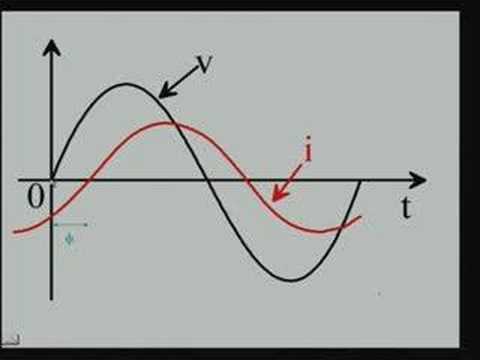
Ненавязчивое видео: фон с коэффициентом мощности
Нижеследующее лекционное сообщение NPTEL предоставляет нейтральную образовательную информацию о коэффициенте мощности и реактивной мощности. Это не рекомендация по покупке продукта.