How to Choose a Power Quality Analyzer for Harmonic Studies
Choose a power quality analyzer for harmonics by defining the measurement boundary, required spectral information, operating coverage and reporting method before comparing hardware. Confirm the voltage and current channels, sensor suitability, harmonic measurement method, recording functions and data export. A meter that displays total harmonic distortion may still be unsuitable for the study you need to perform.
The right choice depends on whether the task is troubleshooting a load, documenting conditions at a common-coupling point, assessing capacitor stress or preparing a filter inquiry. These tasks share some measurements, but they do not require identical instruments or justify the same conclusions.
Define the harmonic study objective
Write the decision the data must support. An engineer investigating one VFD group may need synchronized voltage and current spectra at its feeder. A compliance assessment may require an agreed boundary, measurement method and reporting period. A filter inquiry needs representative harmonic current and operating states rather than a single attractive screen image.
Specify whether interharmonics or other frequency components matter. Do not use the word harmonics as a catch-all for every disturbance. Voltage sags, switching transients and reactive-power variation may need additional recording capabilities. An analyzer suitable for a steady harmonic trend is not automatically suitable for fast transient diagnosis.
The IEC 61000-4-7 publication addresses spectral measurement instrumentation. The IEC 61000-4-30 publication addresses power-quality measurement methods. Detailed requirements come from the applicable full documents and project brief; their titles alone do not establish a site acceptance limit.
Distinguish an analyzer from a standard panel meter
A multifunction panel meter may provide useful current, voltage, power and energy information within its documented capabilities. A specialist analyzer may add spectral recording, event waveforms, standardized aggregation and advanced exports. Confirm the actual model functions rather than treating either category name as a specification.
The CNBYG BY194 multifunction power instrument is relevant to plant metering. Its photograph in this article illustrates a real panel instrument; it is not a claim that every BY194 variant is a specialist harmonic analyzer or has a particular measurement class. Request the exact model documentation before assigning it to a study.
An existing panel meter can help identify operating patterns even when a temporary analyzer is needed for detailed evidence. Using the two together may avoid collecting the same basic context repeatedly. Keep their measurement boundaries and time alignment clear so their readings are not compared as if they were identical.
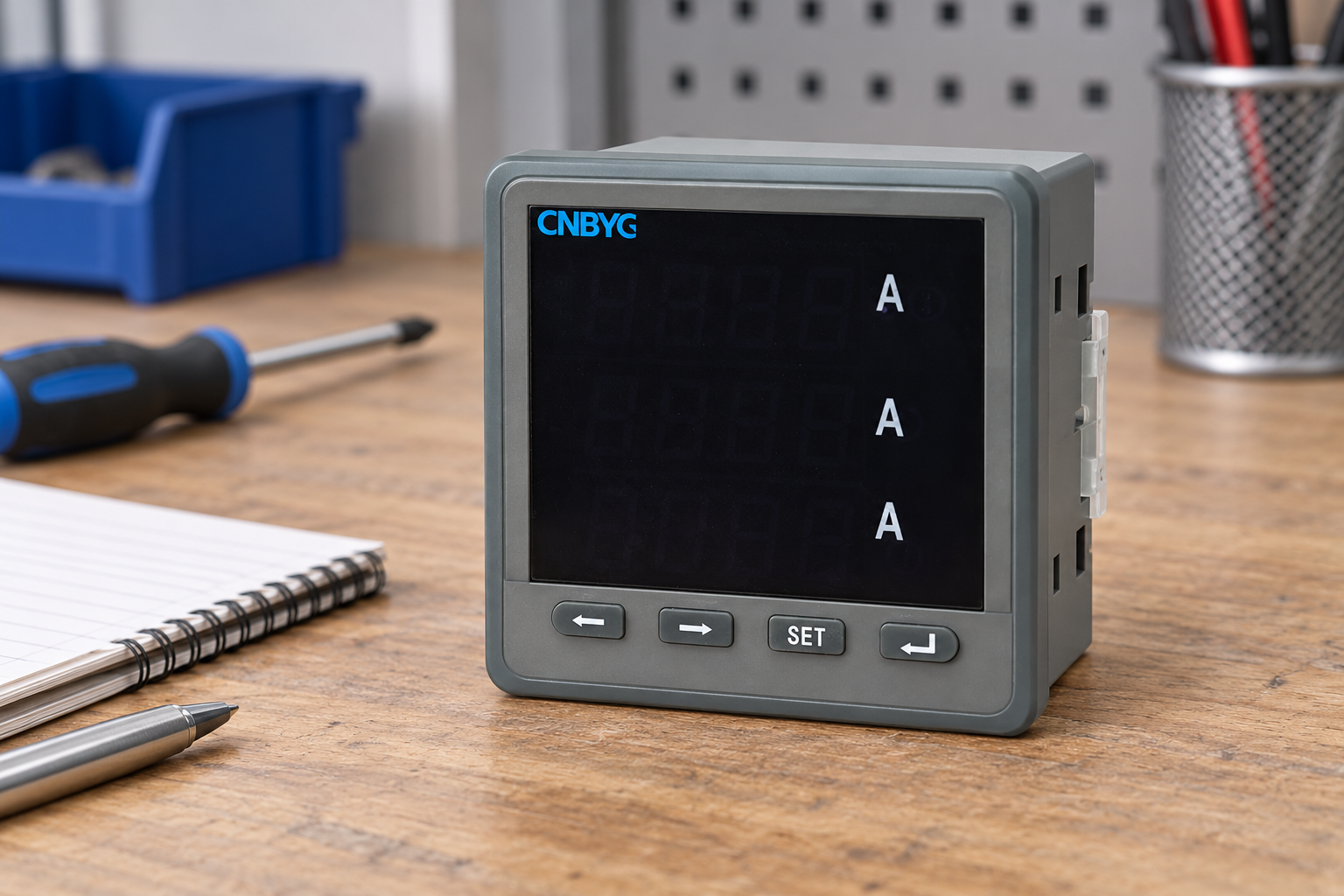
Reference-based illustration. Instrument capabilities must be established from the exact model documentation.
Make a capability checklist
| Requirement | What to ask the supplier | Why it matters |
|---|---|---|
| Voltage and current channels | Supported connections and simultaneous recording | Defines which circuits and phase relationships can be assessed |
| Harmonic spectrum | Available orders, quantities and recording format | THD alone does not identify the dominant components |
| Measurement method | Applicable standard, edition and declared performance | Supports comparable and interpretable results |
| Sensors | Range, accuracy, bandwidth and installation constraints | The analyzer cannot correct an unsuitable measurement chain |
| Event recording | Triggers, waveform retention and timing | Captures changes hidden by long-term averages |
| Storage and export | Raw data access, configuration export and overwrite behavior | Preserves evidence for independent review |
| Clock and synchronization | Time accuracy and supported synchronization | Allows comparison between points and operating logs |
This is a qualitative procurement checklist. Numeric performance requirements must follow the study objective and applicable method. Avoid specifying the largest possible range or every available feature when those choices make the actual low-level measurements less suitable.
Check the complete measurement chain
Voltage connections, CTs or current probes, scaling and phase mapping are part of the result. Confirm that the sensor range covers expected operation while preserving useful accuracy for the conditions of interest. Very low current relative to the chosen range can make a percentage-distortion reading difficult to interpret.
Ask about sensor bandwidth and phase behavior where the study requires them. A current sensor intended for basic load measurement may not meet a detailed harmonic requirement. Verify the manufacturer’s compatibility documentation instead of combining connectors that happen to fit.
Record sensor identities and calibration information as required by the project. Calibration of the analyzer does not automatically cover every external sensor or installed CT. The final report should describe the measurement chain so another engineer understands what was actually assessed.
Understand the quantities in the export
Confirm whether harmonic current is reported in amperes, percentage of the fundamental or another defined basis. Total harmonic distortion uses the fundamental as its denominator, so a changing fundamental can change the percentage even when the absolute harmonic current remains similar. Interpret the value with load context.
Where a contractual assessment uses another quantity or demand reference, establish how it will be calculated and documented. Do not rename current THD as another compliance metric. The instrument or analysis software must provide the relevant underlying data and the report must state the method.
Voltage distortion and current distortion also answer different questions. A load can draw distorted current while voltage distortion depends on the network and other conditions. Record both where the objective requires them, and avoid treating a current spectrum as direct proof of an unacceptable supply-voltage condition.
Select recording and aggregation deliberately
Check how the analyzer stores short-term values, longer aggregates, maxima and event records. A long interval may smooth over a process event, while very detailed continuous recording can create storage and review burdens. Choose settings that preserve the evidence needed without confusing the report with unrelated data.
Ask whether harmonic spectra are retained over time or only displayed live. A screen with many orders is less useful if the export cannot show their behavior during the relevant production cycle. Verify software access, licenses and file compatibility before hiring or purchasing equipment.
The event-triggered harmonic logging guide explains why intermittent loads need operating context. For a general recording plan, read the power-quality recorder guide. These complement analyzer selection without replacing its documented specifications.
Match timing to the investigation
For measurements at several points, determine whether simultaneous recording is necessary. A rare event observed upstream one day and downstream the next does not establish the same event path. Synchronized records may be needed to distinguish a shared disturbance from a local process effect.
Include the plant’s operating log in the timing plan. Check instrument clocks, time zones and any daylight-saving handling. A small timestamp discrepancy can cause the wrong machine start to be linked with a waveform. Save configuration and clock checks as part of the evidence package.
Duration should follow operating coverage and the study question. A longer rental is not a substitute for a suitable instrument or correct trigger settings. Define the completion rule and review sample data early to confirm the analyzer is collecting the expected evidence.
Assess installation and access
Qualified personnel must determine suitable connection methods, circuit ratings, isolation requirements and access. The analyzer’s measurement rating and accessories must suit the actual location. A device intended for a different category of circuit is not made suitable by using it for a short time.
Follow the site’s approved procedure and relevant local rules. The OSHA electrical work-practice requirements provide authoritative background on electrical work practices. This article does not provide live connection instructions or permission to open an energized panel.
If a permanent installation is being considered, include enclosure conditions, communications, maintenance and replacement access. If the analyzer is temporary, plan installation, removal and responsible ownership. The operational plan is part of selecting equipment that the plant can actually use.
Test the workflow before committing
Request a representative sample export and configuration file. Confirm that the engineering team can open them, identify units and timestamps, and retrieve the necessary spectra. Check whether reports can distinguish missing data from valid low values. A polished PDF alone may conceal limitations in the underlying records.
During a rental or demonstration, validate a known operating condition using the approved procedure. Check plausible readings, phase relationships and scaling. Do not mark an instrument accepted merely because it powers on and communicates. The useful test is whether it supports the intended analysis from start to finish.
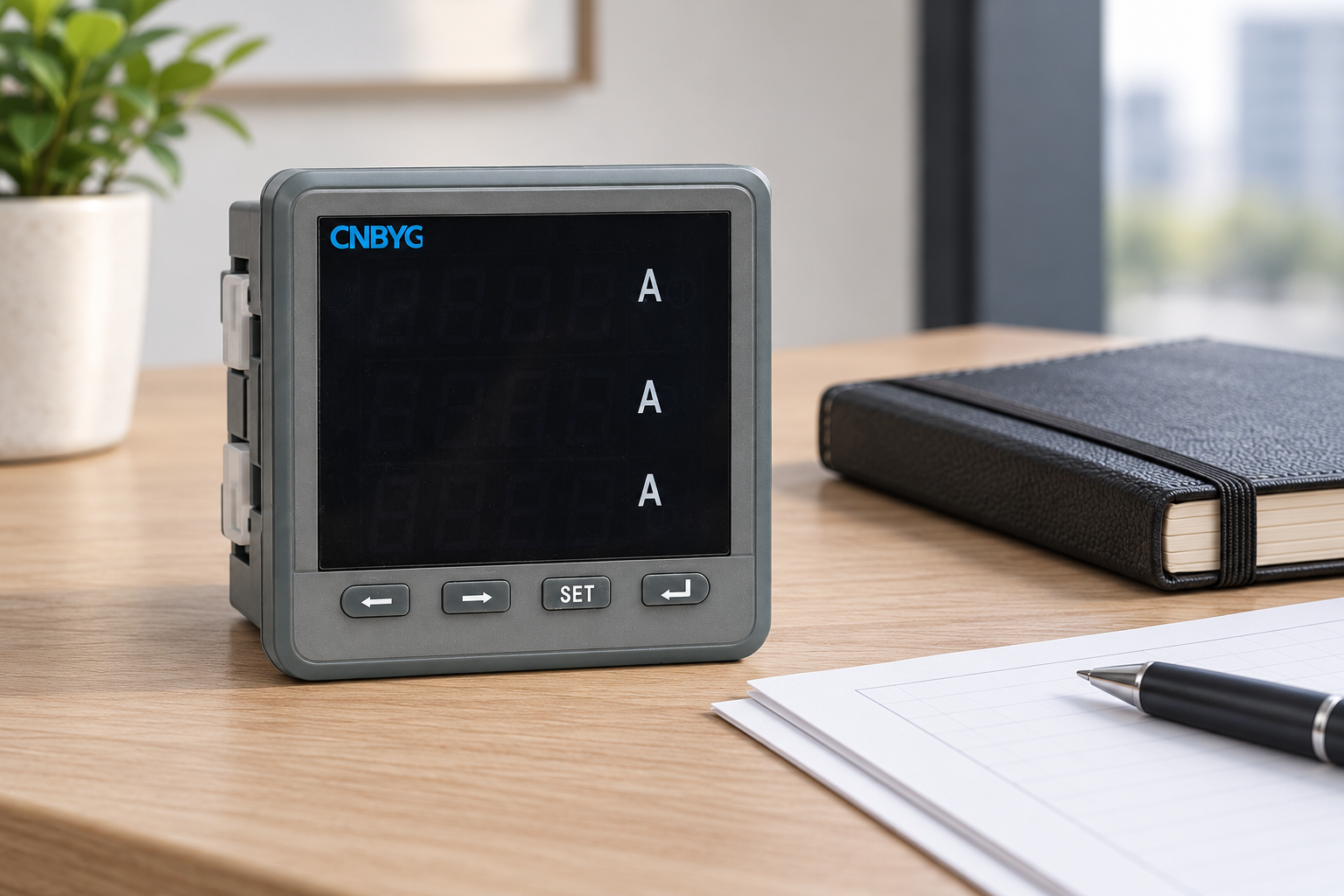
Reference-based illustration. The selection checklist must be completed with supplier documentation and verified sample data.
Prepare an inquiry that leads to a useful recommendation
Provide the system connection, voltage, expected current range, measurement boundary, required quantities, event behavior and reporting purpose. State whether the equipment will be temporary or permanent, how many points must be measured and what software environment the team uses.
For correction-equipment planning, the metering guide before an APF/SVG inquiry explains the evidence suppliers need. The power-quality system overview connects those measurements with the larger system. Keep analyzer selection focused on evidence, then choose correction equipment from the verified findings.
Further learning
Watch Power Quality: Standards and Monitoring
Frequently asked questions
Is THD display enough for a harmonic study?
Often it is not. Check whether the objective requires individual orders, absolute current, trends, event records or a specific measurement method. A single percentage can hide important differences.
Must every study use the most expensive analyzer?
No. Choose documented capabilities that meet the defined objective. Unneeded features do not improve results, while missing channels or unsuitable sensors can invalidate an otherwise expensive setup.
Can a panel meter support the investigation?
Yes, within its confirmed functions. It can provide context or ongoing trends, but should not be assumed to replace specialist recording without a capability check.
What should be checked before renting an analyzer?
Sensors, installation suitability, recording functions, software access, exports and the study completion rule. Confirm the whole workflow before paying for monitoring time.