Voltage Sag vs Voltage Dip
Voltage sag and voltage dip generally describe the same type of power quality event: a temporary reduction in supply voltage. “Sag” is common in North American terminology, while “dip” is widely used in IEC terminology. The words alone do not define different physical causes or different remedies. When comparing reports, use the applicable standard, measurement method, retained voltage, event duration, and affected phases rather than assuming one term describes a more severe disturbance.
For an industrial facility, the useful question is whether the recorded voltage reduction coincides with a process interruption and what evidence identifies its origin. A production stoppage can also result from an interruption, a control fault, or an equipment sensitivity problem. Start with synchronized records before purchasing compensation or backup equipment.
Why the terminology creates confusion
Engineers may receive a utility report using “sag,” an equipment manual using “dip,” and an analyzer export using another event label. Those differences can be linguistic rather than technical. Translate the label into a documented event description: where it occurred, how far voltage fell, how long it lasted, which phases were involved, and how the analyzer combined overlapping phase events.
Do not assign a universal numerical definition from a marketing article. Thresholds, averaging methods, aggregation, and event classification depend on the chosen measurement and assessment framework. Record the edition of the applicable standard and the analyzer configuration. If two reports use different thresholds, their event counts can differ even when they observe the same waveform.
The IEC 61000-4-30 publication describes power quality measurement methods. The IEEE 1159 overview concerns monitoring electric power quality. Consult the appropriate full documents and project requirements when interpreting formal classifications; a terminology comparison is not a substitute for an acceptance specification.
Record retained voltage and duration
A useful event record includes the minimum retained voltage relative to the declared reference, the start and end timestamps, and the duration. State whether the value represents one phase, a line-to-line quantity, or an aggregate event. A percent without its reference voltage and channel identity is incomplete.
For an illustrative calculation, if a monitored 230 V reference falls to 184 V, retained voltage is 184 divided by 230, or 80 percent. The reduction is 20 percent. Those two percentages describe the same example from different directions. Clearly label the report so a reader does not mistake an 80 percent retained value for an 80 percent reduction.
Duration also matters. Equipment response depends on its input design, controls, loading, and energy storage, not only the lowest voltage. Ask for the voltage-versus-time record where available. Do not infer whether a contactor, PLC, drive, or computer should ride through solely from a single minimum value.
Distinguish dips from interruptions and transients
A temporary voltage reduction is different from a supply interruption, even though both can stop production. It is also different from a brief transient overvoltage, sustained undervoltage, or a swell. An event label should follow the selected standard and instrument configuration. Preserve the recorded waveform or event trend where the instrument supports it.
A device reset does not prove which electrical event occurred. A process log may identify the moment of failure but usually does not measure the supply waveform. Combine equipment logs, analyzer records, and utility information. If the timestamps disagree, check time synchronization before forming a causal explanation.
The power quality survey guide helps define the measurement location and production coverage. The portable versus fixed monitoring comparison explains why short investigations and long-term monitoring answer different operational questions.
Investigate causes at the correct boundary
Faults in the wider electrical network can create voltage reductions at a facility, including events outside the customer installation. Within the plant, large motor starting, transformer energization, and other high-current changes may also contribute through the supply impedance. The pattern must be assessed against the actual network and concurrent current records.
A dip observed at the main incomer and many downstream feeders suggests a different investigation from one observed only at a remote motor panel. However, absence in another recorder is meaningful only if its thresholds, sampling, and timestamps were suitable. A slow panel trend can miss an event recorded by a dedicated analyzer.
Ask the utility whether relevant switching or fault events occurred, and compare plant operating logs. Avoid declaring every dip a utility failure or every process trip an internal wiring problem. The evidence should establish the scope before the project assigns corrective work.
Compare reports with a practical checklist
The table below is a reporting checklist, not a set of universal event limits. Each row identifies information needed to make terminology useful for diagnosis.
| Comparison item | What to request | Why it matters | Common interpretation error |
|---|---|---|---|
| Event terminology | Standard, edition and analyzer label | Sag and dip can name the same phenomenon | Treating the words as separate faults |
| Voltage reference | Nominal or declared reference and channel type | Makes percentages interpretable | Confusing retained voltage with reduction |
| Duration | Start, end and measurement method | Connects event to equipment response | Comparing duration from different aggregation rules |
| Phase pattern | Individual phase and aggregate records | Helps determine investigation scope | Assuming a single number represents every phase |
| Location | Single-line diagram and sensor position | Establishes which part of the plant was observed | Treating a feeder result as a whole-site result |
| Operating state | Motor starts, switching and production logs | Tests proposed causes | Assigning cause from a timestamp alone |
| Instrument capability | Event recording, time resolution and sensor documentation | Shows what evidence actually exists | Assuming every panel meter captures dips |
Confirm instrument capability before deploying monitors
A multifunction panel meter may provide useful voltage, current, power, and energy information, depending on its exact model. That does not automatically establish suitable event detection, waveform capture, aggregation, or timestamp accuracy for a dip investigation. Read the model datasheet and ask the survey provider which functions are required.
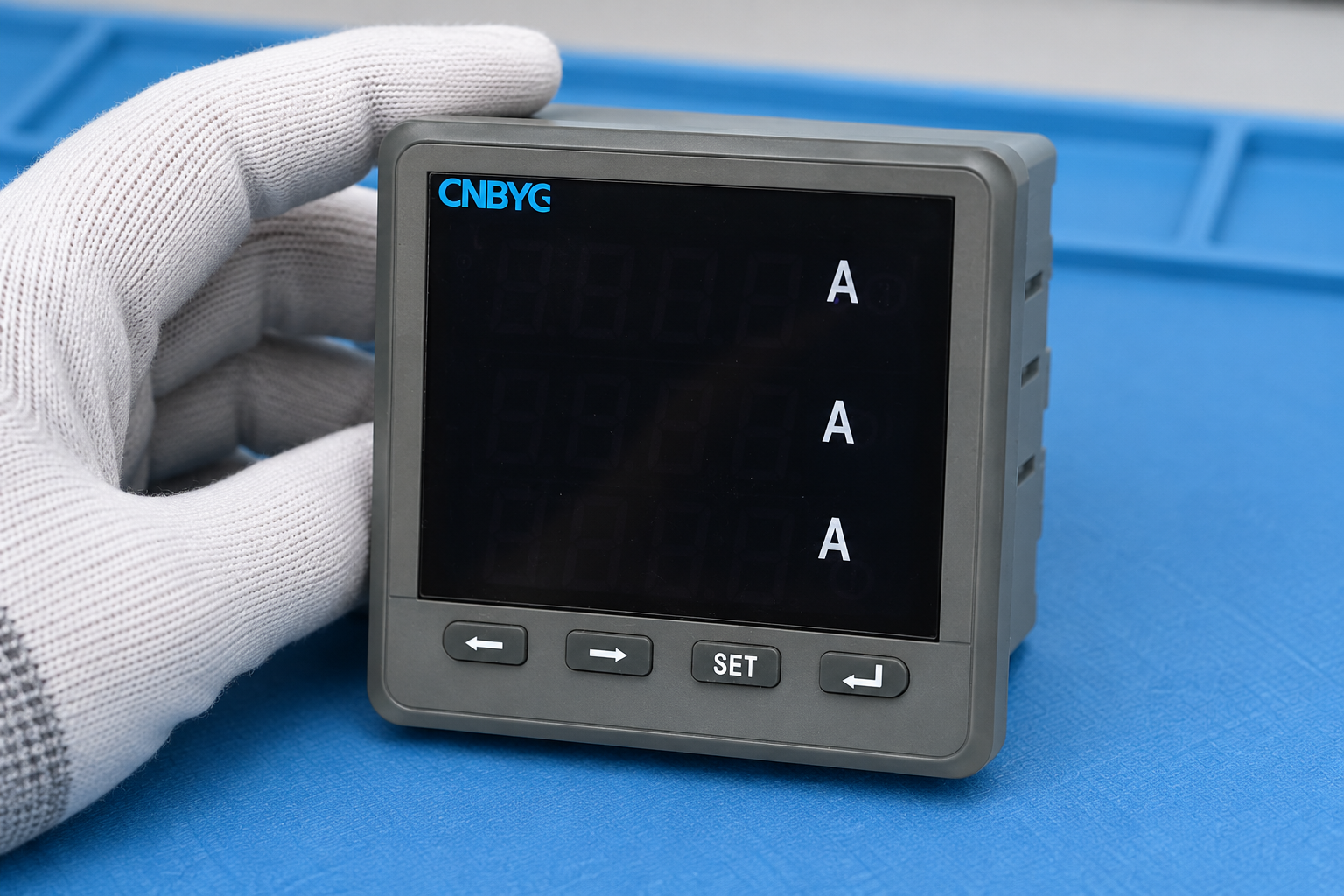
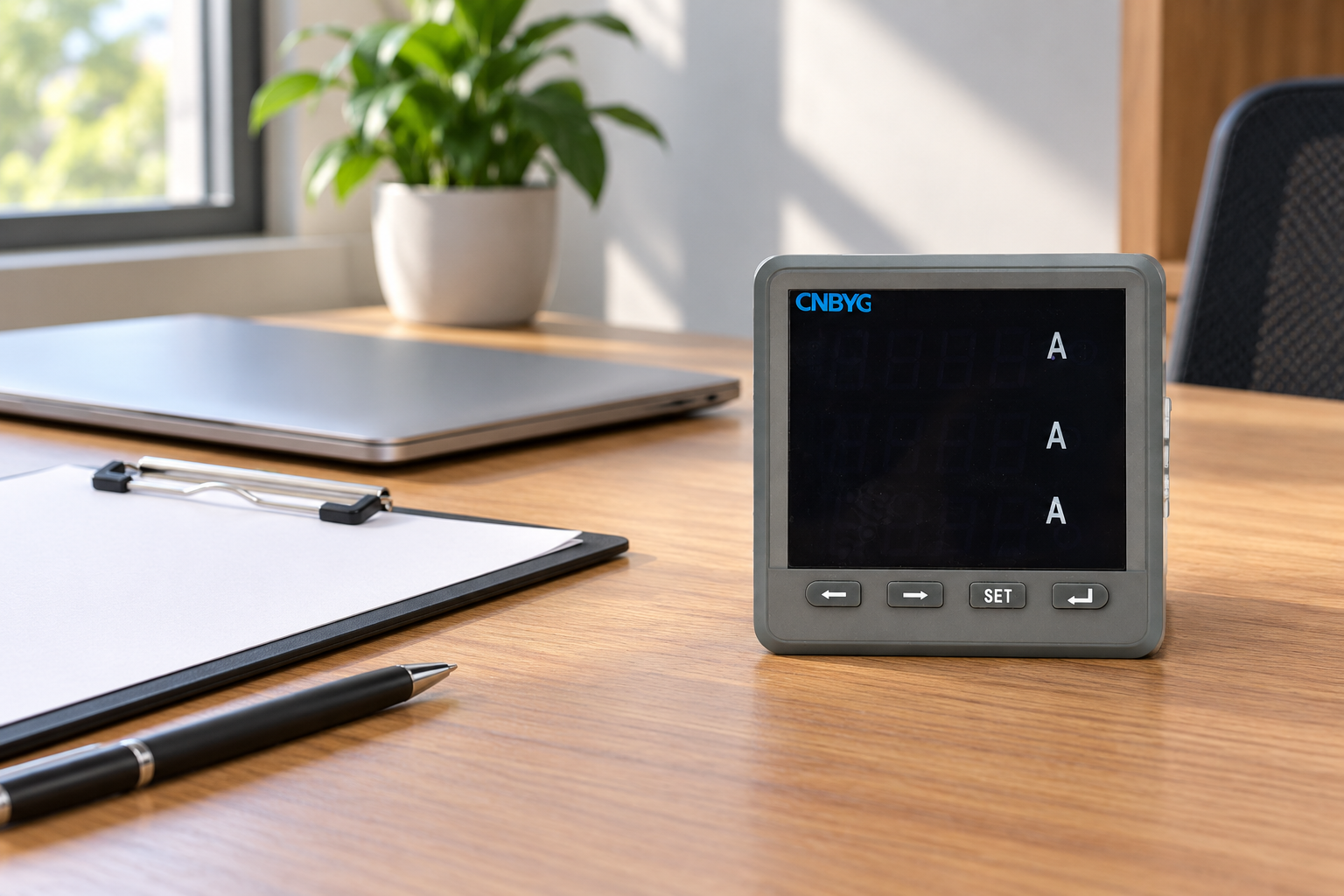
The BY194 multifunction power instrument is shown in the product-reference illustrations as a panel-monitoring device. The images do not claim that the illustrated unit performs Class A dip recording, generates event waveforms, or complies with a particular test method. Select a qualified power quality analyzer where those functions are necessary.
Review the analyzer selection guide for the distinction between routine monitoring and a specialist measurement campaign. Obtain configuration exports, sensor details, calibration information where required, and a documented electrical installation procedure. Qualified personnel should perform any connection or modification involving energized equipment.
Link event records to process sensitivity
List the equipment that stopped and separate cause from consequence. A drive trip, contactor release, controller reboot, and communication loss may occur together, but their thresholds and recovery behavior can differ. Record the first alarm, shutdown sequence, and restart conditions rather than relying only on the final operator message.
Request the equipment manufacturer’s documented ride-through or immunity information for the relevant operating mode. Laboratory test levels do not guarantee performance in every installation or prove that an existing unit meets those levels. Match the voltage-time event and system arrangement to the actual equipment documentation.
For process-critical loads, quantify the interruption consequence and required recovery time. This helps prioritize engineering work even when the same disturbance affects multiple devices. A small control supply failure can create a larger production loss than a temporary reduction in a noncritical motor’s output.
Choose mitigation from the confirmed problem
The remedy may involve equipment settings, control supply support, dedicated backup power, changes to motor starting, network reinforcement, or a purpose-designed voltage support solution. Each option has operating limits and needs a site-specific design. Avoid selecting a solution from the word “dip” alone.
Reactive power compensation can help a defined voltage or power-factor problem under suitable conditions, but it should not be presented as universal protection against upstream faults or interruptions. An active harmonic filter addresses specified harmonic-current objectives and is not automatically a dip ride-through device. Ask suppliers to connect their proposal to the measured event and a verifiable acceptance test.
An engineering specification should state the load to protect, the measured voltage-time envelope, event recurrence, installation constraints, and required process outcome. Define responsibility for commissioning and repeat measurements. This makes competing proposals comparable and reduces the risk of buying equipment that solves a different problem.
Create an event review record
Retain the raw measurement files and a short event register containing timestamps, location, retained voltage, duration, phase pattern, operating state, affected equipment, and supporting evidence. Keep uncertain causes labeled as hypotheses. Update them only when synchronized records or a controlled investigation provide support.
After corrective work, repeat monitoring for representative production conditions. Compare event severity, equipment response, and process recovery separately. A reduction in process trips can be valuable even if the external event frequency remains unchanged. Conversely, fewer recorded events may reflect changed thresholds rather than a better supply.
Further learning
The neutral educational lesson below explains power quality standards and monitoring concepts. Use it as background for the measurement vocabulary; actual event classification should follow the selected standard and instrument documentation.

Watch Power Quality: Standards and Monitoring
Frequently asked questions
Are voltage sag and voltage dip different disturbances?
They generally name the same temporary voltage reduction. Confirm the standard and measurement method before comparing formal definitions, event counts, or acceptance limits.
Does 80 percent retained voltage mean an 80 percent voltage drop?
No. In the same reference system, 80 percent retained voltage means a 20 percent reduction. Reports should label the reference and the percentage convention explicitly.
Can a standard panel meter replace a power quality analyzer for dip diagnosis?
Only if its exact documented functions meet the investigation requirements. Verify event detection, recording method, timestamps, sensor arrangement, and export capabilities rather than relying on the product category.
Will an active harmonic filter prevent every voltage dip?
No. A harmonic filter is selected for documented harmonic-control objectives. Dip mitigation requires the measured voltage-time event, affected load behavior, and a solution designed for that specific problem.