Capacitor Bank Condensation: Dew Point, Shutdowns and Restart Checks
Capacitor bank condensation occurs when a surface becomes cold enough for moisture in the surrounding air to condense on it. The important comparison is surface temperature against the local dew point, not relative humidity alone. A cabinet can be dry during normal operation yet develop moisture during a shutdown, overnight cooling or the arrival of warm humid air around cold equipment. Visible moisture, tracking or uncertain insulation condition requires a controlled hold and assessment before energization.
The correct response depends on the complete enclosure and component design. Ventilation, heating, sealing and dehumidification each affect different conditions. This guide explains what to measure and document; it provides no universal heater wattage, humidity limit or drying time for CNBYG capacitor banks.
Understand dew point before choosing a remedy
The Met Office explanation of dew describes condensation when a surface cools to the relevant dew-point condition. Its humidity guide explains the relationship between temperature, relative humidity and moisture. These physical principles also help explain moisture on electrical enclosure surfaces.
Relative humidity changes with temperature, so a single percentage does not describe the entire risk. Warm air can have a moderate relative humidity while still carrying enough moisture to condense on a much colder metal surface. Measure or determine the dew point for the air near the surface of concern.
As an illustrative comparison, if a local dew-point estimate is 19°C and a metal surface is 16°C, condensation is possible at that surface. These numbers are not operating limits, measured conditions or CNBYG ratings. Sensor accuracy, location and the actual air reaching the surface must be considered before drawing a site conclusion.
Distinguish condensation from water ingress
Water can enter through a damaged seal, roof leak, conduit, unsuitable cable entry or cleaning activity. That is not the same mechanism as moisture condensing from air already present. Both can occur in the same enclosure and require different corrective actions.
Record where the moisture appears, when it develops and what preceded it. Repeated droplets on cold metal after an overnight shutdown suggest a different investigation from a wet trail below a cable entry after rain. Do not label every moisture event as condensation without checking the enclosure and surrounding installation.
An enclosure ingress-protection designation does not by itself eliminate condensation. Moist air can be trapped inside or enter through intended ventilation and pressure changes. Likewise, a cabinet with operating fans may still have a cold surface or a shutdown condition that allows moisture to form.
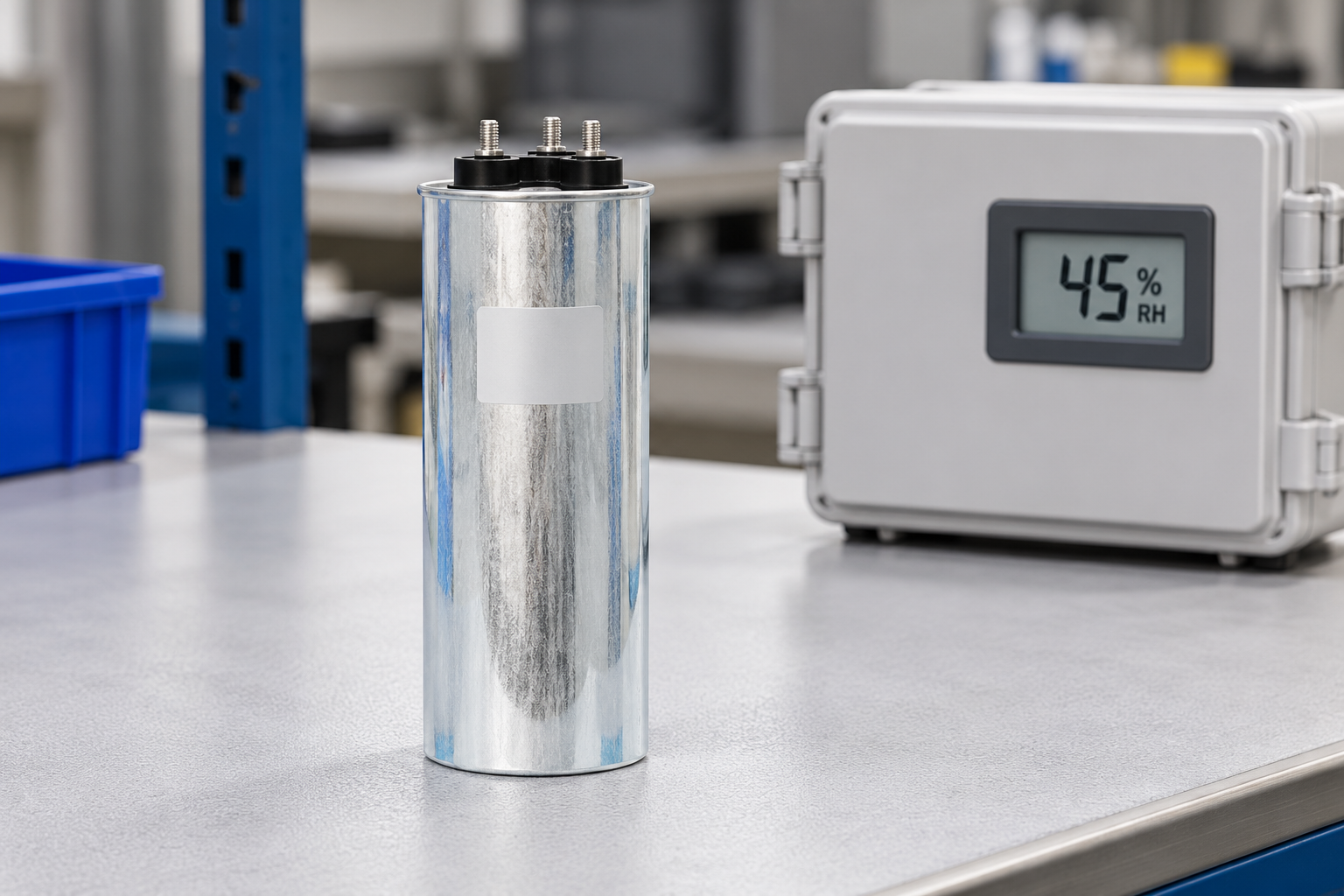
For the product context, CNBYG BSMJ cylindrical capacitors must be used within the environmental conditions approved for the exact ordered model. A reference photograph does not establish that a component or assembled bank tolerates condensation.
Investigate shutdown and restart conditions
Normal operation produces heat inside a compensation cabinet. When the equipment is shut down, that heat source disappears. The cabinet, capacitor cans, supports and nearby structures can cool at different rates, creating local conditions that a single room sensor misses.
A cold cabinet moved into a warm humid room presents another situation. Opening it immediately can expose cold surfaces to moist air. Receiving, storage and acclimatization instructions should address the actual transport and installation conditions rather than assuming indoor equipment is automatically dry.
Look at weekends, seasonal shutdowns, air-conditioning schedules, washdown routines and changes in adjacent doors or ventilation. A problem that appears only on Monday morning may be related to the preceding environmental cycle. A daytime reading taken after the cabinet has warmed up can miss the relevant period.
Do not energize a bank simply to warm wet components. Electrical release requires the responsible qualified person’s assessment and the manufacturer’s applicable instructions. Heating may be part of an approved environmental-control design; it is not a substitute for determining whether moisture has affected insulation or caused damage.
Build a measurement record around the coldest relevant locations
A useful environmental log includes cabinet air temperature, relative humidity or dew-point information, relevant surface temperatures, equipment operating state and the condition of any environmental controls. Record sensor identity, location and time alignment.
Avoid placing the only sensor where it is warmed by a heater or active equipment if the concern is a colder remote wall or component. Sensors should answer the actual engineering question without creating electrical clearance or access problems. Their placement must follow the approved installation method.
| Observation to record | What it helps distinguish | Limitation to keep in mind |
|---|---|---|
| Local air temperature and humidity | Moisture conditions around the equipment | One room reading may not represent cabinet air |
| Relevant surface temperature | Whether a cold surface approaches the local dew point | An accessible surface may not be the coldest internal location |
| Operating and shutdown state | Whether moisture follows a cooling cycle | A later warm reading cannot reconstruct every earlier condition |
| Rain, cleaning or nearby water event | Ingress and external moisture sources | Timing alone does not prove the entry path |
| Heater, fan and control state | Whether installed environmental controls operate as intended | Device operation does not prove the overall design is adequate |
| Moisture location and visible damage | Inspection scope and release requirements | A dry-looking exterior does not establish insulation fitness |
This is a diagnostic record, not a set of acceptance limits. The component manufacturer and enclosure designer must define the applicable operating conditions and any required release checks.
Compare environmental-control options by their purpose
A correctly designed anti-condensation heater can help maintain selected surfaces above dew point. It does not remove water vapor from the enclosure by itself. Its position, control method, safety clearances, supply availability during shutdown and effect on component temperature all need review.
Ventilation can remove heat during operation, but bringing humid air into a cold enclosure can worsen condensation conditions. More airflow is therefore not a universal cure. Assess both the operating thermal requirement and the moisture conditions of the incoming air.
Sealing may reduce uncontrolled air or water entry, but it can also change heat rejection and trap moisture already inside. Any change to gaskets, drains, vents or cable entries needs to preserve the intended enclosure design. Do not block ventilation or drill drainage holes as an improvised repair.
Dehumidification or other moisture-control measures may be appropriate for some installations. Their capacity, maintenance, drainage, electrical supply and interaction with ventilation require a design assessment. A small packet of desiccant is not evidence that an entire cabinet remains within approved conditions over its service life.
Keep capacitor thermal limits in the same review
A remedy for moisture must not create an overheating problem. Capacitors, reactors, contactors and controllers can have different environmental and thermal requirements. Review the complete assembly, not just the device nearest a heater or fan.
The temperature and capacitor bank life guide addresses the separate thermal-aging context. The indoor versus outdoor bank guide helps frame enclosure selection. Neither establishes permission for operation with condensation or substitutes for the actual assembly environmental rating.
If a bank has both hot-running and wet-shutdown symptoms, retain both observations. Solving only the daytime temperature may leave the overnight moisture cycle unchanged. A coordinated enclosure assessment can avoid repeatedly exchanging one problem for another.
Use a controlled hold and restart decision
When moisture or possible moisture-related damage is found, follow the site’s safe isolation and access process. Capacitors may retain energy after supply disconnection. The UK HSE electrical safety guidance provides general context for competent personnel and controlled electrical work.
Record corrosion, deposits, discoloration, tracking, damaged insulation and the location of any water. Do not wipe away all evidence before the responsible person has assessed the condition. Do not perform an insulation test using an arbitrary voltage on an assembled bank containing sensitive equipment.
Drying, cleaning, replacement and testing must follow the appropriate manufacturer instructions and authorized scope. A fixed waiting period cannot establish dryness for every component and enclosure. Confirm the cause has been corrected as well as the present condition; otherwise the same cycle may recur after the next shutdown.
Record the release decision, required checks, responsible personnel and any follow-up monitoring. The capacitor bank maintenance checklist can hold the recurring inspection actions, while a separate incident record should preserve the moisture event and corrective work.
Specify the environment clearly when ordering
Provide the installation location, expected temperature and humidity conditions, shutdown pattern, nearby water or cleaning exposure and whether the cabinet is indoors, sheltered or outdoors. Include the site’s available environmental measurements where possible.
Ask the supplier to confirm component suitability and the complete enclosure arrangement, including environmental controls and their operation during shutdown. Avoid requests based solely on a maximum room temperature. A complete environmental description helps prevent a bank that performs acceptably when warm but faces unresolved condensation during idle periods.
Further learning: condensation in the water cycle
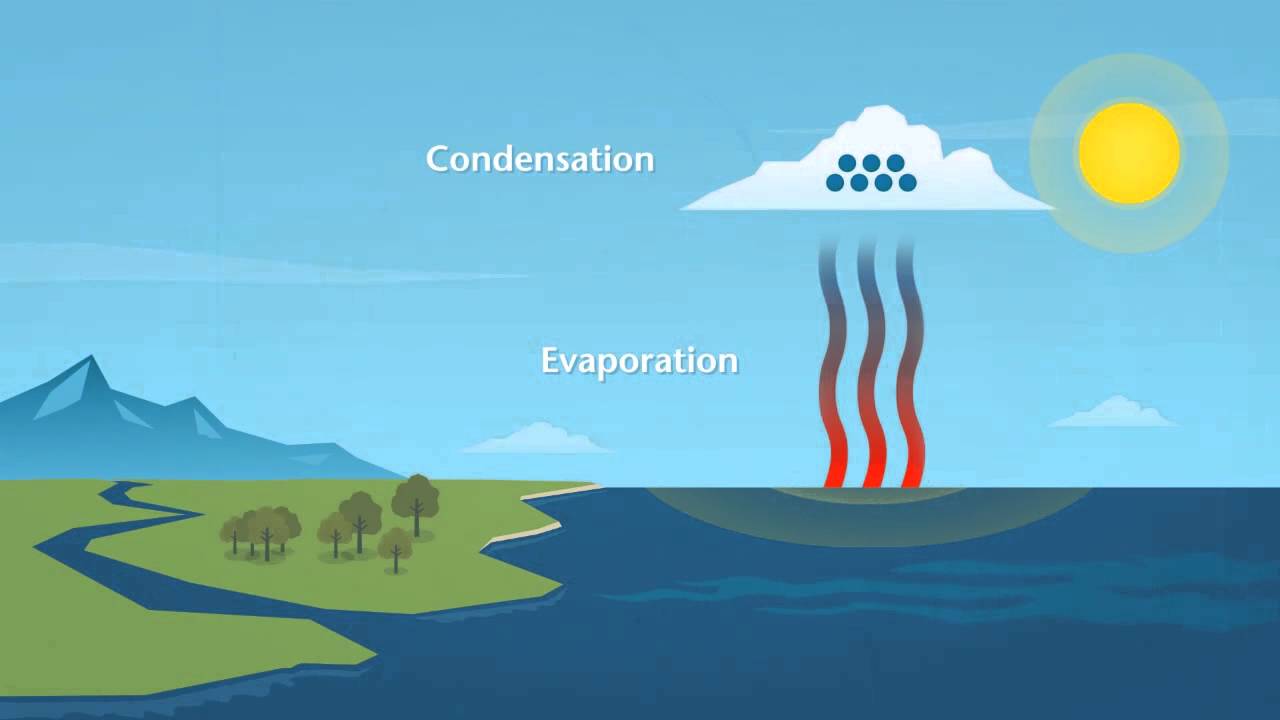
The Met Office animation explains evaporation and condensation as physical processes. It helps explain how water vapor becomes liquid, while electrical enclosure control and release decisions require the equipment-specific engineering review described above.
Frequently asked questions
Does a low relative-humidity reading prove there is no risk?
No. Consider local air conditions and the temperature of the relevant surfaces. A colder surface can face condensation even when a warmer room sensor looks reassuring.
Will adding a fan always prevent condensation?
No. Ventilation can introduce humid air to cold surfaces. Review incoming air, shutdown conditions and the complete thermal and moisture-control design.
Can the bank be energized to dry it out?
Do not use normal energization as an improvised drying method. Obtain the responsible qualified person’s assessment and the manufacturer’s approved requirements before release.
Is a sealed enclosure automatically condensation-proof?
No. Moisture can be trapped inside, and temperature cycles can still produce condensation. Enclosure design, environment and component suitability must be assessed together.