How to Review a JKW Controller Setpoint Before Switching
A reactive power controller setpoint is not a stand-alone performance target. Review it beside the measurement point, CT orientation, capacitor-stage arrangement, delay record, and the operating condition in which the setting will be used.
Direct answer
Before switching, preserve the current setting and its revision history, then check the measurement boundary and stage information that give that setting meaning. This is a review method, not a prescribed target power factor or commissioning approval.
Part 1. Define the decision before opening the controller menu
Write the question in a form another reviewer can test: which setting is under review, which bus or feeder is represented, and whether the purpose is a revision check, an alarm review, or an RFQ. “Improve power factor” is not a review question because it does not identify the measurement or the evidence.
| Review question | Evidence needed | Do not infer |
|---|---|---|
| Is the recorded target still intentional? | setting export and revision note | that it suits every load state |
| Is a stage action traceable? | stage identifier and timestamp | that a command proves physical operation |
| Is a change ready for review? | drawing, CT record and operating log | that a screen value is an approval |
For terminology, use the reactive power compensator resource as the product-line entry. This article starts at the narrower evidence question.
Part 2. Confirm the measurement boundary and CT record
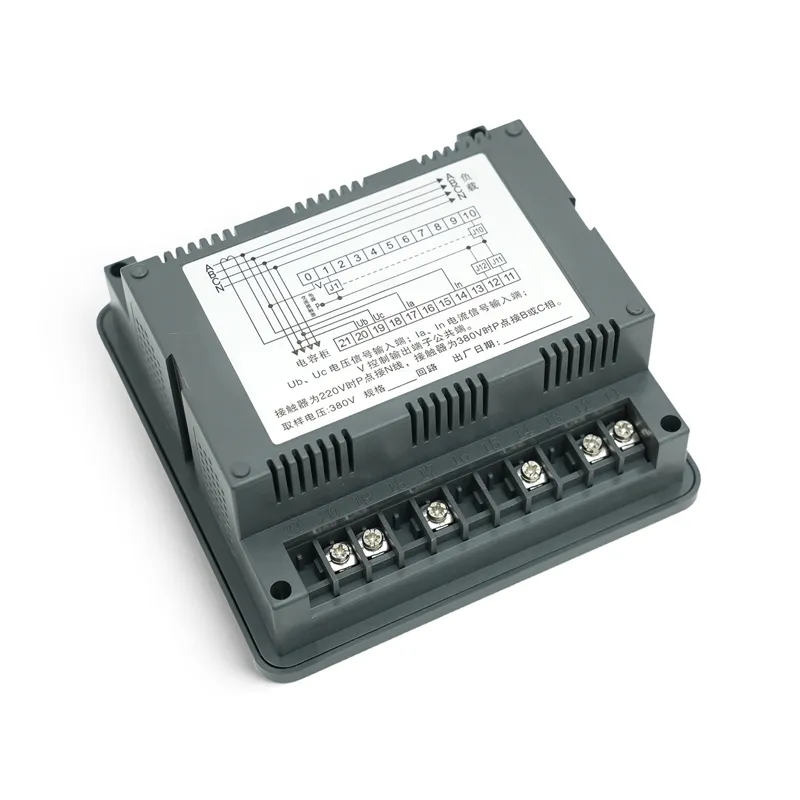
If the CT and voltage references are not named, a displayed value cannot be assigned confidently to a bus, feeder, or stage group. Record location, phase reference, CT orientation as installed, meter/controller relationship, and the one-line drawing revision before comparing any setting.
| Item | Why it belongs in the record | Common review gap |
|---|---|---|
| CT location and orientation | identifies the current observation boundary | treating a nearby feeder as the same load |
| Voltage reference | identifies the controller reference | omitting a source or transformer change |
| Drawing revision | locates stages and protection | reviewing an obsolete arrangement |
The related PF logging guide helps separate recorded quantities; it does not set a controller value.
Part 3. Read setpoint, step and delay as one control record
A setting export gains meaning when each stage is named and the delay or sequence information is retained with it. Keep manual actions, alarms, lockouts, and any controller revision in the same dated package. This prevents a later reviewer from mistaking a changed operating state for a controller change.
| Record field | Procurement or review value |
|---|---|
| stage sequence and nominal description | connects the menu record to the drawing |
| delay and switching history | identifies chronology to compare, not a universal value |
| alarms and manual actions | exposes exceptions before a setting is copied |
Part 4. Compare records only under comparable operating states
Unlike a calendar comparison, a useful comparison groups records by source arrangement, major nonlinear loads, process state, and stage configuration. The Schneider Electrical Installation Guide notes that harmonic conditions matter in capacitor-bank context.
Important: Keep harmonic observations and any reactor or topology note beside the setting record. They identify a condition requiring review; they do not prove a controller setting caused or solved it. (Schneider Electric Electrical Installation Guide)
Use a power-quality baseline report when the project needs a separately defined measurement package.
Part 5. Build a commissioning review sheet
Start the sheet with the current state rather than a desired outcome. A reviewer should be able to see the installed controller, drawing, measurement references, stage list, setting export, alarm history, and operating window without reconstructing them from messages.
| Buyer should provide | Why it matters | Common mistake |
|---|---|---|
| one-line diagram and controller model | fixes the electrical scope | sending only a front-panel photo |
| CT and voltage-reference record | makes displayed data reviewable | omitting orientation or location |
| stage list and operating log | separates sequence from load change | comparing unlike shifts |
Fit boundary: this sheet suits a documented review before a project decision. It is not suitable for selecting a target, changing a live cabinet, or declaring compliance without the project engineer and applicable requirements.
Part 6. Send product-context inputs without assuming a setting
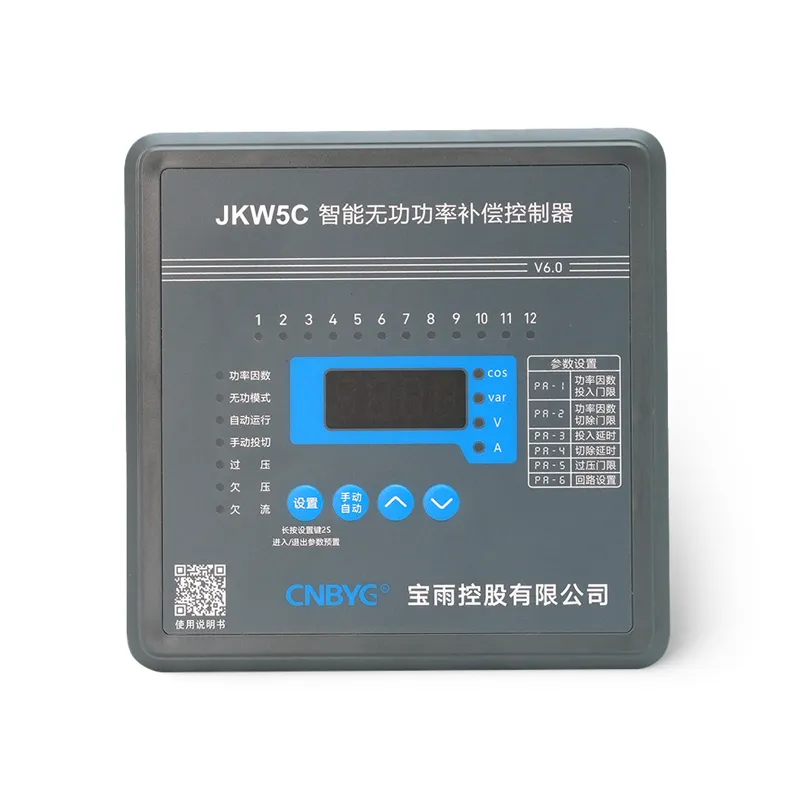
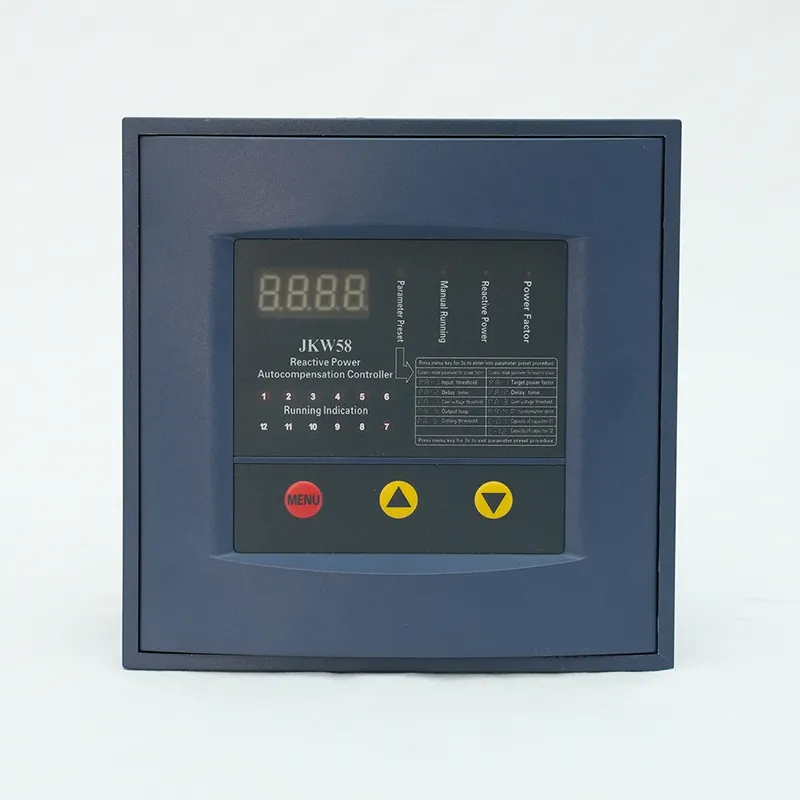
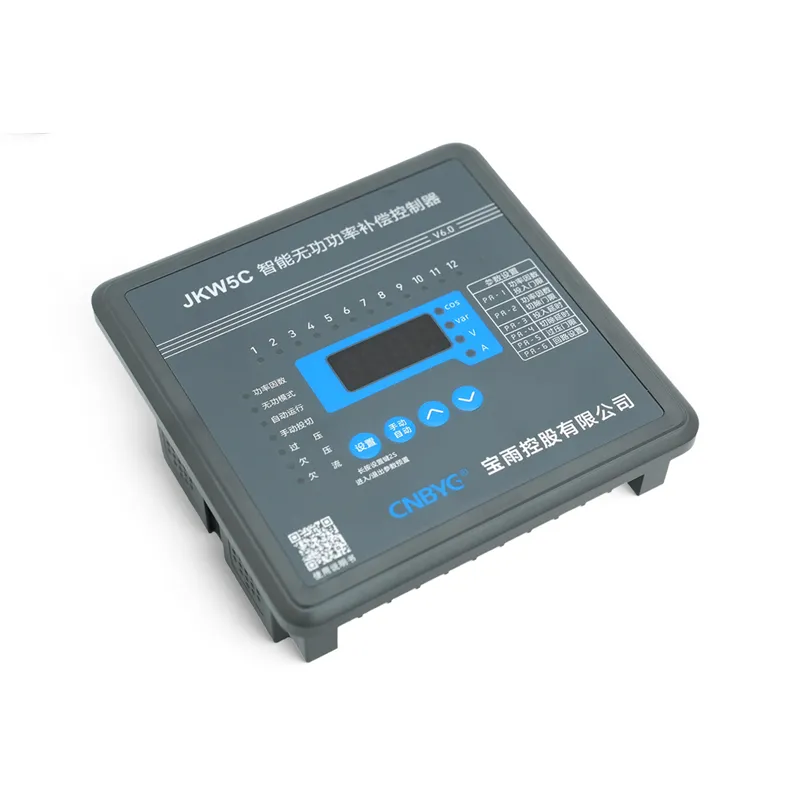
The JKW reactive power controller product page is the correct product-context route once the cabinet record is defined. CNBYG’s public page identifies the JKW controller family; it does not establish that a particular model, setting, or wiring arrangement fits an unnamed panel.
| Send with quote or review | Why it is needed |
|---|---|
| controller model and documentation revision | keeps the inquiry tied to a defined product scope |
| drawing, CT/voltage record and stage list | allows the electrical boundary to be checked |
| operating log, alarms and required project standard | separates evidence from an unsupported setting request |
Send the documented controller inputs when the drawing and records are ready for review.
FAQs
What is a reactive power controller setpoint?
It is a recorded control value used within a defined measurement and stage arrangement. It should be reviewed with the drawing and operating evidence, not treated as a universal target.
Does a CT arrow or orientation matter?
Yes. The installed CT relationship is part of the measurement boundary, so it belongs in the review record before conclusions are drawn from displayed quantities.
Should a delay be copied from another panel?
No. A delay record can be compared, but a suitable value depends on the named controller, stages, operating duty, and project constraints.
Which stage information belongs with the setting?
Keep the stage identifier, arrangement, command history, available state indication, and the drawing revision that locates the stage.
Why include harmonic context?
Harmonic conditions are relevant to capacitor-bank review. Record the observation and topology context without turning it into a site-specific diagnosis.
When is engineering review needed?
Seek the project’s qualified review when a live change, protection issue, unclear measurement boundary, unusual operating record, or acceptance decision is involved.