kWh vs kVAh: Energy Meter Readings and Billing Checks
kWh vs kVAh compares active energy with apparent energy. A kWh reading records the accumulated active power used over time; a kVAh reading records apparent energy according to the meter’s defined calculation and accumulation method. They answer different questions and are not interchangeable billing units. For a stable importing load, kWh divided by the corresponding kVAh can describe an interval energy ratio related to power factor. For variable loads, use matched interval records and the applicable meter definition rather than dividing a monthly kWh total by one instantaneous power-factor reading.
For a purchasing or billing review, begin with three documents: the exact meter manual, the utility tariff that applies to the account, and the period readings used on the bill. A panel meter can support plant monitoring without being the utility’s approved revenue meter. Confirm the intended purpose before selecting equipment or comparing totals.
Power and energy use different units
kW is active power at a given operating condition. kWh is active energy accumulated over a period. A machine drawing a steady 10 kW for two hours uses 20 kWh in that simplified example. The time dimension matters: a high short-duration load can use less energy than a smaller load running continuously.
kVA is apparent power. In a suitable single-phase measurement, apparent power is related to RMS voltage multiplied by RMS current. In three-phase systems, the aggregation method and circuit conditions must be specified. kVAh accumulates apparent power over time using the meter’s implementation. It should not be confused with maximum demand in kVA, which describes demand over a defined interval rather than total energy.
The U.S. Energy Information Administration explanation of electricity measurement provides the basic distinction between power and energy units. The MSEDCL kVAh billing FAQ illustrates a utility’s explanation of active, reactive and apparent energy. That historical document supplies context, not a universal tariff or confirmation of today’s charges for any account.
Compare the quantities before comparing their numbers
A meter display can show power, cumulative energy and demand in adjacent screens. A number that appears larger may simply use a different unit or accumulation period. Write down the complete label, multiplier and register definition rather than recording only the digits.
| Quantity | Unit | What the record describes | Check before using it |
|---|---|---|---|
| Active power | kW | Present or averaged active power | Averaging period and import/export sign |
| Active energy | kWh | Accumulated active power over time | Start and end readings, scaling and counter continuity |
| Apparent power | kVA | Apparent loading under a defined method | Phase aggregation and measurement definition |
| Apparent energy | kVAh | Accumulated apparent power | Integration method and register direction rules |
| Reactive energy | kvarh | Accumulated reactive-energy quantity | Quadrants, leading/lagging treatment and tariff rules |
| Maximum demand | kW or kVA | Largest recorded interval demand | Interval length, reset date and billing window |
These distinctions are based on the measurement concepts in the linked energy and utility references. They do not imply that every BY194 variant exposes every listed quantity. The required functions must be confirmed on the actual instrument specification.
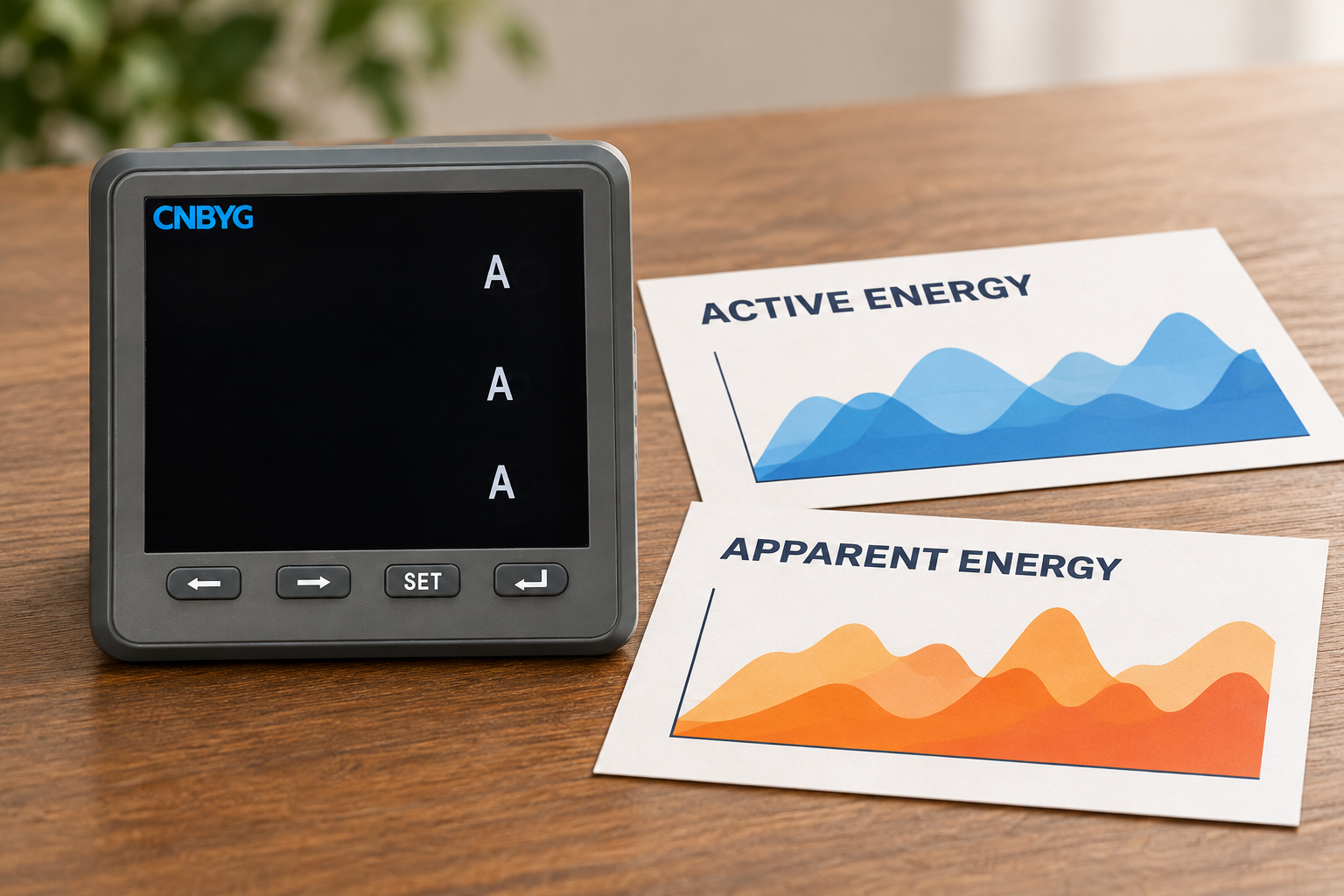
A steady-load calculation
Consider an illustrative load importing 80 kW with a stable true power factor of 0.8 over one hour. If the stated power-factor and apparent-power definitions are consistent, apparent power is 80 divided by 0.8, or 100 kVA. During that hour, the simplified accumulated values are 80 kWh and 100 kVAh. Their ratio is 0.8.
The example assumes stable quantities, a common measurement boundary and no counter discontinuity. It does not predict a specific plant bill. A tariff may charge for active energy, apparent energy, demand, reactive energy, time-of-use periods or other items. Prices, exemptions and settlement methods need the current account-specific documents.
If the same active load operates at a power factor of 0.95, the corresponding apparent power in this simplified case is approximately 84.21 kVA. One hour represents about 84.21 kVAh while active energy remains 80 kWh. This illustrates why apparent loading changes with power factor; it does not establish a guaranteed financial saving from any compensation device.
Why a monthly total cannot use one live power-factor value
A plant rarely operates at a single load condition all month. Motors start and stop, shifts change, production lines idle and different circuits contribute different power factors. A live reading collected at midday does not represent the whole billing period.
For a two-interval example, suppose interval one lasts one hour at 40 kW and power factor 0.8. Its illustrative energies are 40 kWh and 50 kVAh. Interval two lasts one hour at 60 kW and power factor 1.0. Its energies are 60 kWh and 60 kVAh. Total active energy is 100 kWh, total apparent energy is 110 kVAh, and their ratio is about 0.909. The simple average of the two power-factor values is 0.9, which is different.
This is why the interval structure and weighting matter. With changing signs, waveform distortion or different phase-aggregation rules, interpretation needs further care. Do not assume that every meter calculates apparent energy from the same combination of accumulated active and reactive counters. Ask the manufacturer for the precise definition if agreement with another system is required.
Match the two counters to the same period
Use differences between the end and start readings, not the lifetime totals shown on two unrelated dates. Confirm that both counters cover the same meter, circuit, time zone and observation window. Include CT and VT scaling exactly once. A software multiplier added on top of a meter’s primary-scaled value can create a plausible but incorrect total.
Check for resets, rollover, meter replacement and communication gaps. The energy counter rollover guide explains why a negative or unexpectedly small difference needs investigation. Preserve the original readings and the reason for any correction rather than overwriting the evidence.
For sites with generation, also inspect the import and export energy guide. Net active energy may become small even while substantial energy flows in both directions. A ratio using net kWh and a differently accumulated kVAh register may not describe the operating behaviour the analyst intends to assess.
Read a kVAh bill as a tariff document
Start with the unit beside each charge. An energy charge expressed per kVAh is different from a demand charge expressed per kVA. Review the billing dates, meter multiplier, time-of-use breakdown and adjustment lines. Compare these with the account’s approved tariff rather than assuming a larger number means an inaccurate meter.
The MSEDCL FAQ describes one utility’s approach to apparent-energy billing. Its publication date and service scope matter. Other jurisdictions may use different rules, and the same utility can revise tariffs. Keep a dated copy of the applicable tariff and identify which consumer category applies before estimating costs.
A useful reconciliation separates quantity differences from price differences. First verify the units and period totals. Then check rates and charge rules. Only after those checks should the team estimate how a change in operating power factor might affect the bill. The utility-bill power-factor calculation guide addresses the broader bill-review process.
Select a meter for the required reporting task
The BY194 multifunctional power instrument family is a starting point for discussing panel measurement requirements. Do not infer kVAh accumulation, billing approval, register resolution or a specific integration algorithm from the family name or reference photograph. Obtain confirmation for the exact order code.
State whether the project needs a local indication, plant submetering, a monitoring-system input or revenue settlement. Request the available energy registers, units, scaling, counter width, update behaviour and treatment of import, export and reactive quadrants. Where communication is required, request the matching register map and firmware information as well.
For a new installation, the three-phase meter overview helps define the measurement boundary and application. A meter with more displayed quantities is not automatically a better match; the required quantities must be defined, traceable and supported by the intended reporting system.
Use the comparison to guide a real investigation
If kVAh increases faster than expected while kWh remains similar, compare corresponding operating intervals. Review power factor, loading, production state and any recent changes to the meter or software. An instrument replacement, multiplier correction or register-mapping change can alter the reported series without a real change in electrical behaviour.
Do not size a capacitor bank from a single monthly ratio. Compensation decisions need the load profile, leading and lagging operation, harmonic conditions and the site’s control requirements. A billing investigation may identify an opportunity, but it does not supply the complete engineering specification for correction equipment.
Keep one reconciliation sheet with period boundaries, raw start/end values, applied multipliers, excluded intervals and explanations. Mark estimated values clearly. This allows finance and engineering teams to discuss the same evidence and prevents a calculated apparent-energy estimate from being presented as a directly observed revenue-meter register.
Educational background: power factor
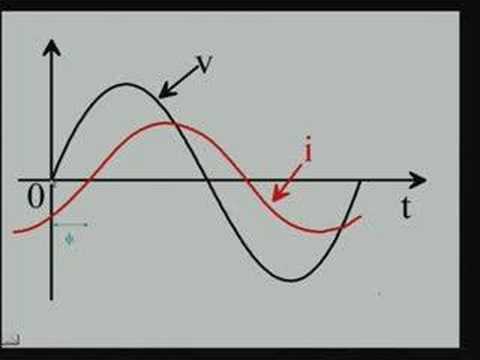
NPTEL’s Power Factor lecture explains the relationship between active and apparent power. It is useful background for the steady-load examples above. Billing totals still require the appropriate energy registers and the actual tariff; a classroom power triangle does not replace either.
Frequently asked questions
Are kWh and kVAh the same?
No. kWh measures active energy, while kVAh describes apparent energy under the meter’s defined accumulation method. Compare their units, direction rules and observation periods before calculating a ratio.
Can I calculate monthly kVAh from kWh and today’s power factor?
That is generally unreliable for a variable plant load. Use matched interval data and the meter’s definitions, or use the documented kVAh counter when the exact instrument provides one.
Does a kVAh meter always produce a higher electricity bill?
The bill depends on the applicable tariff, rates, demand rules and operating profile. A difference in energy-unit totals alone does not establish the financial effect.
Does every BY194 meter record kVAh?
Do not assume that from the series name. Confirm the energy functions, accumulation method and available communication registers for the exact ordered variant.