What Is Power Compensation? Meaning, Methods, and Selection
The concept of power compensation refers to the optimization of the power factor through various means in order to manage the reactive power present in electrical systems. An effective method of power compensation increases the efficiency and stability of an electrical network and decreases energy costs. Therefore, power compensation is an important factor in industrial and commercial applications.
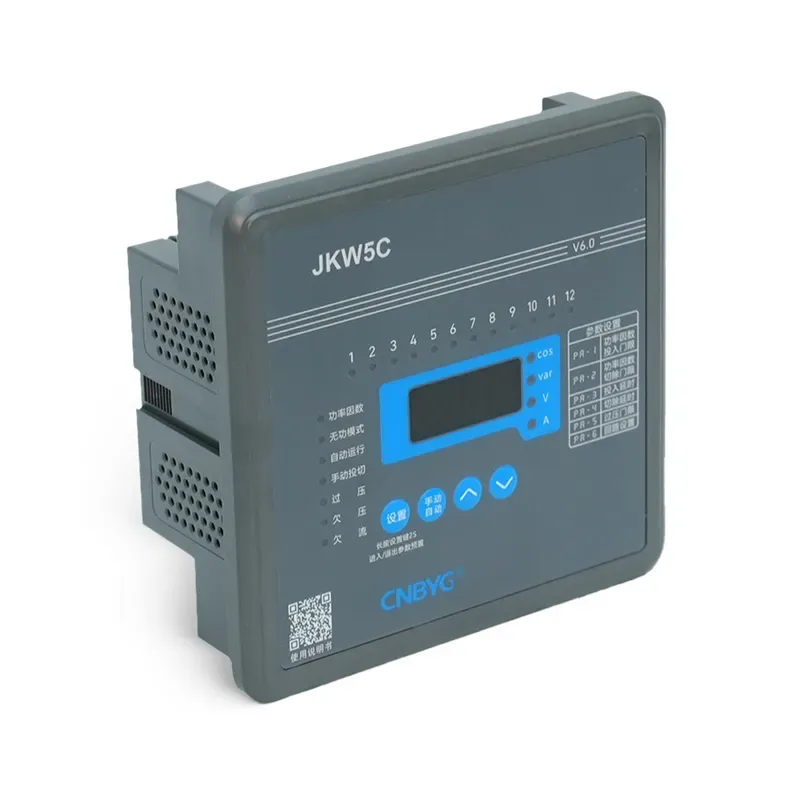
What is Power Compensation?
Power compensation fundamentally deals with the management of reactive power within an electrical system to maintain proper levels of balanced and efficient energy flow. Although reactive power is not itself usable for performing useful work, it’s nevertheless essential for creating and maintaining the electric and magnetic fields used by transformers and motors. If there is excessive reactive power in the system, then the lagging power factor will lead to higher energy losses along with increased operating costs.
Capacitors, Synchronous Condensers and other modern Power Electronics as Reactive Power Generators or Absorbers contained in power compensation are utilized to improve the overall operating efficiency by providing additional means of minimization of the amount of Power Lost and maximizing the overall performance of the Power System.
Why is Power Compensation Important?
Power compensation can play an important role in reducing inefficiencies caused by low power factors. Here’s why:
1. Better Energy Efficiency: Using a power compensation method, reduced apparent power usage will lower overall energy waste from the electric grid and therefore improve overall energy efficiency.
2. Lower Operational Costs: Utility companies often charge penalties due to low power factors; however, power compensation can allow you to avoid paying these penalties.
3. Improved Performance of the System: Optimizing your power factor guarantees that there is a stable voltage for your electrical system, permitting less voltage drop and less chance of malfunctioning electrical equipment.
4. Extended Equipment Life: The less strain there is on an electrical device/saves, the longer its working life will be and the more efficient the overall system will be.
5. Environmental Advantages: Power Compensation has environmental advantages by increasing the efficiency of electrical systems and reducing the carbon footprint of your electrical system as a result of your optimal use of energy.
Components of a Power Compensation System
A total power compensating system is comprised of multiple elements that can be used to optimise as well as regulate the supply of reactive power to an electric utility. Below are the primary components of a total power compensation system:
- Capacitors for Power Compensation: These are typically the main component of a power compensation system. Capacitors temporarily store energy, and release it when needed to counterbalance the reactive power created by inductive loads, therby improving the power factor of the system.
- Power Factor Correction Units: PFC units measure the power factor of the system in real-time, and will automatically apply the appropriate amount of reactive power through the use of capacitors or some other device.
- Synchronous Condensers: Synchronous condensers are large, rotating machines that generate or absorb reactive power in order to help stabilize the electrical grid. Synchronous Condensers are used extensively in heavy industrial applications.
Understanding KVAR, kVA, and kW
In order to thoroughly understand power compensation, one must also familiarize themselves with the relationship between KVARs, kVA and kWs:
1. KVAR (Kilovar Reactive)
KVAR (Kilovar Reactive): The amount of reactive power that a system has; this includes the power used to create magnetic fields within inductive devices (i.e. transformer, motor).
2. kVA (Kilovolt-Amperes)
kVA (Kilovolt-Amperes): The sum total of (kW + KVAR). Therefore the total ‘apparent’ or ‘non-reals’ (KVAR) added to real working (kW) yields the amount of kVA present.
3. kW (Kilowatts)
kW (Kilowatts): The amount of real working energy available to perform work in the power system.
The power factor (PF) refers to the ratio of real power (KW) to apparent power (KVA) and indicates how much power is used efficiently (low PF = ineffective use of power). Therefore, having some type of effective power correction or compensation system is necessary to help increase the power factor and reduce the amount of loss from the use of electrical energy.
Applications of Power Compensation
Power compensation can be applied to many different fields and industries; below are a number of different physical applications where power compensation technology is actually being used:
1) Industrially-based Facilities: In order to efficiently control the large inductive load of their machinery, factories and plants need to use power compensation as part of their electrical supply.
2) Commercial Facilities: Companies use power compensation to enhance the stability of their electrical supply and minimize electrical costs. This applies to both office buildings and retail shopping centres.
3) Renewable Energy: Systems such as wind turbines and solar panels use power compensation to maintain stable electricity levels and improve electrical supply to the grid.
4) Utility Companies & Power Distribution: Utility providers utilize synchronous condensers and power compensation systems as a means of maintaining consistent voltage levels and reliable distribution of electrical power.
Power Compensation Methods
Several methods can be employed to achieve effective power compensation, including:
Shunt compensation is adding capacitance in parallel with the load to compensate for the reactive power flowing back through the load.
Series compensation occurs when compensating devices are used in series with transmission lines. The compensators improve the voltage regulation of the transmission line and reduce the power loss due to the reactive power components that are transmitted.
Dynamic compensation uses devices such as Static Var Compensators (SVCs) and Static Synchronous Compensators (STATCOMs) to provide true-time control of reactive power and voltage in dynamic systems.
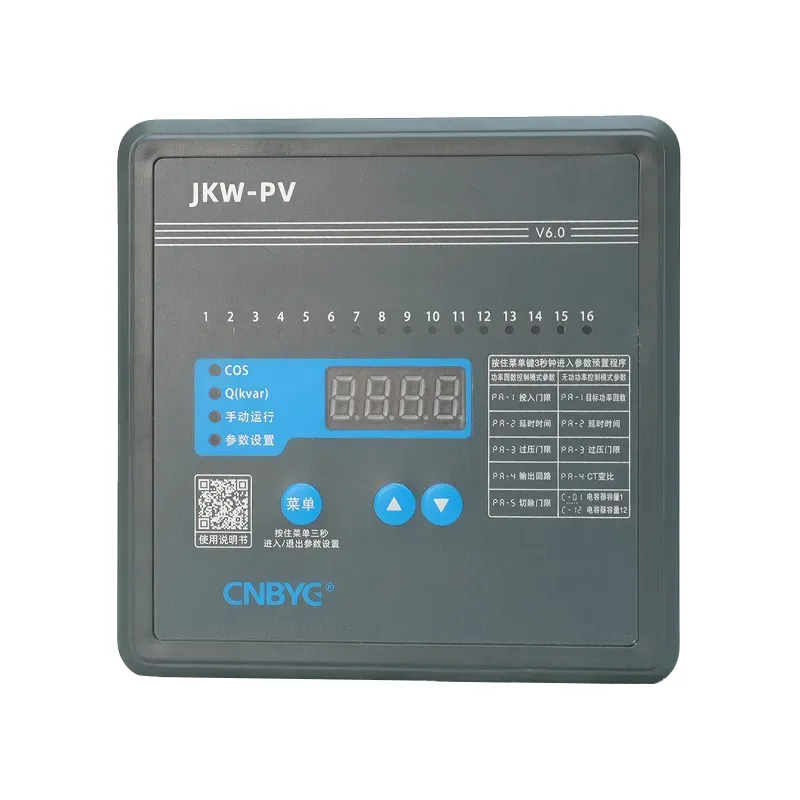
Power Compensation Meaning in Practical Terms
In an AC facility, power compensation usually means supplying part of the reactive power close to the equipment that needs it. Motors, transformers, welding equipment, and other inductive loads draw magnetizing current. A capacitor bank or an electronic compensator supplies an opposing reactive component, so less reactive current must travel through the transformer, cables, switchgear, and utility connection. The load still receives the real power needed to do useful work; compensation does not create free energy or reduce the mechanical work of a motor.
| Observed condition | Likely objective | Typical first check | Possible approach |
|---|---|---|---|
| Stable lagging power factor | Reduce reactive demand | kW, kvar, load profile | Fixed or automatic capacitor bank |
| Rapidly changing reactive load | Fast voltage and kvar control | Cycle time and voltage variation | SVG or thyristor-switched solution |
| High harmonic distortion | Prevent resonance and overheating | Harmonic spectrum and impedance | Detuned bank or active filter study |
| Leading operation at light load | Avoid overcompensation | Minimum-load kvar | Smaller steps or revised control |
How to Decide Whether Compensation Is Needed
Start with interval measurements rather than one power-factor value. Review real power, reactive power, displacement power factor, true power factor, voltage, current, and harmonic distortion across normal production states. Check the utility tariff and the point where penalties are assessed. Then calculate the kvar required to move from the present displacement power factor to the target, while checking minimum load so the system does not become leading. Where nonlinear loads are significant, complete a harmonic and resonance assessment before adding plain capacitors.
A successful project has a defined result: for example, an acceptable power-factor range at the billing meter without excessive voltage rise, step hunting, capacitor overload, or amplified harmonics. Commission each step, verify CT polarity and controller response, and trend the result after production changes.
FAQs about Power Compensation
What is power compensation?The technique of optimizing an electrical system’s power factor, while increasing energy efficiency, involves managing the reactive power in the electrical system. Typical methods for achieving this include using capacitors or synchronous condensers to mitigate reactive power issues.
What is the exact meaning of compensation?Compensation in electrical engineering refers to supplying reactive power to balance out the effects of inductance or reactance, thereby improving energy efficiency and overall stability of an electrical system.
What is KVAR vs kVA vs kW?The terms below are various types of electricity:
– KVAR which refers to the demand for reactive power used in determining how much inductive load (such as motors) there is at any given time and mainly used to create magnetic fields
– kVA represents apparent power which is the sum of both reactive and real power
– kW represents real power which can actually do work (e.g., turning a motor). Power correction systems work to create an optimum balance between kVAR, kVA and kW.
To summarize, power compensation is essential for increasing the efficiency and stability of electrical systems and should be one of your top priorities as a utility manager because of the positive effects to energy, utility and reliability cost, and for supporting energy sources that can be developed in an environmentally friendly way. There are many types of compensatory power systems available. The best options for individual customers will vary based on the customer’s needs, industry regulations and overall financial constraints.Therefore, it is important to carefully consider the future cost and operational characteristics when selecting a compensatory power system for a customer or a utility company to achieve maximum savings.
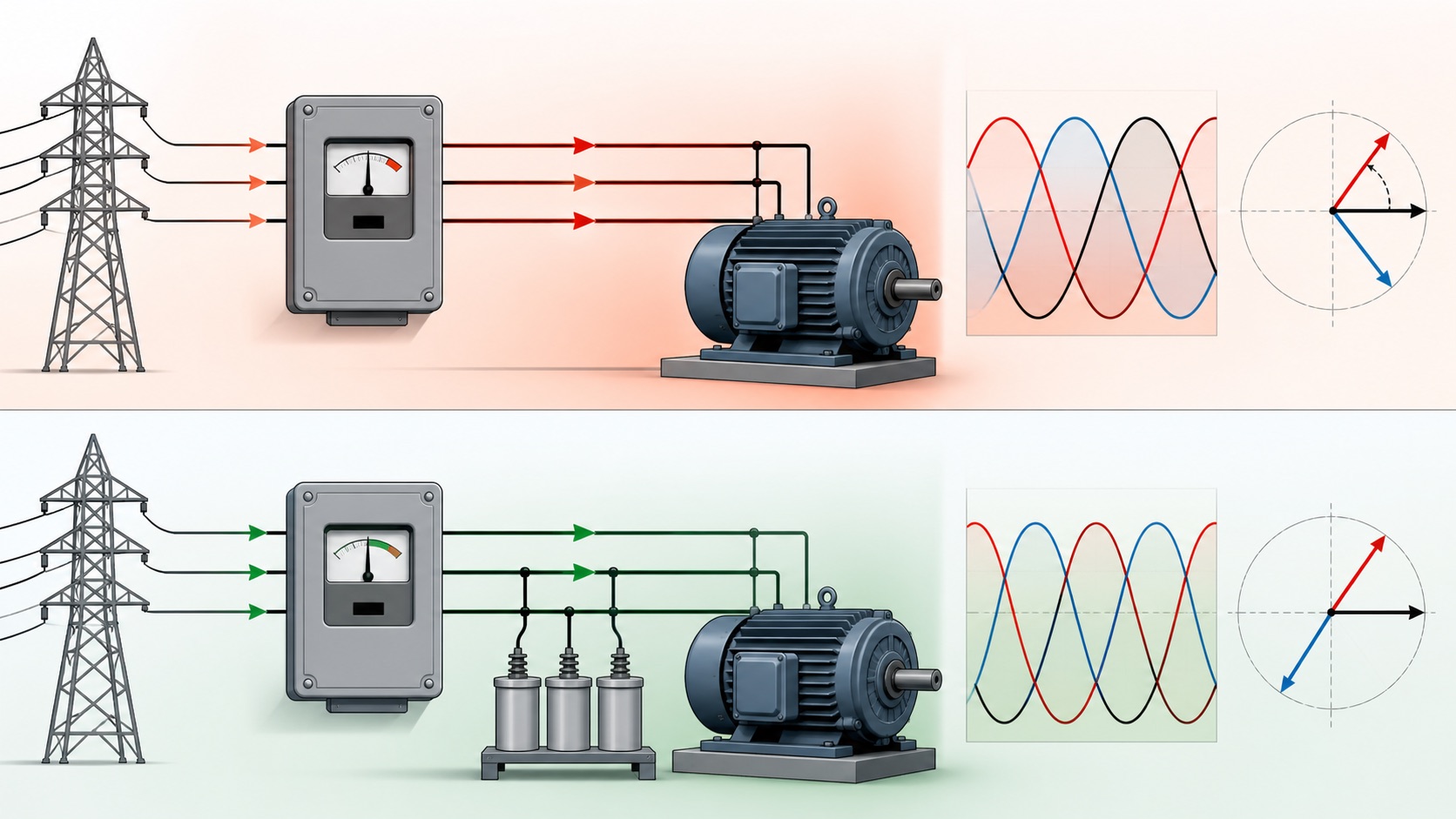
Practical FAQ
What does power compensation mean?
It means locally supplying or controlling reactive power so the upstream system carries less unnecessary reactive current.
Does power compensation reduce kWh?
It primarily reduces reactive current, losses, voltage drop, and possible tariff charges; it does not remove the real energy required by the load.
Can capacitors always be added directly?
No. Harmonic-rich systems require a resonance assessment and may need detuned reactors or an active solution.
What is the difference between power factor correction and harmonic filtering?
Power factor correction addresses reactive power; harmonic filtering targets distorted current or voltage. A project may need both.
Why can compensation become leading?
If connected capacitor kvar exceeds the inductive demand at light load, reactive power flows in the opposite direction.