Tunnel Ventilation VFD Harmonics: PCC Logging Guide
Road and rail tunnels modulate ventilation fans with traffic density and incident modes, so VFD harmonic current at the ventilation feeder changes with operating mode rather than with a fixed schedule. Assessing tunnel ventilation fan VFD harmonics starts with mode-labeled measurements at the feeder or PCC.
Direct answer
Road and rail tunnels modulate ventilation fans with traffic density and incident modes, so VFD harmonic current at the ventilation feeder changes with operating mode rather than with a fixed schedule. Assessing tunnel ventilation fan VFD harmonics starts with mode-labeled measurements at the feeder or PCC.
Traffic operations and electrical mitigation scopes should not share a single acceptance sentence. CNBYG can review AHF/APF fit when measured harmonic current is defined. This guide does not confirm smoke-control certification, traffic throughput targets, or a guaranteed harmonic result. See Power Quality System Engineering Guides.
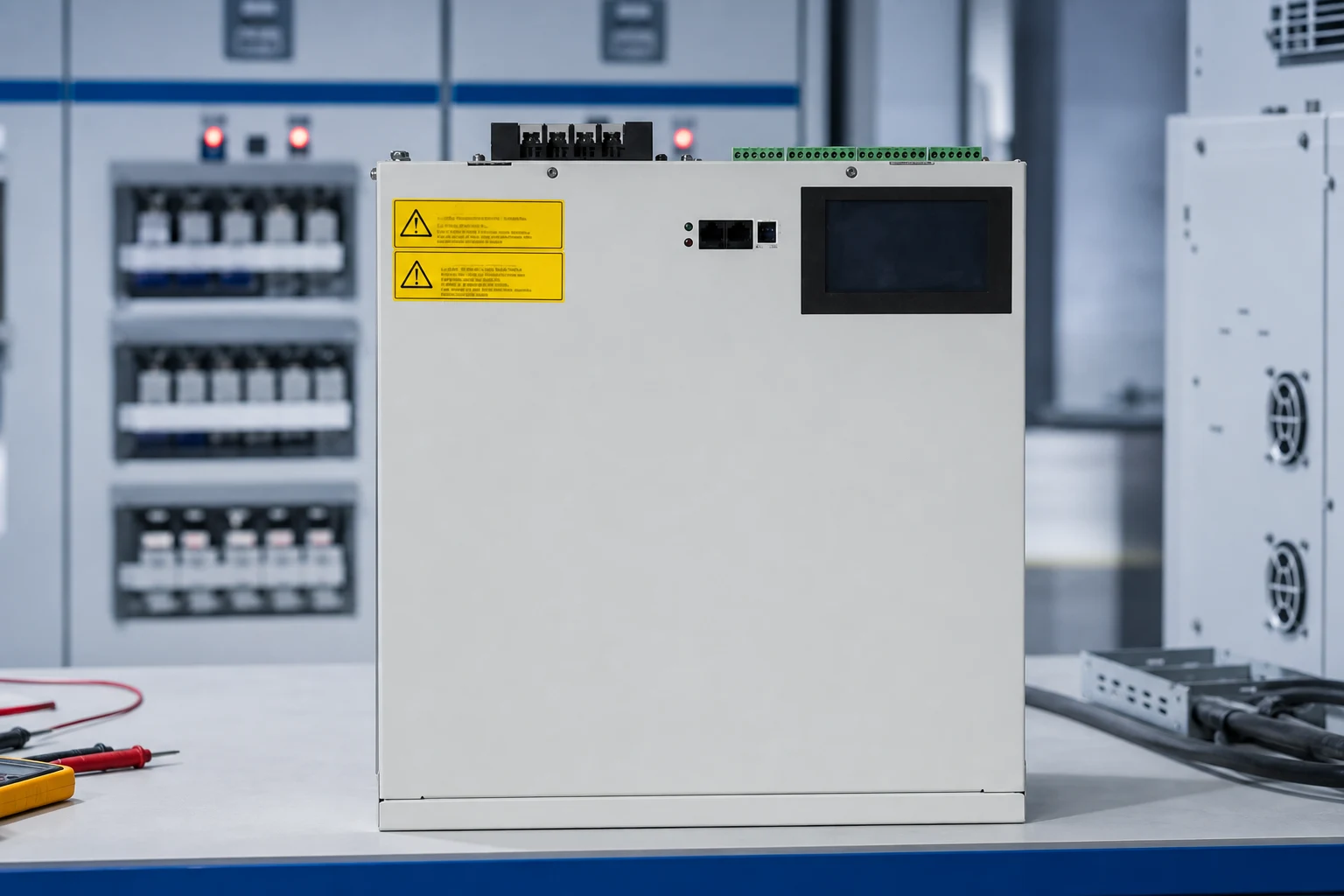
Choose the ventilation measurement boundary
Ventilation MCC feeders characterize fan groups; the tunnel PCC answers a utility-boundary question. Record CT data, fan stage counts, and control mode with every capture.
For longitudinal jet fans and axial ventilation fans on VFDs, cover normal traffic ventilation, congestion boost, incident extract, fire-mode tests, and overnight maintenance. Record fan stage counts and control mode for each window, because incident and fire-test modes can dominate the spectrum briefly.
A practical pre-RFQ record for this application normally includes:
- Single-line of ventilation substations and fan feeders.
- Spectra for normal traffic and labeled incident-test windows.
- Notes linked to the tunnel ventilation operating mode.
- Existing compensation on the tunnel electrical system.
- Demand trends across a representative traffic day plus one test mode.
| Tunnel log focus | Attachment needed | Decision supported |
|---|---|---|
| Activity at the monitored ventilation feeder | Current spectrum, RMS trend, load state, CT reference | Local source characterization |
| Activity at the system boundary | Voltage/current trends, transformer and upstream data | Boundary mitigation scope |
| Repeatability across traffic-day and incident-test cycles | Multiple labeled operating windows | Capacity and commissioning planning |
| Connected equipment | Single-line, protection, compensation inventory | Interaction and integration review |
Important: Do not size mitigation from normal-traffic data alone when the objective includes incident extract modes (Source: VFD harmonics measurement and APF selection). Fire-test staging can dominate short windows.
Separate smoke-control claims from harmonic claims
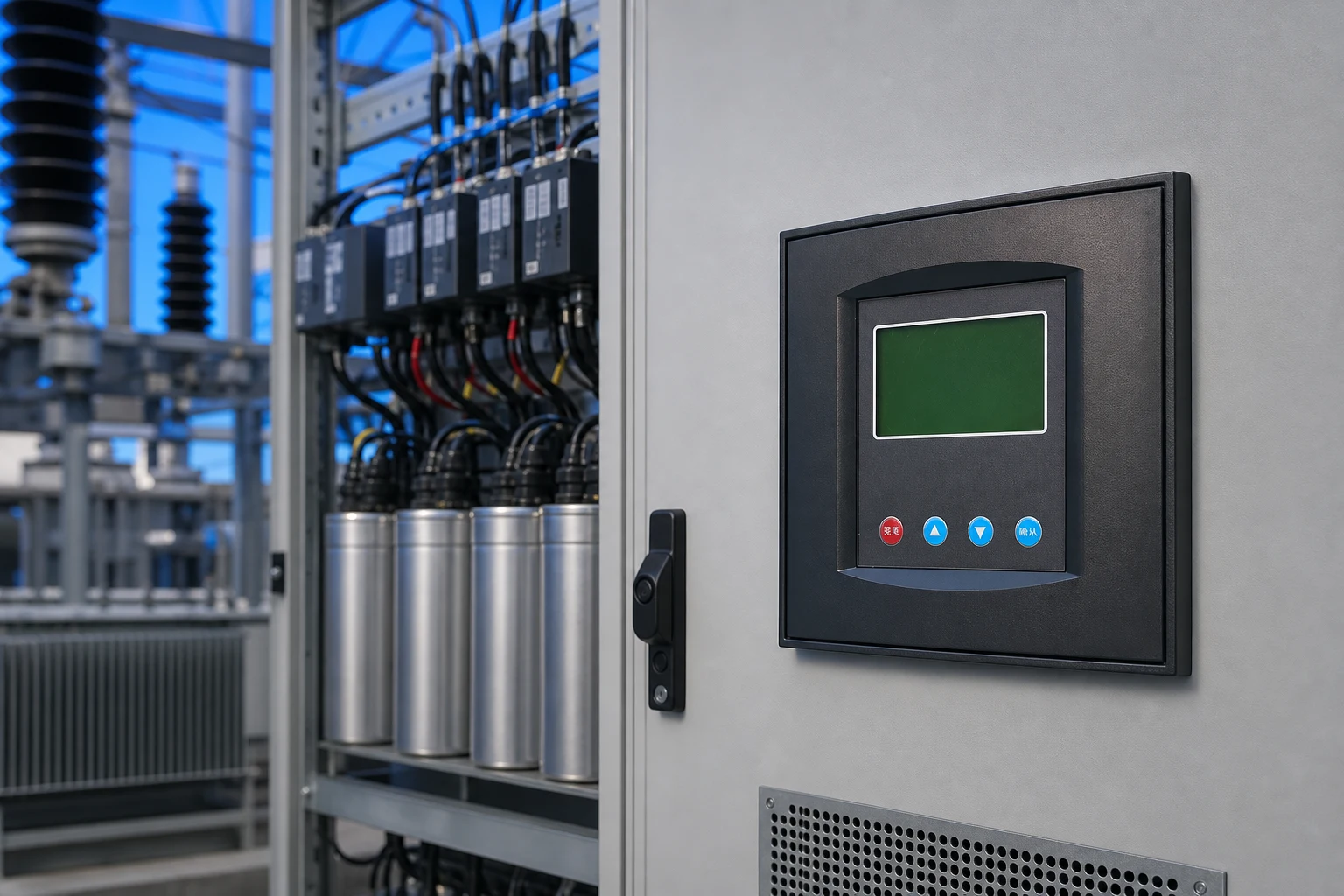
Smoke-control certification and harmonic mitigation are different engineering tracks. A distorted waveform does not prove a ventilation control failure.
Use the IEEE 519 overview for boundary vocabulary, then write tunnel-specific operating cases into the RFQ.
Operators should also record jet-fan versus axial-fan identity in each window, because those machines sit on different feeders in many tunnels. Keep a short note on traffic-density band or incident code next to the electrical log so operations and electrical teams can reconcile timestamps during RFQ review. Those notes are short, but they keep tunnel mode windows comparable for quotation.
Shortlist after mode-labeled evidence exists
AHF/APF fits harmonic-current reduction at the tunnel electrical PCC or main substation. SVG may fit reactive swings during fan ramps. Passive options need a study that includes incident modes if those modes are in scope.
| Mitigation category | Useful when | Confirm before RFQ |
|---|---|---|
| AHF / APF | Harmonic-current reduction at the tunnel electrical PCC or main substation is documented | Spectra, CT plan, thermal path, protection, acceptance test |
| SVG / ASVG | Fast reactive-power support is the primary objective | Voltage profile, existing compensation, controls, commissioning |
| Passive tuning | A system study shows a stable tuned or detuned function | Resonance review, switching policy, maintenance access |
| Operational change | Schedule or staging shifts materially change demand | Owner sign-off and documented implementation |
Assemble a tunnel-mode RFQ evidence pack
Before suppliers quote, assemble mode-labeled ventilation spectra, fan-stage tables, CT notes, and a marked-up tunnel single-line. State whether the decision is local fan troubleshooting, PCC assessment, or harmonic-current mitigation. Keep normal-traffic and incident-test windows in separate folders.
Require the quote to name covered orders, niche humidity ratings, and acceptance tests. Include headroom for future fan stages and list compensation already installed. Assign who records mode labels and who signs acceptance after traffic closures.
Add niche space constraints, traffic-closure windows, and a glossary of ventilation modes so incident-test files are not averaged with normal traffic. Include CT polarity checks, sample intervals, and a note describing fan stage counts during each capture. Record expected spare headroom for future fan stages and keep the acceptance checklist owner named before quotation begins.
Review the CNBYG AHF Active Harmonic Filter page with mode-labeled ventilation files. The commercial planning guide on commercial building power quality planning shows a related boundary-first approach.
Integration in constrained tunnel niches
Document niche space, humidity ratings, cable routes, and permitted traffic closures. Acceptance should replay mode labels from the baseline set.
The related building-systems scenario in VFD harmonics measurement and APF selection shows how mode labels support acceptance after constrained outages.
Tunnel project inquiry package
Provide single-line drawings, mode-labeled spectra, fan inventory, compensation details, and connection preferences. CNBYG can discuss fit and should not guarantee smoke-control certification, traffic throughput targets, or a guaranteed harmonic result. Contact the CNBYG contact page.
Frequently asked questions
Should fire-mode tests be included in harmonic logs?
Include them as labeled special windows if the mitigation objective must cover incident modes; keep them separate from normal-traffic baselines.
Where is the preferred first measurement point?
Start at the ventilation MCC or tunnel substation feeder, then add the PCC when the objective is utility-boundary compliance discussion.
Can normal-traffic data alone size mitigation for incident modes?
Not reliably. Incident and extract modes change fan staging and coincidence enough to need dedicated captures.
Is one measurement enough to select mitigation equipment?
Rarely for tunnels. Traffic modes, incident tests, and objective definition decide whether the record is representative.
Can mitigation equipment be sized from fan nameplate data alone?
No. Nameplates are context; measured spectra and mode logs drive capacity review.
Does this article guarantee a compliance or operational outcome?
No. Smoke-control certification, network conditions, and commissioning remain project-specific.