Capacitor Bank Altitude: Site Conditions and Approval Checks
Capacitor-bank altitude selection starts with the approved service conditions of the complete assembly. Do not apply a universal percentage reduction to kvar and assume the bank is suitable for a mountain site. Reduced air density changes the cooling assessment, and air-insulation performance needs its own review. CNBYG’s published BSMJ cylindrical capacitor instructions specify indoor installation below 2,000 m; its CKSG reactor page also lists an altitude limit of 2,000 m. A project above the applicable limit needs written engineering approval for the actual equipment and site, rather than an improvised controller adjustment.
Why an altitude limit matters
Altitude is a service condition, not a cosmetic detail in a request for quotation. Two sites can have the same nominal voltage and temperature while exposing equipment to different air conditions. The bank builder must consider the particular combination of elevation, enclosure, heat losses, ventilation, contamination and electrical clearances. A cooler outdoor climate does not, by itself, establish acceptable temperatures inside a crowded switchboard.
UCAR’s atmospheric science explanation illustrates how air density and pressure decrease as altitude increases. This general physical relationship helps explain why a sea-level cooling assessment cannot simply be assumed valid at a higher site. It does not supply a capacitor-bank derating factor or certify industrial equipment for a particular elevation.
Keep geographical elevation separate from the actual installation environment. A ventilated indoor electrical room, a weatherproof outdoor enclosure and an air-conditioned equipment room create different conditions around the components. Record the room and enclosure conditions expected during the worst relevant operating state. The component’s own surrounding air temperature can differ from the temperature reported by the nearest weather station.
Separate thermal and insulation questions
A thermal assessment asks whether heat can leave the capacitors, reactors, switching devices and other parts without exceeding their approved limits. A clearance assessment asks whether the electrical insulation arrangement remains suitable under the specified service conditions. Passing one assessment does not automatically pass the other. More fan capacity is not evidence that every air gap has an acceptable dielectric margin.
The National Radio Astronomy Observatory’s technical memo on forced-air cooling at high altitude discusses the effect of air-density changes on cooling electrical equipment. Use such material to understand the engineering question, not to copy a telescope-equipment adjustment directly into a capacitor-bank specification. The accepted method and limits must come from the bank and component manufacturers for the intended assembly.
A review should identify which parts rely on surrounding air for cooling, which have temperature protection and where the design has been tested or calculated. A normally closed reactor temperature contact can help a protection scheme respond to overheating; it does not create additional continuous-duty capability. Repeated trips should lead to investigation of loading and cooling, rather than disabling the contact.
Read the exact product conditions
The CNBYG BSMJ cylindrical capacitor page includes indoor installation below 2,000 m among its use instructions. That published condition is a selection boundary for the listed product family. It should not be rewritten as a general rule that every capacitor is suitable up to that elevation, or that a standard version is approved above it after reducing kvar.
The CKSG low-voltage series reactor page states an altitude not exceeding 2,000 m and calls for ventilation when installed in a cabinet. A detuned bank containing these components needs an assessment of both. If component documents use different wording at the boundary, obtain confirmation for the exact site elevation and ordered versions instead of resolving the difference by assumption.
Also read the actual delivered nameplates and instructions. A customized component may have an approved specification different from a general website description. Conversely, a quotation saying “custom available” is not proof that the shipped item incorporates the required changes. Preserve the approved offer, drawing revision, bill of materials and acceptance requirements together.
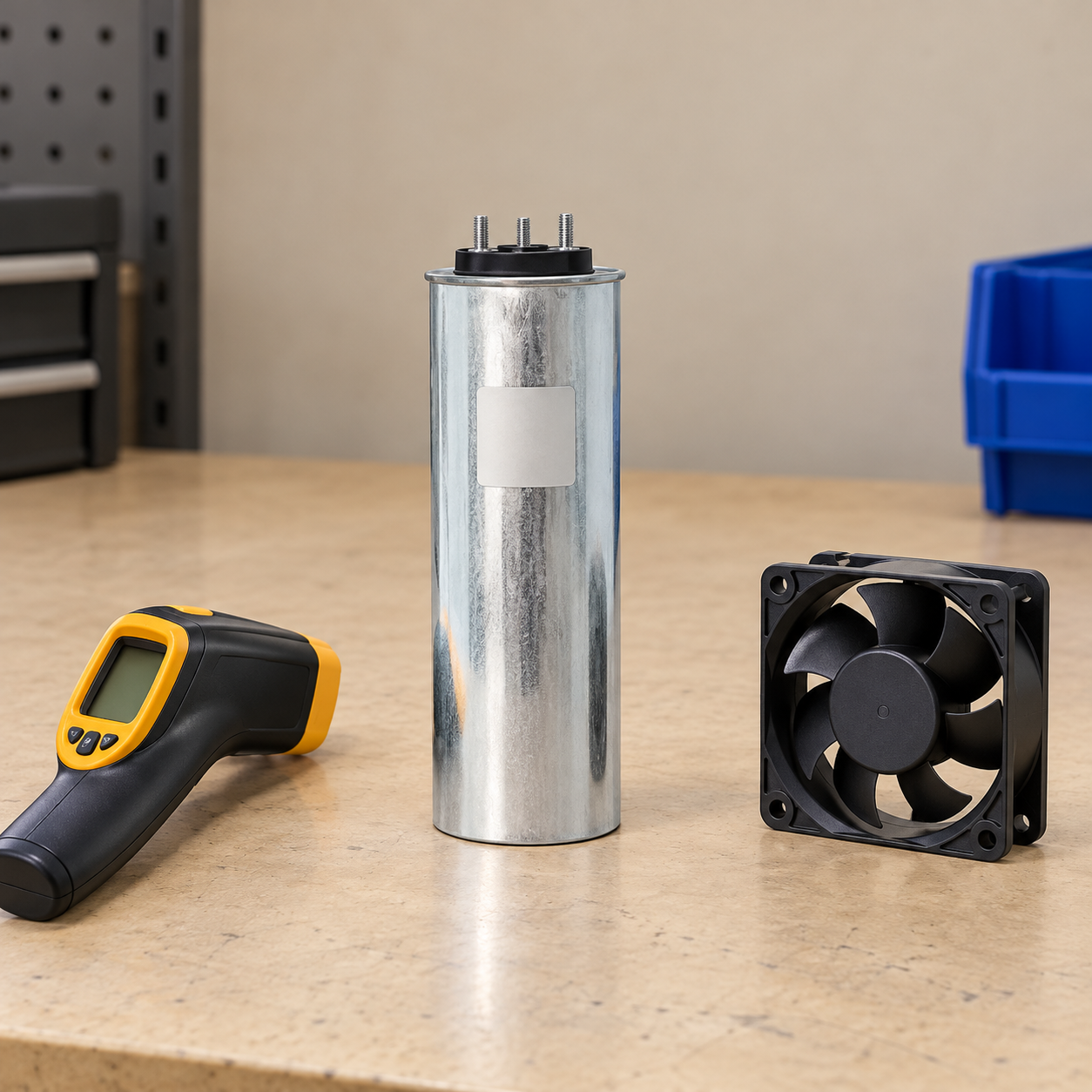
Build a complete site specification
State the site elevation with units and identify the source of that information. Include the expected ambient temperature range, enclosure arrangement, room ventilation, dust or corrosive conditions, humidity, condensation risk and maintenance access. Distinguish transport and storage conditions from operating conditions; equipment may travel through a different environment before reaching the installation.
Provide the electrical duty as well: nominal voltage and frequency, voltage range, required compensation, stage sequence, operating hours, nonlinear loads and available harmonic measurements. Elevation does not replace these inputs. Harmonic loading and poor ventilation can combine with altitude, so a review based only on nominal kvar leaves important conditions undefined.
The site record should state what remains unknown. If enclosure temperature has not been measured or calculated, mark it as pending. If a future process expansion will increase continuous reactive demand, describe that separately from current operation. Clear assumptions let the supplier give a qualified answer and prevent an incomplete request from turning into an unsupported suitability claim.
| Review area | Information to provide | Acceptance evidence to request |
|---|---|---|
| Site elevation | Elevation in metres and site location | Written applicability for the ordered assembly |
| Thermal environment | Room temperature, enclosure design and ventilation | Approved cooling assessment and temperature limits |
| Electrical insulation | Voltage, service conditions and installation arrangement | Confirmation of the required insulation design |
| Capacitor duty | Voltage, frequency, kvar, steps and harmonic information | Exact approved capacitor specification |
| Reactor duty | Inductance or detuning design, current and cooling arrangement | Compatible reactor approval for the same conditions |
| Operation | Load states, continuous hours and maintenance plan | Commissioning checks and clear operating restrictions |
This is a qualitative procurement checklist. It deliberately contains no universal altitude correction factor, because such a factor would need a defined equipment design and a validated method.
Why a smaller kvar setting may not solve the problem
A controller target or a reduced number of connected stages can change operating demand, but it does not change the physical insulation arrangement. It may also leave individual connected stages carrying their normal current. Therefore, a bank with fewer enabled steps is not automatically a lower-duty version of each component.
Similarly, selecting a larger nameplate bank and operating it below total capacity does not prove that its internal clearances, ventilation or protection are suitable for the site. Ask the supplier to explain the actual design response. That response could involve a different component version, enclosure arrangement or operating restriction; the appropriate solution depends on the assembly and must be documented.
Keep the reactive-power requirement separate from the equipment qualification. The plant may still need the same compensation even when a particular standard bank cannot meet the environmental conditions. Read the capacitor-bank sizing guide to establish the electrical requirement, then add the altitude and environmental conditions to the procurement review.
Check a detuned bank as a coordinated assembly
A detuned bank contains a capacitor-reactor relationship that cannot be preserved by replacing one component with an arbitrary higher-rated part. Changing capacitance, inductance or the approved duty can affect branch behavior. An altitude-related redesign must retain a reviewed electrical combination as well as an acceptable thermal arrangement.
Ask for the revised branch current, capacitor terminal duty, reactor thermal conditions and protection arrangement where changes are proposed. The review should identify the assumptions used for supply distortion and operating voltage. If the supplier provides only an enclosure fan description, request the rest of the assembly assessment before treating the proposal as complete.
For the underlying coordination question, use capacitor and reactor matching for detuned banks. That article and this altitude checklist answer different questions: one concerns the electrical pair, while the other establishes environmental applicability and the evidence required for the complete installation.
Turn the approval into commissioning checks
Before delivery, agree on the documents that will demonstrate conformity: assembly identification, approved components, applicable service conditions, drawings, protection settings and the acceptance method. Decide which observations are necessary during commissioning and which require a manufacturer or test facility. Do not improvise an altitude chamber test or insulation test on site from a general blog article.
At commissioning, qualified personnel should verify the delivered equipment against the approved record and check the specified operating states. Record room and enclosure temperatures, load conditions, stage operation and any alarms using the approved procedure. A single no-load observation does not demonstrate thermal performance during sustained production or the hottest relevant room condition.
The result should be traceable to the equipment and site rather than recorded as a generic “altitude passed.” State the conditions actually observed, any limits imposed and the items still requiring verification. If an alarm or excessive temperature appears, investigate before accepting service or modifying protection. This article is a planning guide, not an instruction to work on energized equipment.
Further learning
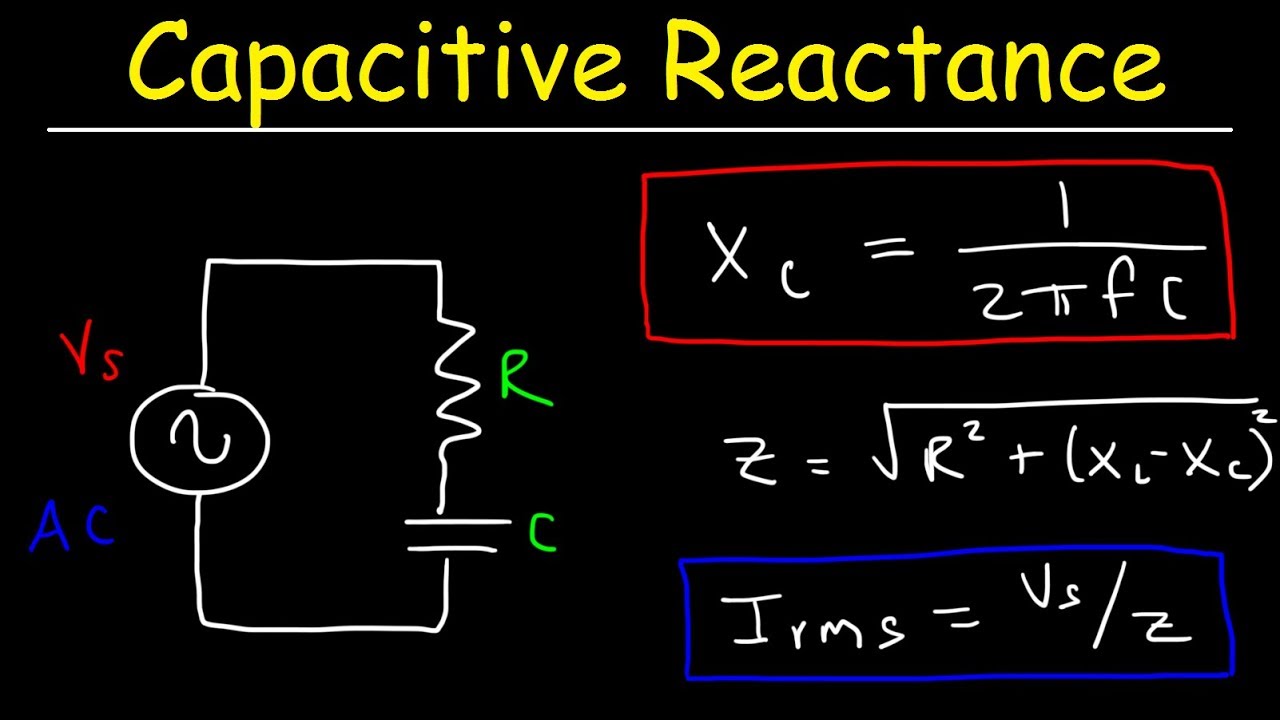
Watch the capacitive-reactance lesson
The educational lesson introduces capacitive reactance and AC circuit quantities. It supports understanding of capacitor duty, but it does not establish altitude capability or replace a supplier’s environmental approval.
Frequently asked questions
Is there one capacitor-bank altitude derating formula?
No single formula in this guide can approve an unspecified bank. The thermal and electrical-insulation assessments depend on the actual components, enclosure and service conditions. Obtain a documented method from the responsible manufacturer.
Are standard CNBYG BSMJ capacitors automatically approved above 2,000 m?
No. The published cylindrical BSMJ instructions specify indoor installation below 2,000 m. A higher-altitude application requires explicit approval for the exact ordered equipment and installation.
Does a colder mountain climate remove the altitude issue?
No. Room and enclosure temperatures, component losses, air conditions and insulation requirements still need review. Outdoor weather alone does not establish conditions around the equipment.
Can I solve the problem by disabling capacitor stages?
Not automatically. Fewer active stages do not change insulation clearances and may leave each connected stage at its original duty. Any operating restriction must form part of an approved assembly assessment.