Power Meter Commissioning Witness Records: Scope, Evidence and Sign-Off
Power meter commissioning witness records should identify what was tested, which installed equipment and configuration were involved, what evidence was observed, and who had authority to accept the result. A witness signature does not automatically establish electrical safety, calibration, complete integration or final project acceptance. Define that scope before testing, record exceptions as they occur, and link every accepted result to retrievable evidence. This guide helps industrial owners, contractors and panel integrators prepare a defensible handover record. It addresses evidence and acceptance responsibilities, while physical tests and electrical work remain subject to approved project procedures and qualified personnel.
Agree what the witness is being asked to confirm
Begin with an agreed test plan and a named acceptance authority. Separate the person executing a test, the person observing it and the person authorized to accept the delivered service. One individual may hold more than one role under the contract, but the record should still state which decision each signature represents.
Identify whether attendance is required for every test or only selected hold points. If the witness reviews a previous report rather than attending the original test, say so. A later document review should not be represented as direct observation. Likewise, a remotely observed screen session may establish displayed behavior while leaving physical identification or wiring evidence dependent on other records.
For broader equipment context, use the three-phase meter selection guide. The witness record should refer to the actual approved device schedule rather than a generic article or catalogue. Different projects need different measurements, interfaces and acceptance limits; those requirements must be agreed before results are judged.
Freeze the identity and configuration being accepted
Record the meter location, asset identifier, serial number, exact variant and relevant documentation revision. Where an external gateway or reporting platform forms part of acceptance, identify it too. This prevents a successful result from one device being inadvertently applied to a similar device in another panel.
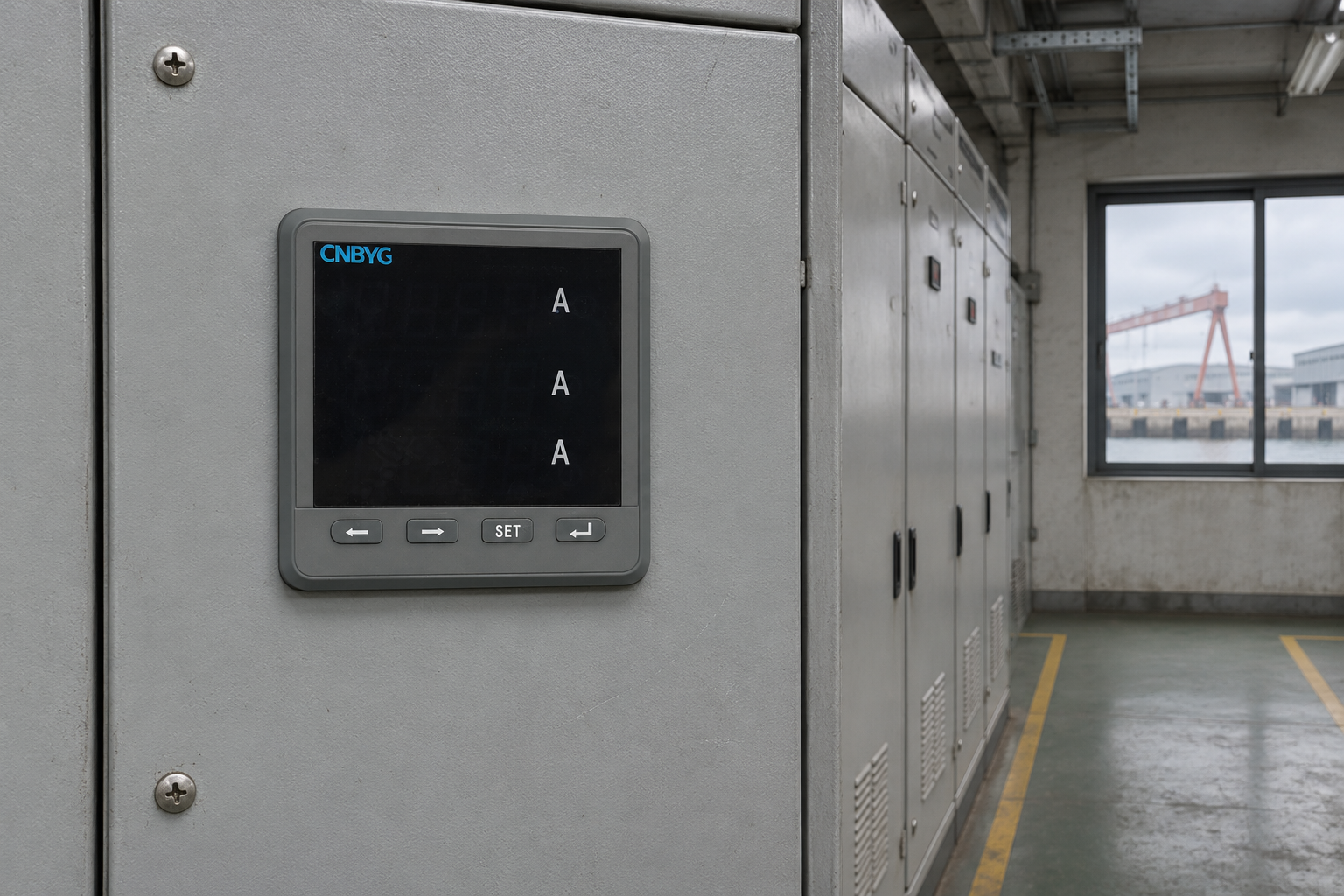
The BY194 series product information can support a CNBYG procurement discussion, but the family page does not prove the installed unit contains every possible option. Obtain the approved order details and applicable instructions. Match the witnessed checks to the functions actually supplied and required.
Also identify the configuration baseline used during the test. Settings changed after observation can invalidate an earlier result. Record change references and determine whether affected checks need repeating. The purpose is not to collect an unrestricted copy of every system secret; retain the necessary configuration evidence through the owner’s approved access arrangements.
Use a witness record that separates evidence from decisions
The following qualitative table is a suggested record structure, not a universal commissioning standard. Add the project-specific test limits, permitted methods and contractual requirements. Numerical tolerances must come from the applicable specification, device documentation and measurement uncertainty assessment, rather than being invented in a generic form.
| Record section | What to retain | What the entry establishes |
|---|---|---|
| Test identity | Test reference, revision, date and installed asset identifiers | Which planned check and equipment the evidence concerns |
| Preconditions | Approved work state, required documents and reference equipment | Whether the intended test conditions were available |
| Configuration | Baseline reference and relevant settings revision | Which setup produced the observed result |
| Observation | Actual result, units, timestamps and evidence reference | What happened during the defined check |
| Requirement | Approved acceptance criterion and its source | The basis for judging the result |
| Exception | Deviation, impact, responsible person and closure evidence | What remains unresolved or requires retesting |
| Decision | Accept, reject or conditional status with authorized signature | The exact scope and limitations of the decision |
Keep raw observations separate from a pass indicator. A tick without the measured result, method or evidence reference is difficult to defend later. Conversely, a large folder of screenshots is not an acceptance decision. The form should connect the observation, its requirement and the authorized conclusion in a way another engineer can follow.
Treat installation, measurement and integration as different checks
Installation review establishes the approved physical arrangement and supporting documentation. Measurement verification addresses whether the required quantities perform acceptably under the agreed method. Integration checks address whether external systems receive and interpret the intended values. A successful result in one category does not replace the others.
For measurement comparisons, retain the reference equipment identity, relevant calibration evidence, operating conditions, comparison method and units. Use the meter accuracy verification guide for the distinction between a useful field comparison and a more formal accuracy claim. A single convenient observation should not be expanded into a statement that all ranges and conditions were tested.
For integrated monitoring, follow a selected quantity from the local indication through the gateway to its final display or report. Check that the evidence concerns the same asset, quantity and observation period. The Modbus communication setup guide explains why a connection test and a data-meaning check are separate tasks. Where the installed variant lacks that interface, do not add it to the witnessed scope by assumption.
Distinguish power checks from energy-record checks
An instantaneous power value and a cumulative energy total describe different things. A witness record should state which one was observed and how the comparison was aligned. Two displays captured at different times can disagree because the load changed, even when both are behaving as intended. Conversely, matching one displayed value does not prove a complete energy-history path.
If the scope includes interval reporting, identify the reporting window, units, time basis and any transformation between raw data and the final report. Retain enough information to reproduce the comparison. If a required reporting period has not yet elapsed, record the corresponding test as pending instead of filling its result from an unrelated instantaneous reading.
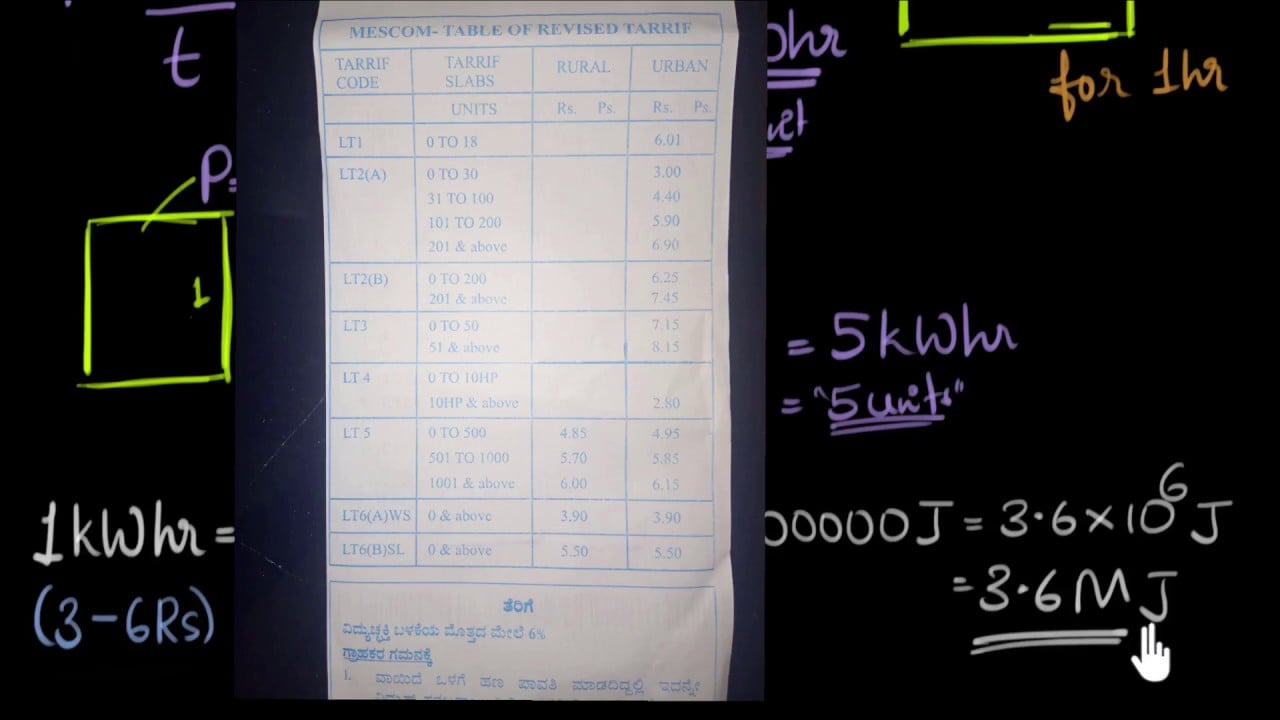
The neutral Khan Academy lesson below explains the power-and-energy distinction used in this part of the witness plan. It supports the engineering concept; it does not supply project acceptance criteria or demonstrate a particular BY194 option.
Handle failures and incomplete attendance honestly
Record failures against the relevant test reference, with the observed condition and supporting evidence. Do not replace a failed result with a later passing result without retaining the correction history. A retest should identify what changed, which checks were repeated and why the new evidence resolves the original concern.
If a witness could not attend, use the agreed project procedure for rescheduling, alternative observation or documented waiver. Do not backfill an attendance signature. A waiver should state who authorized it and which requirement it changes. It should not quietly convert an unobserved test into a witnessed one.
Conditional acceptance needs a precise boundary. Identify which functions may enter service, the open items, operational restrictions, responsible owners, closure dates and approval authority. Safety-critical uncertainties and unknown electrical suitability require resolution through the responsible engineering process. The existence of an open-item list is not itself permission to operate equipment.
Assemble a handover pack another person can use
Organize the final pack around the installed asset schedule and test references. Include approved drawings, final configuration references, test results, evidence locations, outstanding-item status and the acceptance decision. Check that file names and document revisions agree with the form. A link that only the departing contractor can open is an unresolved handover issue.
A receiving engineer should be able to select a test, find its original evidence and identify who approved the result without relying on the commissioning team’s memory. Perform that retrieval check before final sign-off. Record missing access, incomplete files or unclear revisions as specific defects with named owners.
The University of Queensland’s DS-08 electrical design standard, section 6.2.3, provides a concrete institutional example: its process connects meter forms, commissioning documentation, owner review and updated records. It is a UQ-specific requirement, not a universal rule or evidence that CNBYG equipment is approved for UQ projects.

Keep the accepted baseline traceable after handover
Commissioning evidence becomes useful maintenance evidence only when later changes remain traceable. Link post-handover changes to the accepted baseline, identify affected functions and retain the subsequent approval. This avoids treating a historical signature as permanent proof for a substantially changed arrangement.
The baseline and controlled-change principles in NIST SP 800-82 Rev. 3 support this approach for operational technology. They do not prescribe a particular meter witness form or replace local electrical rules. The workflow here applies those general principles to the practical task of knowing what was accepted and when that evidence needs reviewing.
For a small installation, a concise form with reliable attachments may be sufficient. For a larger project, the same logic can be maintained in the owner’s document system. The useful measure is whether the accepted service, evidence, exceptions and responsibilities are clear. The number of signatures or pages alone says little about that quality.
Frequently asked questions
Does a witness signature mean the whole installation is accepted?
Only if that is the explicitly authorized scope. Record separately whether the signature confirms attendance, observed results, document review or final acceptance of a defined service.
Can a screenshot replace measurement verification?
A screenshot can support an observation, but it must be linked to the method, asset, time, units and acceptance requirement. It does not independently establish accuracy across untested conditions.
What should conditional acceptance include?
State the accepted scope, open items, restrictions, responsible people, closure evidence and approval authority. Do not use conditional status to bypass unresolved safety or electrical suitability decisions.
When should a witnessed test be repeated?
Reassess affected checks when a relevant device, setting, mapping or test condition changes. The responsible acceptance authority should define the retest scope and retain its link to the earlier evidence.