Meter Troubleshooting Evidence: Version Corrected Support Packages
Meter troubleshooting evidence version control means keeping the original capture unchanged while issuing clearly identified corrections and additions as separate support-package revisions. Give every release a case number, revision, collection window, contents list and approval state. Record who received it and which earlier release it replaces. This prevents a supplier, integrator and site engineer from diagnosing different versions of the same event. The process belongs to the external support workflow; it does not require or imply a version-control feature inside the meter. Start with the evidence already available before making another configuration change or collecting a replacement file.
Why a corrected support package needs its own identity
A communication fault can produce several apparently contradictory records. The first technician exports a gateway log, another photographs the meter later, and an integrator adds a revised point list the following morning. All three may be accurate within their own context. Trouble begins when someone replaces the original attachment with a file bearing the same name. A later reviewer can no longer tell which observation supported the original diagnosis.
Treat a support package as a documented release of evidence, rather than a convenient folder that anyone can edit. Its revision describes the package, not the device firmware or the register-map revision. Keep those identifiers in separate fields. A package can change because a missing photograph was added even when the installation itself has remained untouched.
The NIST log management guide provides background on managing computer security logs. Its scope is broader than this meter workflow and it does not prescribe the example register below. The register is a practical way to maintain the context needed for engineering review.
Establish the original collection boundary
Record the installation identity, physical meter label, feeder or circuit, collector identity and collection method. Include the start and end of the observation window with the time zone. If device and collector clocks disagree, describe the observed difference rather than silently correcting timestamps in the original evidence. A photograph taken after a restart must not be represented as showing the pre-restart condition.
Separate direct observations from interpretations. “Collector reported no response during this interval” is an observation. “Meter hardware failed” is a conclusion requiring further evidence. Put the conclusion in a review note and identify its author. Avoid renaming a raw capture with a diagnosis that has not yet been confirmed.
For the communication context, use the site’s power meter Modbus setup guide. The support register should reference the applicable setup record, not replace it. Any inspection inside energized equipment remains subject to the site’s electrical safety procedures and qualified personnel.
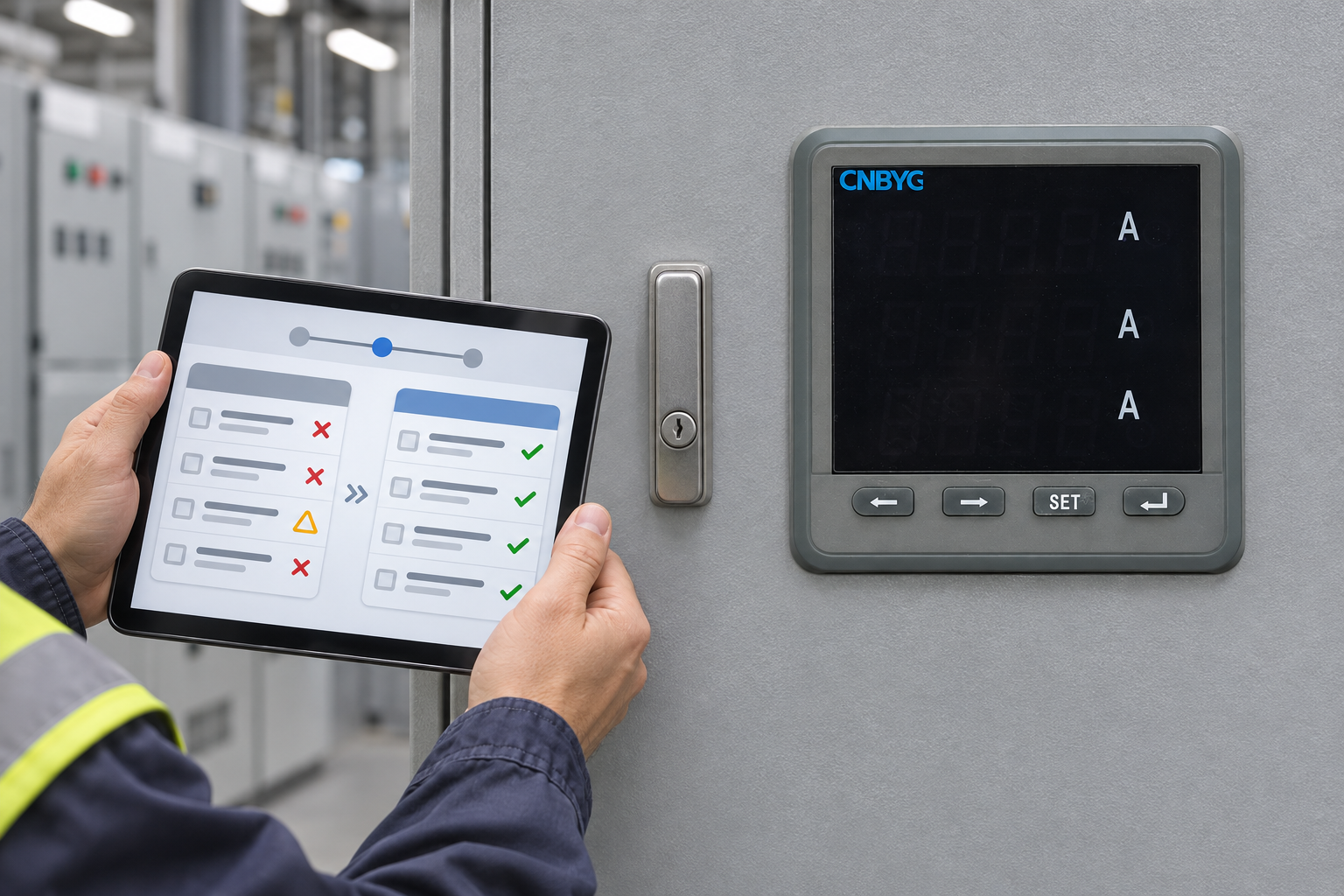
Use a release register with explicit correction reasons
The following fields are qualitative workflow recommendations. They are not manufacturer specifications, legal evidence requirements or a promise that a particular software platform implements them automatically.
| Register field | What to record | What the reviewer can establish |
|---|---|---|
| Case and release | Unique case reference plus sequential package revision | Whether both parties are discussing the same release |
| Original object | Stable identifier, filename, collection time and storage location | Where the unchanged source can be found |
| Added or corrected item | New object identifier and relationship to the earlier item | Whether this is new evidence or a changed interpretation |
| Reason | Missing context, wrong label, additional interval or corrected annotation | Why the package changed |
| Approval | Author, reviewer and release state | Whether the package is ready to distribute |
| Distribution | Recipient, delivery time and acknowledgement | Which earlier recipient needs the correction |
| Supersession | Previous release and limits on continued use | Which package is current for this investigation |
Do not put passwords, access tokens or unrestricted internal network diagrams in the register. Link to a protected location when details require restricted access. An external copy can identify the source object without disclosing the full path or credentials.
Correct an annotation without rewriting the observation
Suppose the first package labels a photograph as the incoming feeder, but the equipment label later confirms that it shows a downstream panel. Keep the original photograph. Issue a corrected annotation that identifies the old label, the new label, the reason and the supporting equipment reference. The image has not changed; its interpretation has.
If the wrong file was attached, withdraw it from the current release and document the replacement. Keep the earlier released package under the appropriate retention and access policy. A confidential attachment may need restricted handling immediately, but the case record should still explain that a release was withdrawn. Do not distribute the confidential content again merely to make the revision history look complete.
A recalculated timestamp or reformatted spreadsheet is a derived object. Store it separately and state the transformation. Reviewers should be able to distinguish a raw collector output from a human-readable table prepared for discussion. This is particularly useful when spreadsheet software changes dates, decimal punctuation or long numeric identifiers during opening.
Check file integrity without overstating what it proves
A file digest helps determine whether two copies contain the same bytes. It does not prove that the measuring installation was correct, that the capture includes every relevant event, or that the person collecting it identified the right circuit. Use integrity checking alongside the collection record and the contents list.
The separate meter export file integrity guide explains the file-checking boundary. For package revisions, record which objects retained their digest and which new objects were introduced. A new digest is expected when an annotation file changes; it is not automatically evidence of tampering.
For an educational explanation of hashes, the following neutral lesson can help reviewers understand the distinction between content identity and interpretation. It is conceptual background, not a certification of any meter or support process.
Release a corrected package in a controlled sequence
First assemble the proposed revision in a working area. Compare its object list with the previous release and write a change note that names each addition, withdrawal or correction. Check that every object opens, its time context is clear and its installation identity is consistent. Ask a reviewer to confirm the package answers the actual supplier question.
Next approve the release and give it a new immutable identity. Distribute a clear notice stating which previous release it supersedes. Ask existing recipients to acknowledge the correction when the change affects a diagnosis or requested action. Simply uploading a new attachment to a shared folder may leave a supplier working from a downloaded old copy.
Finally record the recipient’s response against the release they reviewed. If a supplier requests another observation window, capture it as a new evidence set with its own dates. Do not extend the earlier capture’s stated window unless the underlying source actually covers it. Preserve the sequence between request, collection, release and response.
Worked example: a wrong clock label in a communication case
Consider a hypothetical factory case in which the gateway export contains local timestamps, but the first package describes them as UTC. No real CNBYG customer installation is implied by this example. The raw gateway file remains unchanged. The package owner records the incorrect label and issues a revised interpretation note showing the confirmed time-zone basis.
The second package includes the same raw file, the corrected note and a change summary. Its contents list marks the original file as unchanged and the note as revised. Recipients are told that the event ordering relative to another system may change. The case remains open until the integrator rechecks the correlation using the corrected time basis.
This approach avoids two opposite mistakes: silently editing raw timestamps and refusing to correct a known interpretation error. It preserves the original observation while making the current engineering conclusion explicit. If the time basis cannot be confirmed, the correction should say “unresolved” and list the evidence needed to resolve it.
Keep the product and software responsibilities clear
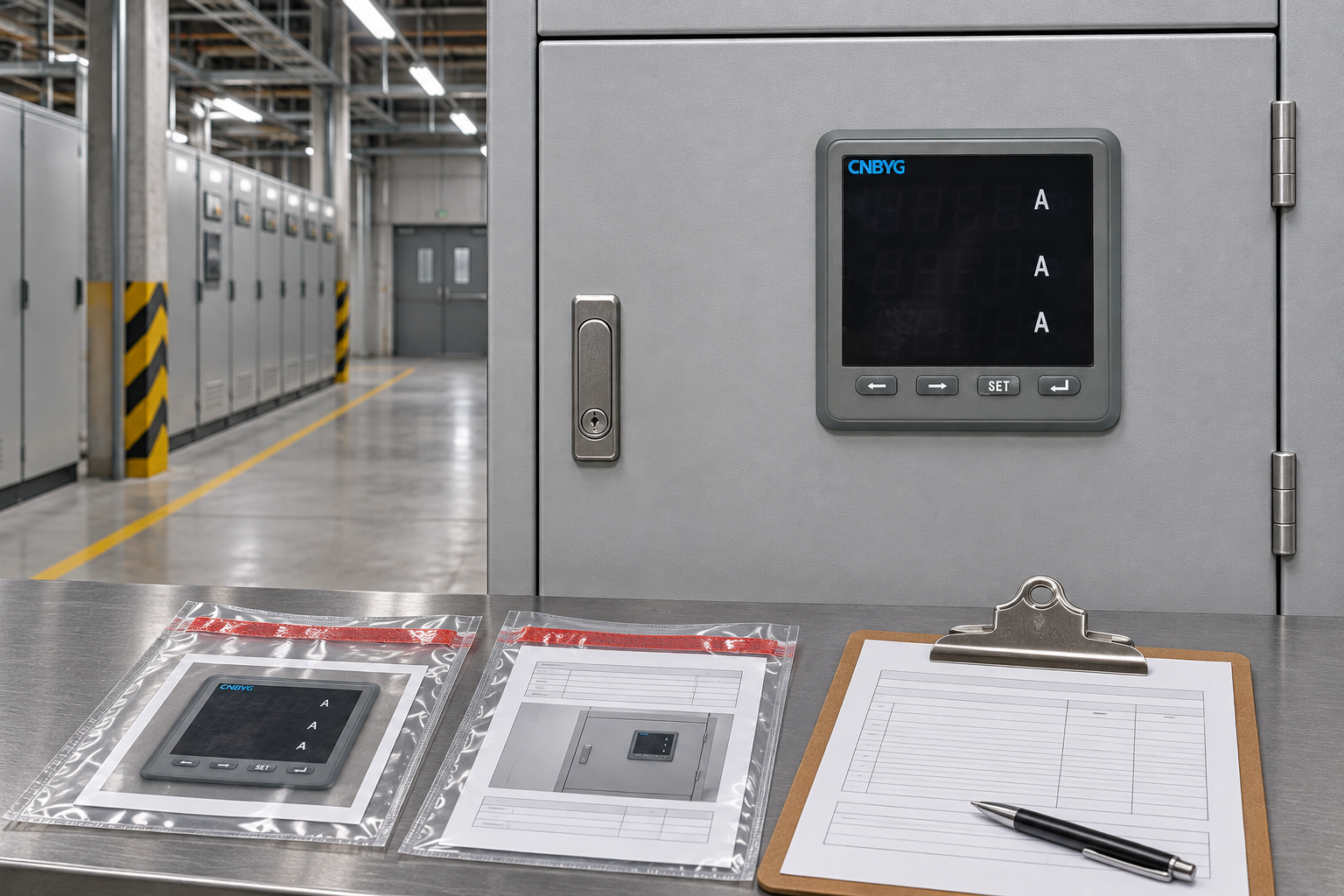
The BY194 series product page is the starting point for identifying the relevant CNBYG instrument. Confirm the exact ordered model, documented communication options and applicable manual with the supplier. A product photograph cannot establish firmware behavior, supported registers or the existence of an internal archive.
The collector, support portal and document repository may be provided by other parties. Assign an owner to each part of the evidence path. The package owner should know who can retrieve an original object and who can approve a correction. This prevents a hardware supplier from being expected to reconstruct undocumented changes made in an external spreadsheet.
The OWASP logging guidance discusses protecting logs and controlling access. Apply those general principles according to the site’s policy. For sensitive supplier communication, also review the existing support evidence redaction workflow, which addresses what can be shared rather than how revisions are identified.
Frequently asked questions
Should the original troubleshooting file be replaced after a correction?
Keep the original collected object unchanged and create a separate corrected annotation or derived file. A wrong attachment can be withdrawn from the current release, with its withdrawal and replacement recorded under the applicable retention and access rules.
Does a matching file digest prove the meter reading is accurate?
No. It supports byte-level identity between copies. Accuracy still depends on the measurement setup, device suitability, configuration and relevant verification evidence. A perfectly preserved file can contain an incorrectly interpreted or incomplete observation.
Is the package revision the same as the firmware revision?
No. The package revision identifies a release of support evidence. Firmware, register-map, configuration and document revisions should be recorded separately so a packaging correction is not mistaken for a device change.
What should happen when an old package has already been sent?
Issue a supersession notice to its recipients, identify the affected items and record acknowledgement where the correction changes an engineering decision. Keep the earlier release traceable and associate later responses with the release actually reviewed.