Industrial Meter Support Escalation: A Clear Handover Register
An industrial meter supplier support escalation handover should identify the affected installation, the unresolved question, the evidence already reviewed and the next accountable owner. Record the supplier case reference, current evidence release, operational impact and agreed next action in one register. Escalate because a defined decision or response is missing, rather than forwarding a growing email chain without context. Keep hardware, collector and monitoring-platform responsibilities separate. A complete handover helps the next specialist continue the investigation without repeating risky tests or assuming that an unverified diagnosis has already been accepted.
Decide what needs escalation
A support case can stall for several different reasons. The supplier may be waiting for a model identifier, the integrator may need to confirm a collector setting, or the site may need to authorize an observation window. These are different blockers. Name the missing decision precisely before selecting the person or team to receive the escalation.
Describe operational impact in observable terms. State which measurements or functions are unavailable, when the issue began and whether an approved workaround exists. Do not label the meter unsafe or defective solely because a downstream report is missing. If the site identifies an immediate safety concern, use its established safety response rather than waiting for an ordinary support escalation.
The NIST operational technology security guide provides broader background on OT systems and their operational constraints. The practical register in this article is an engineering workflow recommendation, not a mandatory NIST form or a claim about response times.
Establish the equipment and integration boundary
Record the exact ordered model, available serial or asset reference, applicable manual and relevant configuration revision. Identify the external collector and monitoring application separately. A meter product-family name alone may be insufficient to select a register map or determine an ordered communication option.
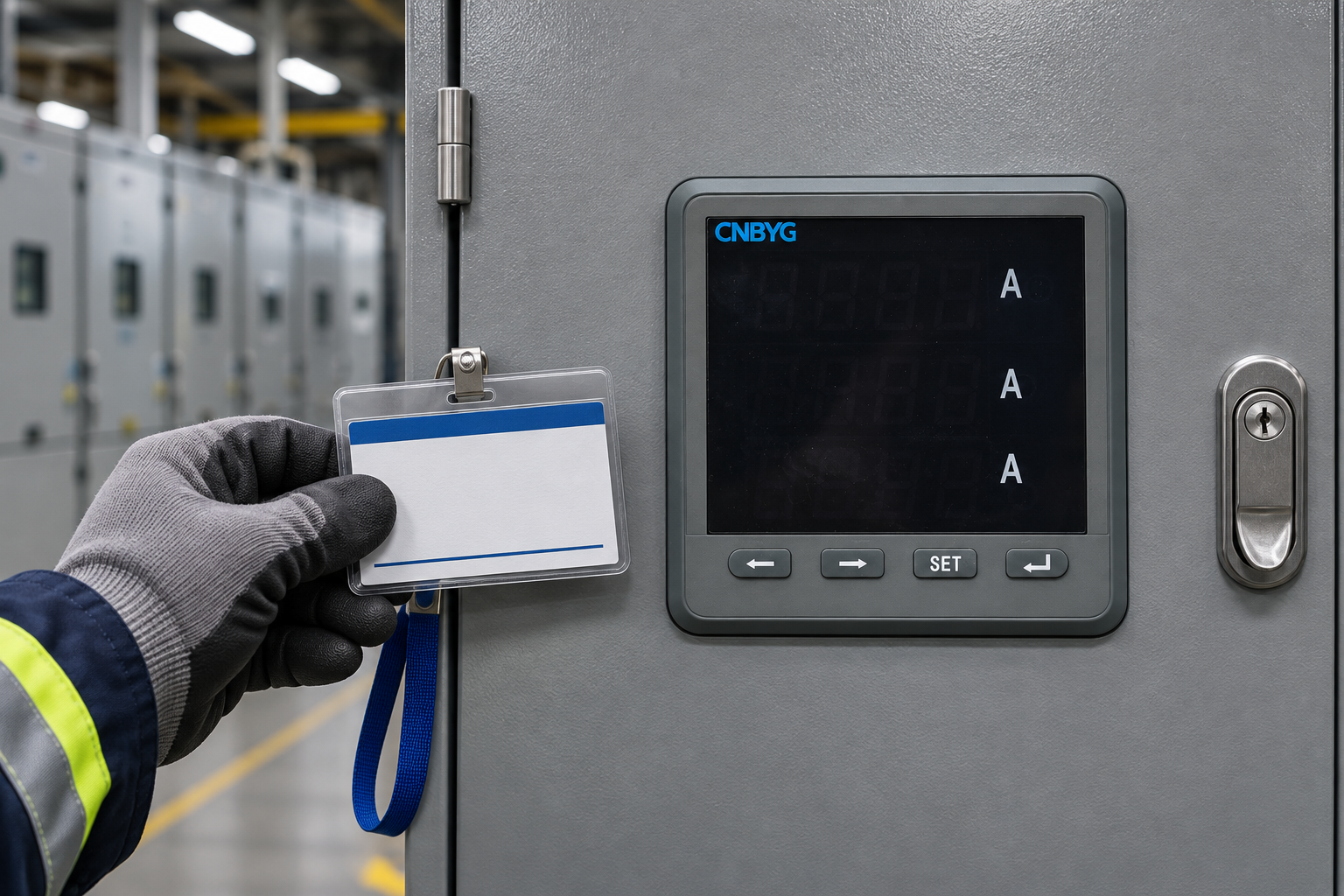
Use the BY194 series product page as the product identification starting point, then obtain model-specific documentation from the supplier. Do not infer installed options, firmware behavior or external software functions from a product photograph. Record uncertainty explicitly if a label cannot be confirmed without an approved site inspection.
A useful boundary statement says who owns each part of the data path. For example, the instrument supplier confirms documented device behavior, the integrator owns collector mapping and the site controls access and maintenance windows. Actual contractual responsibilities may differ; the register should reflect the installation’s agreed allocation rather than impose a generic one.
Build a register around the next decision
The following table is qualitative. Populate it with actual case information and agreed service commitments; do not invent a supplier deadline or present an internal preference as a contractual response requirement.
| Register field | Useful entry | Handover failure it prevents |
|---|---|---|
| Case identity | Site reference and supplier reference | Discussion attached to the wrong installation |
| Current question | One unresolved technical or ownership decision | General requests that nobody can close |
| Impact | Observed missing function and affected period | Unsupported claims about device failure |
| Evidence | Approved package revision and collection window | Specialist reviewing an outdated attachment |
| Previous action | Test, result and person who approved it | Repeating a disruptive test without context |
| Next owner | Named team and accountable contact role | Escalation circulating without acceptance |
| Next action | Specific information or decision requested | A reply that does not advance the case |
| Review trigger | Agreed date or condition for further escalation | Indefinite waiting without a follow-up rule |
Keep the register concise enough that a new specialist can identify the next action quickly. Store bulky captures in a controlled evidence location and reference them by release identity. A register containing every raw log line becomes difficult to review and can expose information that the recipient does not need.
Prepare an evidence summary the next owner can trust
Summarize the symptom, relevant time window, configuration context and tests already performed. For each test, state the observed outcome and its limitations. A response to one read request does not establish the reliability of an entire monitoring chain, and a short successful test may not reproduce an intermittent fault.
Link the evidence summary to the approved support package. If a corrected package has been released, state which earlier release it replaces and why. A supplier who downloaded an older file needs an explicit correction notice. The summary should identify what remains unknown rather than quietly filling gaps with a likely explanation.
For initial communication checks, refer to the existing Modbus setup guide. Preserve the distinction between a configuration checklist and a diagnosis. Report which documented checks were actually performed, by whom and under what conditions.
Avoid turning escalation into uncontrolled remote access
A request for remote access should name the purpose, scope, authorized person and expected duration. The site decides what access is permitted under its own policy. Do not put credentials in the escalation register or share an unrestricted desktop session simply because several parties are waiting for an answer.
Where practical, prepare a read-only evidence review before requesting changes. If the supplier proposes a configuration change or restart, capture the requested action, expected benefit, operating constraints and rollback responsibility. The support team should not have to guess whether an earlier email authorized a later, more disruptive action.
The NIST configuration management guide is relevant background for controlling changes and maintaining a known configuration. Its general principles support a traceable approval boundary; they do not establish that a particular support portal or meter implements a change-management feature.
Agree what a useful response must contain
A useful supplier response answers the current question, identifies the documentation or observation supporting the answer and states the next action if uncertainty remains. A generic request to “check wiring” may be insufficient if the actual issue concerns a register-map version, but the site should not invent an answer to move the case forward.
Ask for clarification when a proposed action lacks an exact model scope or assumes an undocumented option. If a test depends on an approved outage, record that dependency and arrange it through the site. Do not repeatedly perform live changes outside the agreed window while waiting for the supplier to reproduce a symptom.
Keep the response associated with the evidence release that was reviewed. If new evidence changes the conclusion, record that change as a revised assessment. Earlier conclusions can remain traceable without remaining current. This avoids the common problem of a diagnosis being repeated long after its assumptions were corrected.
Worked example: the device and collector teams disagree
Consider a hypothetical installation in which a collector reports intermittent missing values. The instrument supplier asks for a direct communication capture, while the integrator believes an external polling change is responsible. Neither statement alone proves the root cause. This example describes a support workflow, not a real customer fault or a documented product limitation.
The case owner records the shared question: which observation can distinguish device response behavior from collector scheduling? The register identifies the relevant model documentation, the collector configuration revision and the approved observation period. Each team agrees what evidence it needs and who will review the result.
After the observation, the owner releases one evidence package and records the recipients’ acknowledgements. The next review compares both assessments against that same package. If a further test is necessary, its authorization and responsible operator are identified before execution. Escalation advances a decision instead of merely increasing the number of copied recipients.

Close the handover explicitly
A handover is complete when the receiving owner accepts the current question and next action. Sending an email is only delivery, not acceptance. If the receiving team rejects ownership, record the reason and resolve the boundary with the relevant project owner. Do not mark the technical issue solved merely because a different team now has the ticket.
For final case closure, state the resolution, supporting test and any remaining limitations. If the workaround remains temporary, keep its review date and owner visible. Archive the evidence release and decision trail under the site’s retention policy, and withdraw temporary access through the approved process.
The configuration ownership handover article addresses responsibility for retained settings, while the diagnostic capture record guide addresses the observation itself. These complement the escalation register without replacing its next-owner and next-decision fields.
The following neutral educational video illustrates why simultaneous actions can produce confusing outcomes. It helps explain the value of an agreed sequence during a shared investigation; it is not a diagnosis of a particular meter fault.

Frequently asked questions
When should a supplier case be escalated?
Escalate when a defined technical decision, ownership acceptance or agreed response is missing. Describe the impact and next question, and follow the actual service agreement rather than inventing a universal deadline.
Is the supplier always responsible for missing historian data?
No. The instrument, collector, network, mapping and archive can have different owners. Establish the affected boundary with evidence and the installation’s agreed responsibilities before assigning a diagnosis.
Should passwords be included to accelerate support?
No. Keep credentials out of the register and use the site’s approved access process. Any access should have a defined purpose, authorized recipient and controlled scope and duration.
Does forwarding the ticket complete the handover?
No. Record acceptance by the next owner and the agreed next action. Technical closure requires evidence of the resolution or a clearly documented remaining limitation, not simply a change of ticket recipient.