Self-healing Low-voltage Shunt Capacitor Guide
Self-healing low-voltage shunt capacitors use metallized film that isolates local faults, improving reliability in automatic compensation banks. This guide focuses on practical evaluation steps for U.S. industrial and commercial buyers—measurement, documentation, and lifecycle support—not generic marketing claims. Where equipment selection is involved, cross-check public specifications on cnbygele.com and confirm project-specific limits with your utility or consulting engineer. Section checklists can be reused as RFQ attachments and commissioning handover outlines.
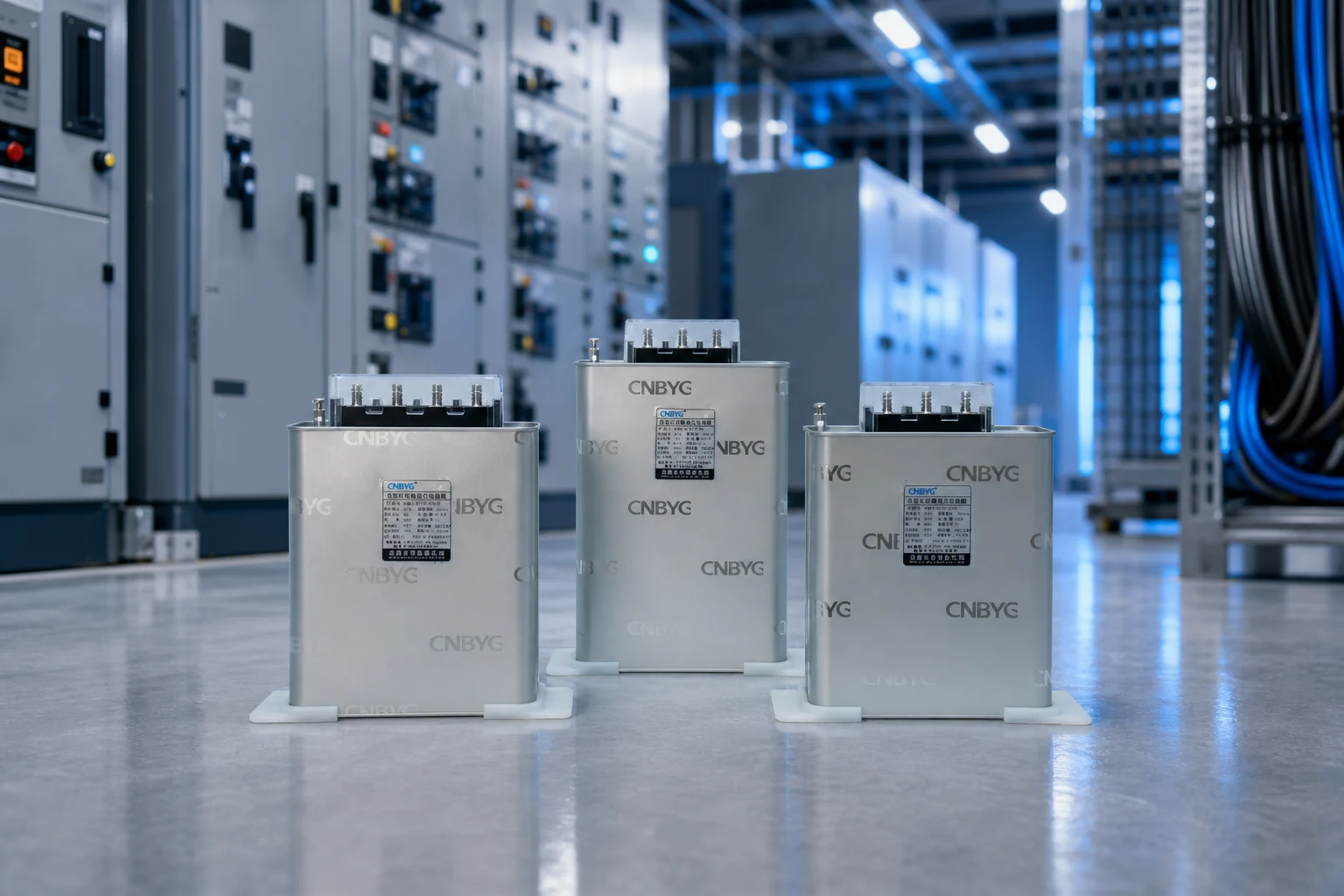
Part 1. Self-healing Film Technology
Partial dielectric breakdown vaporizes around the fault, isolating the element while the unit continues operating at reduced kvar.
Power quality projects succeed when measurement, design, and procurement stay aligned across owner, consultant, and panel builder roles.
Document nominal voltage, available fault level, and ambient conditions before final equipment selection.
Use conservative language for performance claims until site-specific studies confirm targets.
Capture nameplate data, single-line drawings, and utility interconnection rules in the RFQ package to reduce back-and-forth during technical review.
If your site mixes linear motors and nonlinear electronics, treat harmonic and reactive targets as linked requirements rather than separate purchases.
Define acceptance criteria before shipment—power factor, step response, or THD at agreed load points—so commissioning disputes are less likely.
Part 2. Bank Protection
Use per-phase fuses, discharge devices, and interlocks; follow IEC/IEEE installation practices for venting and clearance.
Compare total installed cost including reactors, controllers, enclosures, and commissioning—not equipment list price alone.
Internal links to SVG product line, low-voltage capacitor banks, and active harmonic filters help buyers navigate related product categories on cnbygele.com.
Lead times and MOQ vary by configuration; confirm in quotation for export shipments.
Capture nameplate data, single-line drawings, and utility interconnection rules in the RFQ package to reduce back-and-forth during technical review.
If your site mixes linear motors and nonlinear electronics, treat harmonic and reactive targets as linked requirements rather than separate purchases.
Define acceptance criteria before shipment—power factor, step response, or THD at agreed load points—so commissioning disputes are less likely.
| Component | Purpose | Check frequency |
|---|---|---|
| Fuses | Fault isolation | After any trip |
| Discharge resistor | Safety | Annual inspection |
| Reactor (if used) | Detuning | Thermal scan yearly |
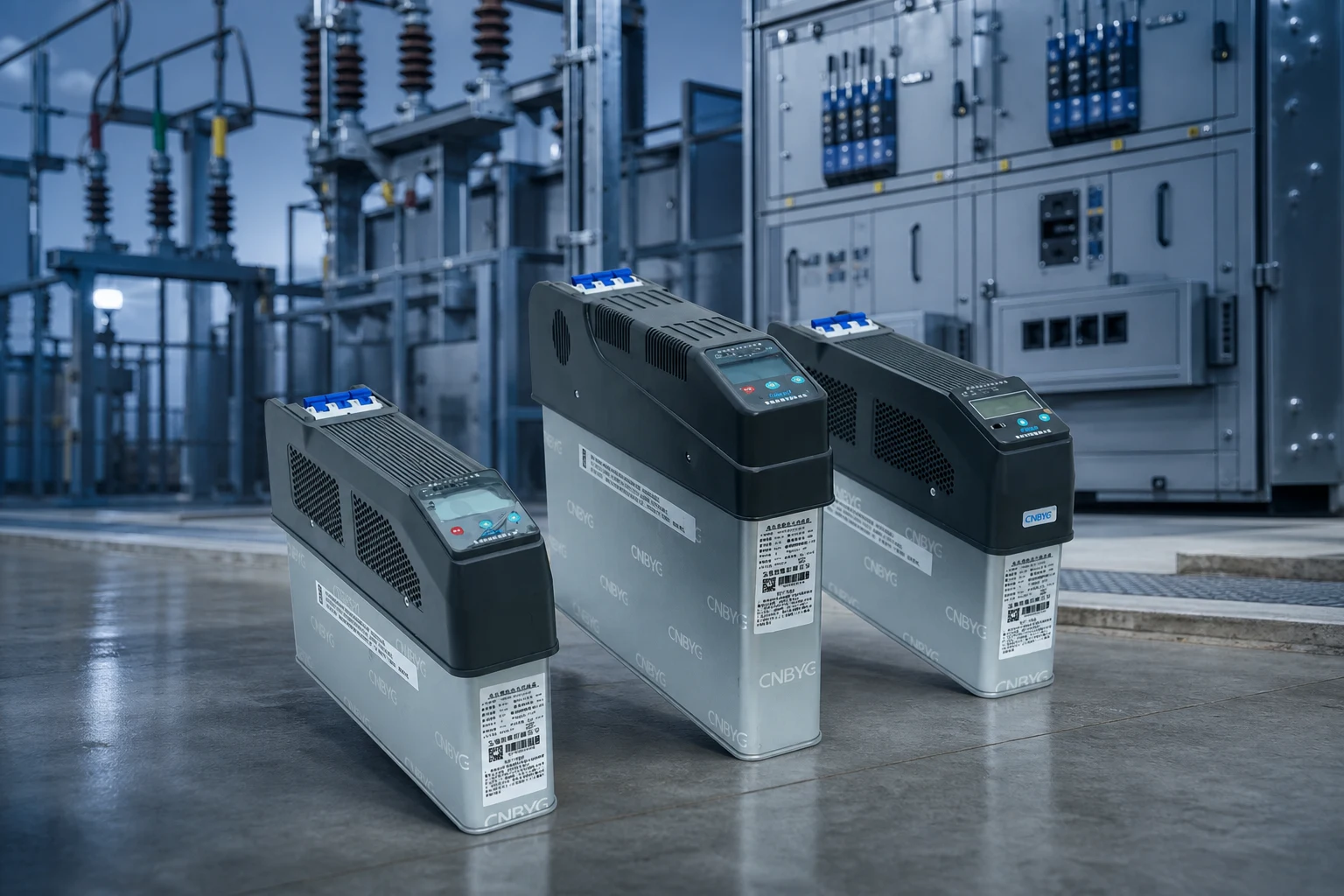
Part 3. When to Replace Units
Replace modules when kvar loss exceeds design margin—consult capacitor datasheets for end-of-life guidance.
Post-commissioning, schedule periodic verification of power factor, THD, and temperature rise at key buses.
Keep spare fuses, contactors, or modules identified in the maintenance plan.
Submit project parameters via CNBYG contact for engineering feedback on fit and documentation.
Capture nameplate data, single-line drawings, and utility interconnection rules in the RFQ package to reduce back-and-forth during technical review.
If your site mixes linear motors and nonlinear electronics, treat harmonic and reactive targets as linked requirements rather than separate purchases.
Define acceptance criteria before shipment—power factor, step response, or THD at agreed load points—so commissioning disputes are less likely.
Part 4. Documentation and Handover Checklist
Industrial acceptance should not rely on energization alone—documentation proves ratings, safety, and maintainability for the next maintenance cycle.
Use the tables below as a starting RFQ checklist; your utility or EPC contract may require additional items.
For product-specific datasheets, cross-check related CNBYG product pages and request any missing type test excerpts.
Align factory acceptance tests with items your insurer or utility interconnection agreement may require.
When comparing quotations, normalize currency, Incoterms, and included commissioning services before ranking suppliers.
| Document / item | Purpose | When to request |
|---|---|---|
| Factory type test report | Verify rated voltage, kvar, and temperature rise | Before purchase order |
| Single-line diagram template | Panel layout and protection coordination | Design phase |
| Communication register map | BMS/SCADA integration | Before FAT/SAT |
| Spare parts list (5+ year) | Lifecycle planning | Contract negotiation |
| Commissioning checklist | Acceptance testing | Before energization |
| Site condition | Risk | Mitigation |
|---|---|---|
| Harmonics present | Resonance with capacitor steps | Detuning reactors or APF per IEEE 519 review |
| Outdoor installation | Temperature / humidity | Confirm enclosure and capacitor technology |
| Frequent motor switching | Inrush and step transients | Proper switching sequence and controller delays |
| Utility PF penalties | Operating cost | Size to measured kvar at billing interval |
Part 5. Commissioning, Monitoring, and Long-Term Operations
Commissioning should verify that reactive and harmonic targets are met at the point of common coupling, not only at the compensation cabinet terminals.
Functional tests typically include step response, power factor at defined load points, and harmonic readings compared to contract or IEEE 519 guidance where applicable.
Monitoring after energization helps catch hunting, unexpected resonance, or capacitor cell failures before they affect production uptime.
Train maintenance staff on lockout/tagout, discharge timing for capacitors, and which alarms require immediate shutdown versus scheduled service.
Schedule a post-warranty review to reassess load changes—production line upgrades often change compensation needs within three to five years.
Utility account managers can clarify whether PF adjustments affect demand charges only, energy charges, or both—align KPIs before writing acceptance tests.
Keep a spare-parts criticality list (fuses, contactors, fan assemblies, control boards) based on lead time and production impact, not catalog defaults alone.
Recommended CNBYG Products
For project support, explore related product line, power quality planning articles, OEM/ODM programs, about CNBYG on cnbygele.com.
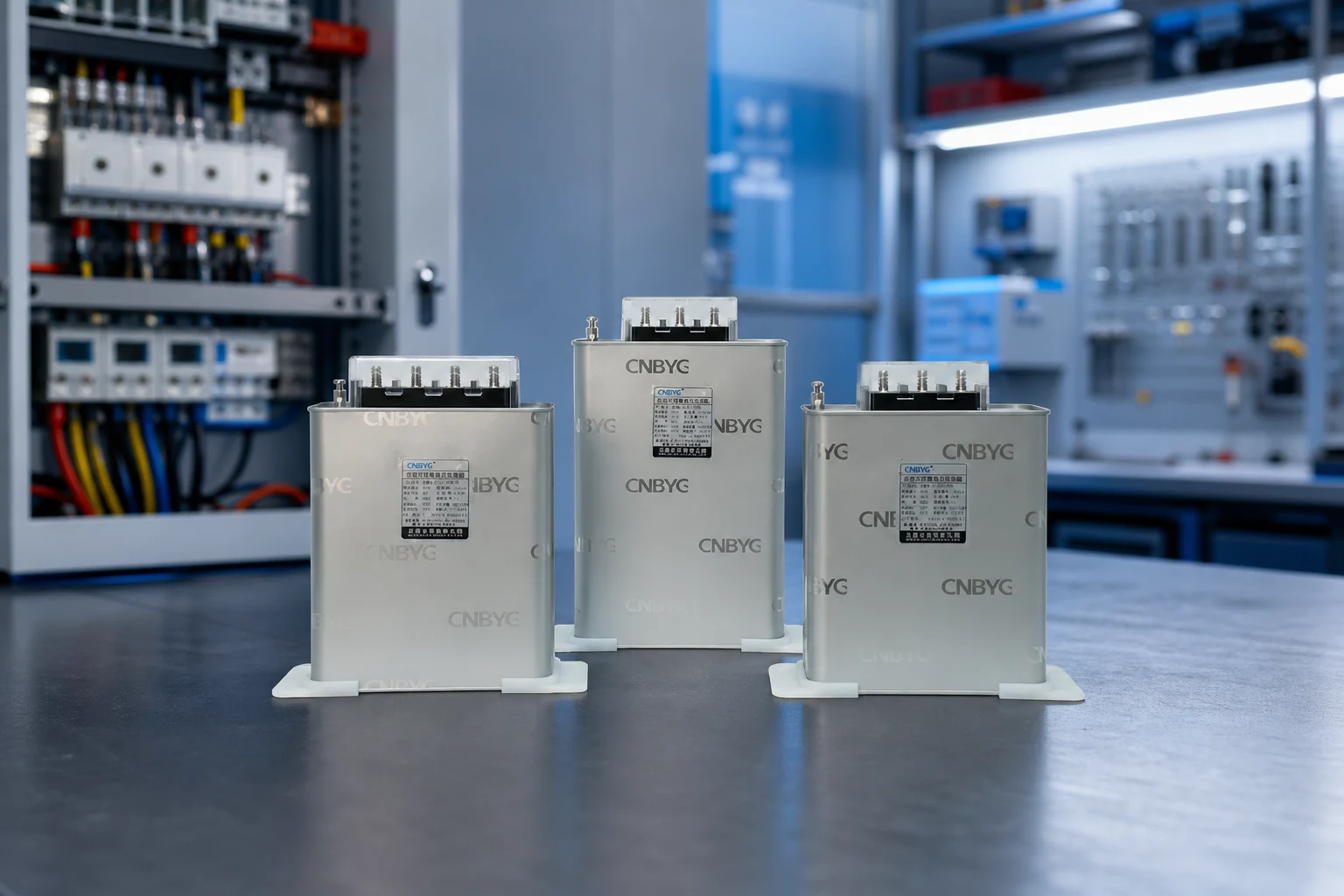
Ready to discuss your project? Contact CNBYG engineering contact with your voltage class, load list, and target power factor or THD goals.
FAQ
What is a self-healing capacitor and how does self-healing work?
It uses a metallized polypropylene film as dielectric. When a weak point breaks down, the thin metal coating around the fault instantly vaporizes and isolates the defect, so the capacitor keeps operating with a tiny, controlled loss of capacitance rather than failing outright.
What standard covers low-voltage shunt capacitors?
IEC 60831 covers self-healing shunt power capacitors: Part 1 defines ratings, performance, and safety with routine and type tests; Part 2 defines endurance (aging), self-healing verification, and destruction tests.
What voltage and frequency range does IEC 60831 cover?
It applies to self-healing shunt capacitors rated up to and including 1000 V AC, at frequencies of 15 to 60 Hz, used for power factor improvement in AC systems. Above 1000 V, other standards such as IEC 60871 apply.
What protection does a self-healing capacitor have against overpressure?
Quality units include an overpressure disconnector: as the element ages or a serious fault develops, internal pressure rises and the device breaks the connection, so the capacitor fails safely without the case rupturing.
Why do self-healing capacitors need a series (detuned) reactor?
In harmonic-rich installations, capacitors can resonate with the supply and draw amplified harmonic current, overheating and aging quickly. A series detuned reactor (e.g. 7%) plus a higher voltage rating prevents this resonance and protects the capacitor.
What shortens the life of a self-healing capacitor?
Sustained over-voltage, high ambient or internal temperature, and harmonic over-current are the main factors. Each repeated self-healing event also removes a little capacitance, so a harsh environment brings the capacitor to end-of-life sooner.
Does self-healing mean the capacitor lasts forever?
No. Self-healing handles small dielectric breakdowns, but each event costs a little capacitance and the ability is finite. At end of life the overpressure device disconnects the capacitor safely, and it should then be replaced.
References